The Niger River curves gently through Niamey, its waters reflecting the shifting hues of the Sahel sky—golden at dawn, deep blue by midday, and fading into violet as the sun dips below the horizon. Along its banks, where the city’s pulse slows just enough to let the river’s rhythm take over, lies Zinder Park. It’s not the kind of place that appears in glossy travel brochures or tops lists of must-see attractions, but that’s part of its quiet charm. Here, the river isn’t just a backdrop; it’s the reason the park exists at all.
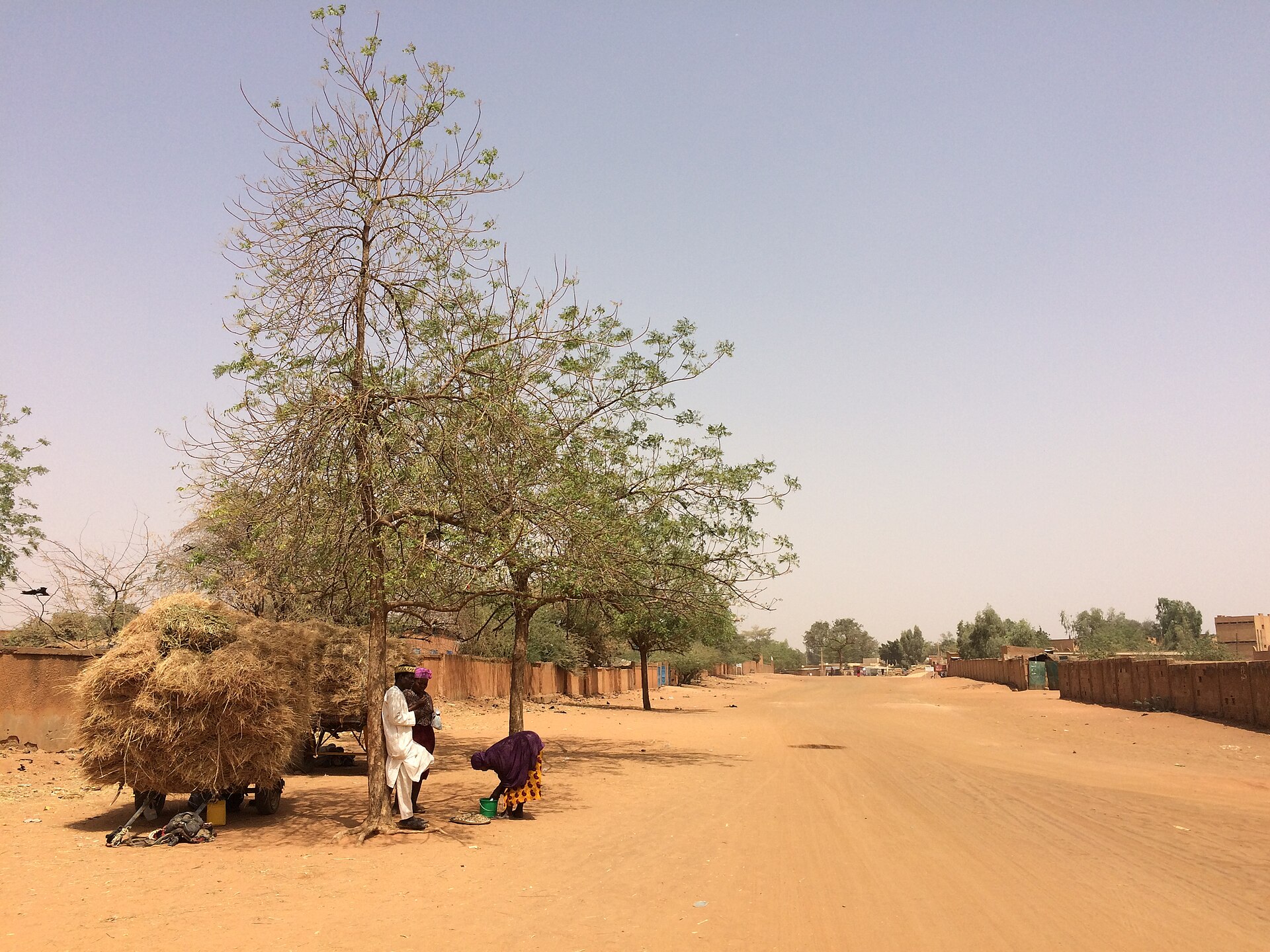
Zinder Park stretches along the river’s edge, a narrow strip of green that offers a rare respite from Niamey’s dust and heat. The park is named after Zinder, a city in the southeast of Niger that was once the country’s capital before the seat of government moved to Niamey in 1926. The name carries a sense of history, though the park itself is more about the present—a place where locals come to escape the hustle of daily life. There are no grand monuments or elaborate gardens, just a simple promenade lined with trees, a few benches, and the occasional vendor selling cold drinks or roasted peanuts.
The trees here are mostly neem and acacia, their leaves providing just enough shade to make the midday sun bearable. In the dry season, when the harmattan winds sweep down from the Sahara, the park becomes a refuge for those seeking shelter from the dust. The river, though not as wide or as deep as it is further downstream, still draws people to its banks. Fishermen cast their nets from small wooden pirogues, their movements unhurried, as if they’ve all the time in the world. Children play along the water’s edge, their laughter mixing with the rustle of the wind through the reeds.
The park’s layout is informal, almost accidental. There are no manicured lawns or carefully planned flowerbeds, just patches of grass where families spread out blankets for picnics. On weekends, the park fills with people—young couples strolling hand in hand, groups of friends gathered around a shared meal, elders sitting in quiet conversation. The atmosphere is relaxed, unpretentious. This isn’t a place for grand gestures or tourist performances; it’s where Niamey lets its guard down, where the city’s daily rhythms sync with the river’s flow.
In the evenings, the park takes on a different character. As the heat of the day dissipates, the air cools, and the scent of grilled meat drifts from the small stands that pop up along the promenade. The river reflects the lights of the city, its surface shimmering like liquid silver. Music spills from radios or the occasional live performance—a griot strumming a kora, a group of teenagers playing hip-hop beats on a portable speaker. The park becomes a stage of sorts, though there’s no script, no audience, just the shared experience of a city unwinding.
Zinder Park isn’t a place you’d travel across the world to see, but that’s not the point. It’s the kind of space that reveals itself slowly, through small moments—a child chasing a butterfly, an old man feeding pigeons, the way the light catches the water at just the right angle. It’s a reminder that sometimes the most meaningful places aren’t the ones that demand attention, but the ones that quietly hold a piece of everyday life.
The river, of course, is the constant presence here. It’s easy to forget, standing in the park, that this is the same Niger that flows through Mali, Niger, and Nigeria, the same river that has shaped civilizations for centuries. In Niamey, it’s not a dramatic force of nature but a steady, reassuring one. It doesn’t rush; it doesn’t demand. It simply is, and in that simplicity, it gives the park its soul.
There’s a sense of impermanence to Zinder Park, as if it could vanish with the next flood or be swallowed by the city’s expansion. But for now, it endures—a small green thread woven into the fabric of Niamey, a place where the river and the city meet, not with fanfare, but with quiet understanding.