The Grand Mosque of Niamey stands as one of the most recognizable landmarks in Niger’s capital, a place where the city’s daily rhythm intersects with its deeper cultural and spiritual currents. Built in the 1970s, the mosque reflects the architectural influences of the time, blending modernist elements with traditional Sahelian design. Its towering minaret, visible from many parts of the city, serves as both a navigational landmark and a symbol of the role Islam has played in shaping Niamey’s identity. The structure’s clean lines and geometric forms contrast with the more ornate styles found in older Islamic centers, yet it carries a quiet dignity that resonates with the city’s understated character.
Niamey itself is a place where the Niger River dictates much of life, and the mosque’s location near its banks ties it to the broader story of the region. The river has long been a lifeline for trade, agriculture, and movement, and the mosque’s presence along its route underscores how faith and daily survival have intertwined here for generations. Unlike the grand mosques of North Africa or the Middle East, which often dominate their surroundings with elaborate domes and intricate tilework, the Grand Mosque of Niamey feels more integrated into the fabric of the city. It doesn’t overwhelm the streets around it but instead offers a space for reflection amid the bustle of urban life.
The mosque’s interior is designed for function as much as for worship. The prayer hall, with its high ceilings and simple columns, allows for the circulation of air in a climate where temperatures routinely climb above forty degrees Celsius. The lack of excessive ornamentation keeps the focus on the act of prayer itself, a practical approach that aligns with the modest means of many of the city’s residents. During Friday prayers, the space fills with worshippers, their voices blending into a low hum that spills out into the surrounding streets. For those who visit outside of prayer times, the mosque remains a place of quiet, its cool interior offering respite from the heat and noise of the city.
Beyond its religious significance, the Grand Mosque has become a point of reference in Niamey’s urban landscape. It sits near the city’s central market, where vendors sell everything from fresh produce to handwoven textiles, and where the scent of grilled meat mingles with the dust kicked up by passing motorcycles. The mosque’s proximity to these everyday spaces makes it feel less like an isolated monument and more like a natural extension of the city’s rhythm. Locals often gather in its shade before or after prayers, exchanging news or simply watching the world go by. For visitors, this offers a glimpse into how faith is lived in Niamey—not as something separate from daily life, but as an integral part of it.
The mosque’s construction in the 1970s coincided with a period of change for Niger. The country had gained independence from France just over a decade earlier, and Niamey was growing rapidly as people migrated from rural areas in search of opportunity. The mosque’s modern design reflected this sense of transition, embodying both the aspirations of a young nation and the enduring traditions of its people. While it may not have the historical weight of older Islamic sites, its relatively recent origins make it a testament to how Niamey has evolved in the decades since. It stands as a reminder that even in a city shaped by colonial history and post-independence struggles, faith remains a constant.
For those who take the time to observe, the mosque also offers subtle insights into the social dynamics of Niamey. The way people move around it—men and women entering through separate entrances, children playing in the courtyard, elders sitting in quiet conversation—reveals the unspoken rules that govern public life here. The mosque is not just a place of worship but a microcosm of the city itself, where different generations and social groups coexist in a shared space. The absence of overt tourism means that interactions feel organic, unmediated by the expectations that often accompany more famous religious sites.
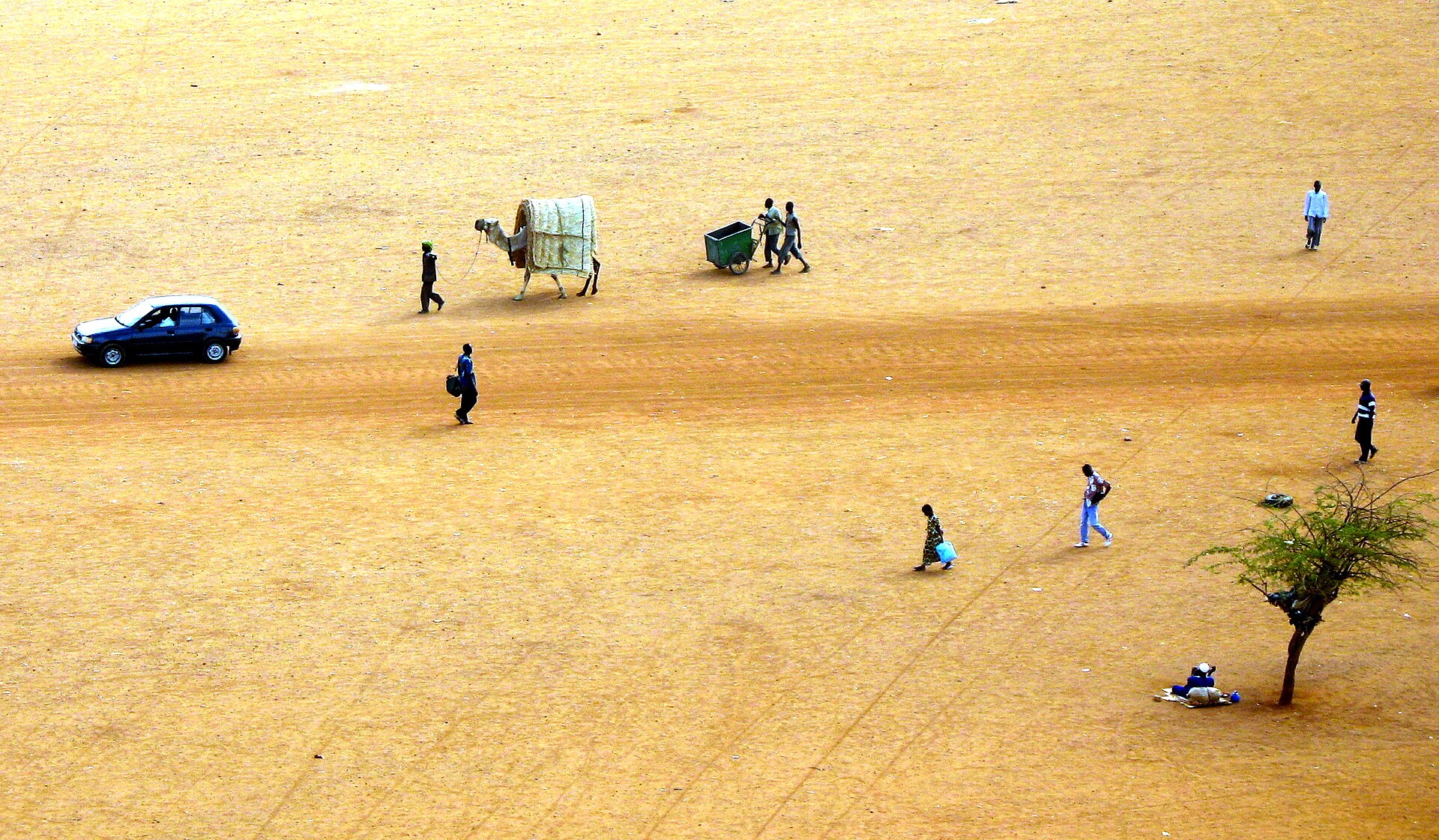
The surrounding neighborhood, like much of Niamey, is a mix of the old and the new. Nearby streets are lined with small shops selling phone credit, secondhand clothing, and household goods, while further out, newer buildings rise in an attempt to keep pace with the city’s growth. The mosque’s presence anchors the area, providing a sense of continuity in a place where change is constant. It’s not uncommon to see a donkey cart passing by on the same road where a motorbike weaves through traffic, a juxtaposition that captures the way Niamey straddles tradition and modernity.
Visiting the Grand Mosque of Niamey is less about ticking off a sightseeing checklist and more about experiencing the city’s pulse. There are no grand ceremonies or guided tours here, just the quiet ebb and flow of daily life. The best time to visit is in the late afternoon, when the heat begins to ease and the call to prayer echoes across the rooftops. The light at this hour softens the mosque’s stark lines, casting long shadows that stretch toward the river. It’s a moment when the city seems to pause, if only briefly, before resuming its steady rhythm. For those who linger, the mosque offers not just a glimpse of Niamey’s spiritual life, but a deeper understanding of how the city moves through time.