Weather overview
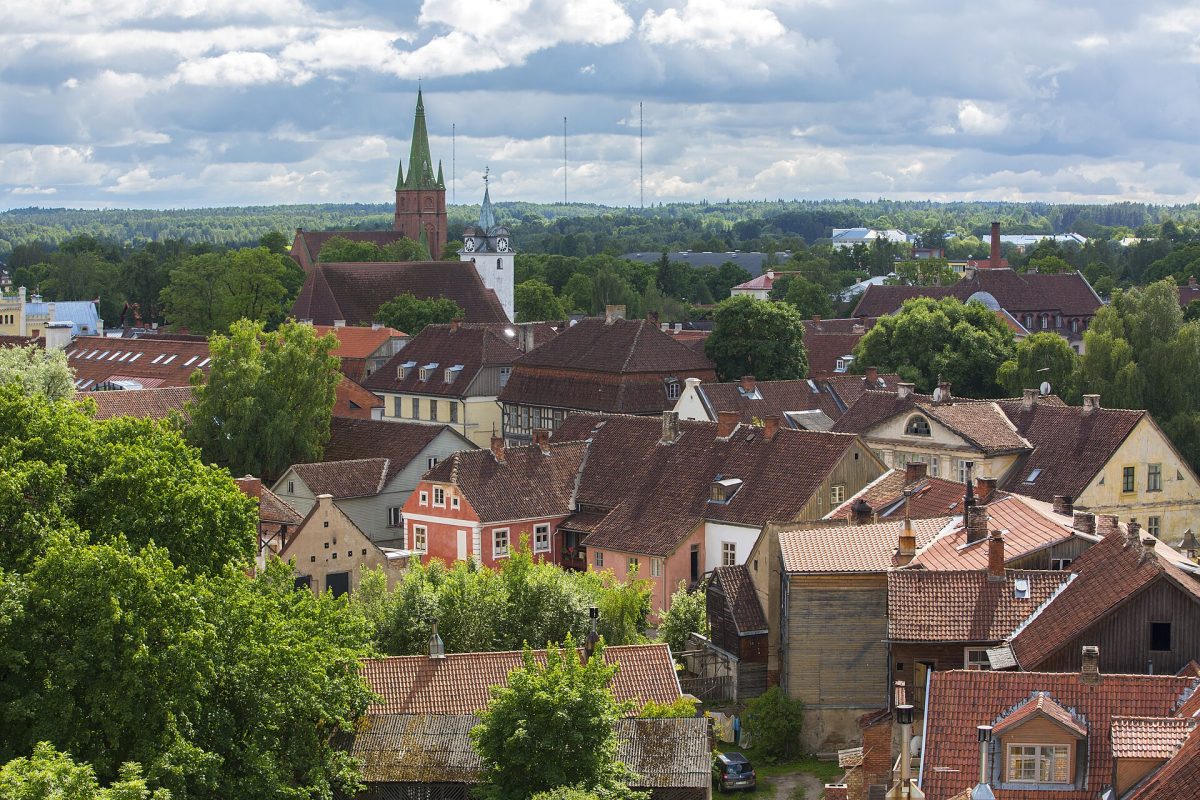
Kuldīga sits in western Latvia, where the seasons unfold gently but distinctly. Winters in Kuldīga are quiet and cold, with January and February often hovering near 0 °C or slightly below. Snow is common, though not always heavy, and the town’s cobblestone streets take on a soft, wintry glow.
By April, Kuldīga begins to thaw, and the countryside around it bursts into early spring greenery. Summers arrive in June, bringing mild warmth that lingers through August. Evenings stay cool, making it pleasant to wander along the Venta River or explore the town’s historic center without the discomfort of heat.
Autumn in Kuldīga is brief but vivid. September still holds onto summer’s warmth, but by October, temperatures drop noticeably, and the surrounding forests turn shades of gold and russet. Rain becomes more frequent in November, setting the stage for winter’s return.
Temperature
The coldest months in Kuldīga are January and February, when average temperatures sit around -1.2 °C and -0.4 °C respectively. Nighttime lows can dip to -6.1 °C in January, so layers and a warm coat are essential if you’re visiting during these months.
Spring warms Kuldīga gradually. By April, daytime highs reach 11.3 °C, while May brings more consistent warmth, with averages around 11.7 °C and highs near 16.2 °C. Summer peaks in July, when temperatures average 17.7 °C, though occasional days may climb to 22 °C. Evenings remain cool, rarely exceeding 13.4 °C at night.
Autumn cools Kuldīga just as steadily as it warmed in spring. September still feels like summer, with averages of 13.9 °C, but by October, the average drops to 8.3 °C. November brings a sharper chill, with temperatures falling to 3.9 °C on average and nighttime lows near 0.8 °C.
| Month | Minimum | Maximum |
|---|---|---|
| January | -6.1 | -0.3 |
| February | -2.8 | 2.9 |
| March | -1.4 | 6.2 |
| April | 2.3 | 11.3 |
| May | 5.8 | 16.2 |
| June | 11.9 | 21.5 |
| July | 13.4 | 22 |
| August | 13.4 | 22.1 |
| September | 10.2 | 18.1 |
| October | 6.1 | 12.7 |
| November | 0.8 | 6.6 |
| December | -1.9 | 2.6 |
Precipitation
Rainfall in Kuldīga is spread throughout the year, though some months are noticeably wetter. January and December see the most precipitation, with around 80 mm and 71 mm respectively. Snow is common in winter, but it rarely accumulates heavily, and the town’s charm isn’t overshadowed by harsh conditions.
Spring and early summer are drier, with April and May receiving around 30 mm of rain each. July marks the start of a wetter period, with 71.4 mm of rainfall, though summer showers tend to be brief and don’t disrupt plans for long. August and September are relatively balanced, with around 50 mm of rain each.
Autumn brings a gradual increase in moisture. October and November see around 50 mm and 43.5 mm of rain respectively, often in the form of steady drizzle. By December, precipitation rises again, matching the winter pattern. If you’re visiting Kuldīga in the colder months, waterproof footwear and a compact umbrella will keep you comfortable.
| Month | Precipitation |
|---|---|
| January | 80.2 |
| February | 34.2 |
| March | — |
| April | 29.6 |
| May | 36 |
| June | 43.4 |
| July | 71.4 |
| August | 51.7 |
| September | 33.1 |
| October | 51.7 |
| November | 43.5 |
| December | 71 |
What to pack
For a winter trip to Kuldīga, pack warm, layered clothing. A insulated coat, gloves, and a hat are necessary for January and February, when temperatures can drop below -6 °C. Waterproof boots are also useful, as snow and slush are common on the town’s streets.
Spring and autumn in Kuldīga call for versatile layers. In April and May, a light jacket or sweater is enough for daytime, but evenings can still feel chilly. By September, a warmer layer is needed, and a waterproof jacket becomes useful as rain becomes more frequent. A scarf and comfortable walking shoes are good additions for any season.
Summer in Kuldīga is mild, so lightweight clothing is ideal. Pack breathable fabrics for daytime, but include a light sweater or long-sleeve shirt for cooler evenings. A compact umbrella or rain jacket is wise, as summer showers can occur, especially in July. Comfortable shoes are a must for exploring the town’s cobbled streets and nearby nature trails.
| Month | Wind speed |
|---|---|
| January | 4.4 |
| February | 4.2 |
| March | — |
| April | 3.8 |
| May | 3.4 |
| June | 3.1 |
| July | 3.3 |
| August | 3 |
| September | 3.2 |
| October | 3.8 |
| November | 3.8 |
| December | 4.1 |