- Home
- Kazakhstan
- Shymkent

Shymkent
Kazakhstan · 8 places
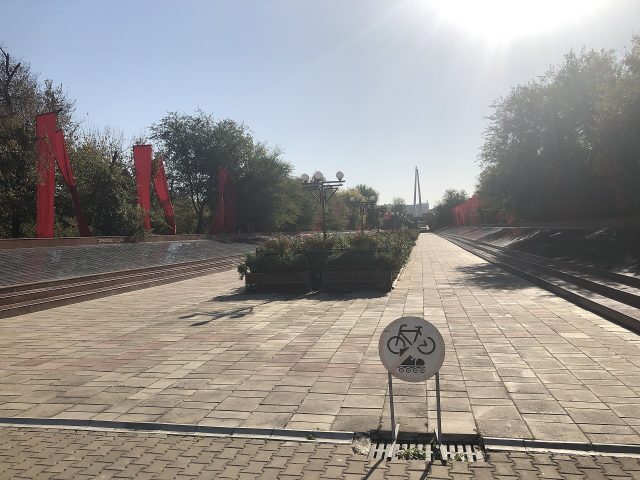
Photo: ほっきー, CC0
Shymkent is a city that doesn’t rush to reveal itself. It’s not the futuristic skyline of Astana or the alpine charm of Almaty—here, life moves at its own pace, unpolished but full of character. This is where Central Asia feels most authentic: the clatter of bazaars, the scent of plov sizzling in open-air cauldrons, and the kind of hospitality that lingers long after you’ve left. The city hums with quiet energy, especially if you wander into its older neighborhoods or stumble upon a modern café where locals debate over steaming cups of tea.
Centuries of history breathe through Shymkent’s streets. Once a key stop on the Silk Road, the city still carries traces of its past in the form of ancient mosques, madrasas, and mausoleums scattered across its districts. The most striking reminder is the nearby Mausoleum of Khoja Ahmed Yasawi in Turkestan, a masterpiece of medieval architecture and a place of pilgrimage. Closer to home, the Museum of History and Culture of Southern Kazakhstan offers a glimpse into the city’s layered past, from nomadic traditions to Soviet-era transformations. In the heart of Shymkent, a statue of Abai Kunanbayev, Kazakhstan’s revered poet and philosopher, stands as a quiet testament to the intellectual legacy that still shapes the region.
What makes Shymkent intriguing is its contrasts. The old city, with its narrow lanes and single-story houses, feels like a step back in time, where men gather in teahouses to play dominoes and debate politics over endless cups of black tea. Yet just a few blocks away, glass-fronted shopping centers and sleek restaurants serve everything from sushi to beshbarmak. The Koylys Bazaar, one of Central Asia’s largest markets, is where these worlds collide. Here, vendors hawk everything from pomegranates the size of your fist to hand-stitched felt slippers, while the air is thick with the smell of spices and freshly baked bread. If you’re lucky, you might catch a demonstration of how the city’s famous plov is made—cooked in massive cauldrons over open flames, the rice soaking up the flavors of lamb and caramelized carrots.
Beyond the city limits, the landscape softens into rolling steppes and gentle hills, offering a peaceful escape. The Sairam-Ugam National Park, just a short drive away, is a haven of relict forests and crystal-clear springs, perfect for a day of hiking or a lazy picnic by the water. In summer, the valleys turn lush and green, while winter transforms Shymkent into a cozy retreat, where the best pastimes are sipping tea in a heated chaikhana or gliding across an outdoor ice rink under strings of twinkling lights.
Shymkent doesn’t dazzle you at first glance. There are no grand palaces or dramatic vistas, just the steady pulse of everyday life. It’s a place where you can lose yourself in the maze of a centuries-old bazaar, strike up a conversation with a stranger over a shared table, or simply watch the world go by from a park bench. The city doesn’t try to impress—it just is, and that’s what makes it special. Here, Central Asia isn’t a postcard; it’s a lived-in, breathing reality.
See & Do
All of them
Places on the map
Marker colour follows the categoryClimate and weather
Detailed weather: Shymkent- Average temperature
- 15 °C
- Precipitation per year
- 626 mm
- Sunshine hours per day
- 7.3 h
Average air temperature
°C
1
3
10
16
22
27
30
27
21
13
6
1
Jan
Feb
Mar
Apr
May
Jun
Jul
Aug
Sep
Oct
Nov
Dec


