- Home
- Madagascar
- Antsirabe

Antsirabe
Madagascar · 4 places
Photo: Bernard Gagnon, CC BY-SA 3.0
Nestled in the highlands of Madagascar, Antsirabe feels like a place where time has paused, leaving behind the quiet charm of a bygone era. Perched at around fifteen hundred meters above sea level, the city is surrounded by rolling green hills and terraced fields that stretch into the distance. The air here is cooler than on the coast, carrying the scent of eucalyptus and freshly cut grass, while the pace of life moves at its own unhurried rhythm. Locals often call it the "Madagascan Vichy," not just for its mineral springs but for the sense of calm that lingers in the streets, as if the city itself exhales slowly.
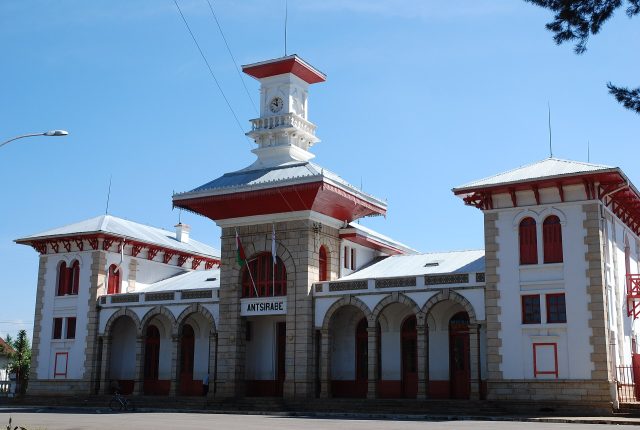
Founded by Norwegian missionaries in the late nineteenth century, Antsirabe quickly became an important stop on the route between the capital and the island’s southern regions. Today, it’s a place where tradition and modernity coexist in subtle ways. Narrow streets lined with single-story houses under terracotta roofs lead to bustling markets where vendors sell everything from fragrant spices and tropical fruit to intricately carved wooden figurines and vibrant textiles. The city’s most distinctive feature, though, might be its *pousse-pousses*—rickshaws that have remained the primary mode of transport. Their brightly painted bodies and jingling bells are as much a part of Antsirabe’s identity as the colonial-era buildings that still stand in the center.
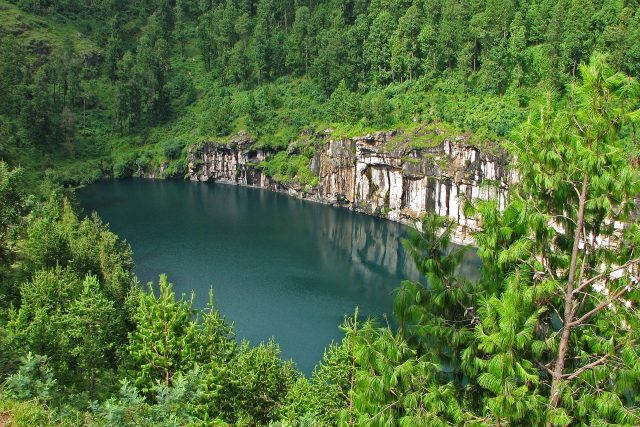
The city’s reputation as a wellness retreat dates back to the French colonial period, when its thermal springs drew visitors seeking relaxation and healing. Some of the old bathhouses still operate, offering mineral-rich waters with a taste that’s as unusual as the experience itself. Beyond the city, natural hot springs bubble up in the countryside, forming small pools where locals and travelers alike soak under the open sky. Nearby, Lake Tritriva adds a touch of mystery—a dark, volcanic crater lake shrouded in local legends. Some say an ancient village lies submerged beneath its waters, while others claim the lake is best admired from a distance. Whether or not the stories hold truth, the lake’s eerie beauty is undeniable.
Life in Antsirabe moves at a gentle pace, and that’s part of its appeal. There are no crowded nightclubs or tourist traps here, just quiet streets where the day unfolds without rush. Mornings might begin with a stroll through the central square, where vendors set up their stalls under the shade of trees, or a visit to a local café for strong coffee and warm pastries. Artisans’ workshops dot the city, where craftsmen shape wood and stone into traditional masks and sculptures, their hands moving with practiced ease. For those who prefer to explore beyond the city limits, bicycle rides through the surrounding countryside reveal a different side of Madagascar—villages with clay huts, rice paddies stretching across the hills, and the occasional glimpse of a chameleon blending into the foliage.
Antsirabe also serves as a gateway to some of the island’s wilder landscapes. From here, it’s easy to venture into national parks where lemurs leap through the trees or head south toward the vast plateaus and canyons that define the region. But even if you never leave the city, Antsirabe has a way of surprising you. There are no grand resorts or flashy attractions, just small moments that linger—the clatter of a *pousse-pousse* on cobblestone streets, the laughter of children playing in a courtyard, the way the light softens over the hills at dusk. It’s a place that doesn’t demand attention but quietly rewards those who take the time to notice.
See & Do
All of them

Places on the map
Marker colour follows the categoryClimate and weather
Detailed weather: Antsirabe- Average temperature
- 18 °C
- Precipitation per year
- 1446 mm
Average air temperature
°C
20
19
19
18
16
14
14
16
17
20
21
21
Jan
Feb
Mar
Apr
May
Jun
Jul
Aug
Sep
Oct
Nov
Dec