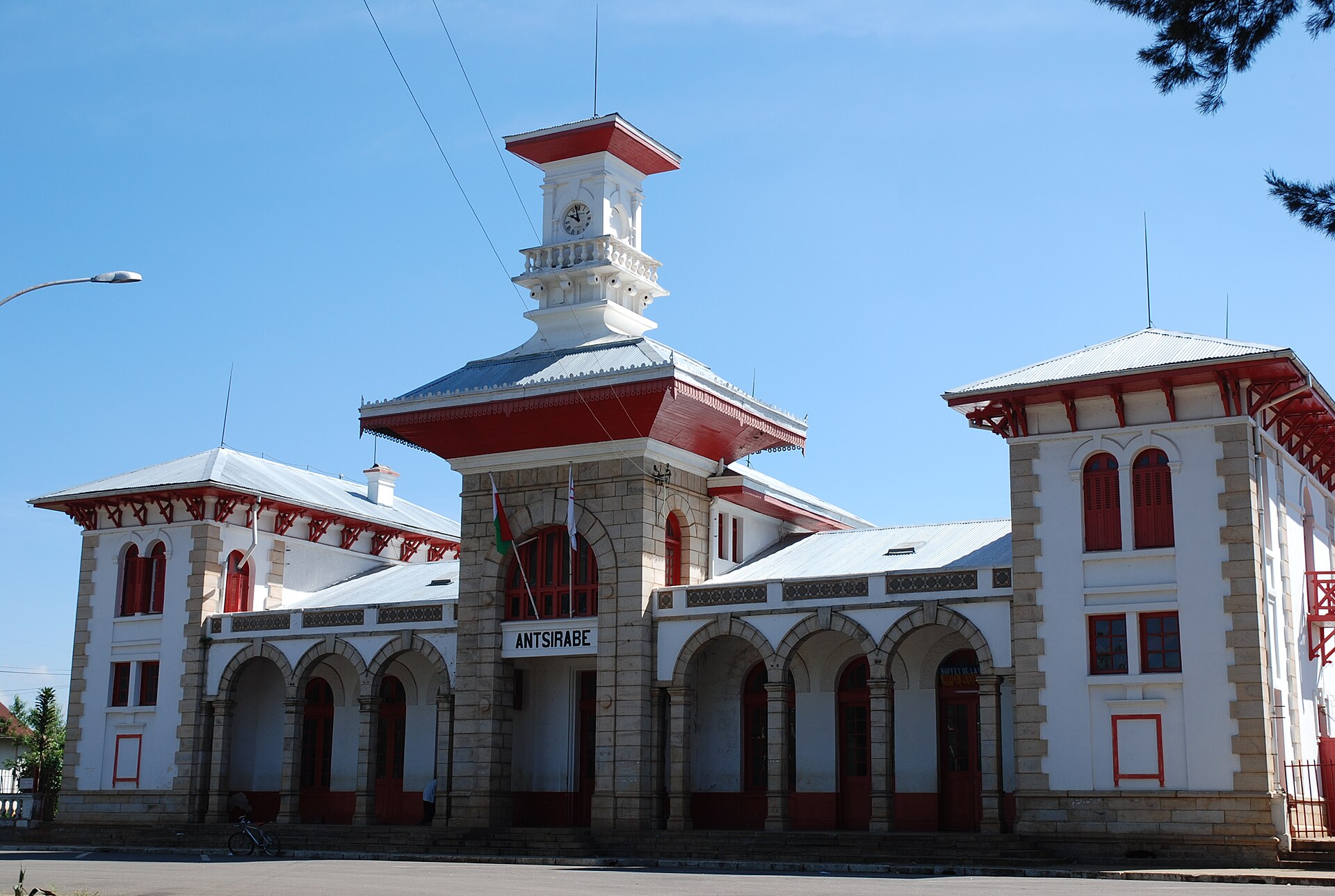
Antsirabe’s railway station is one of those places where time seems to move at its own pace, untouched by the rush of the modern world. Built during the French colonial era, it stands as a quiet witness to Madagascar’s layered history, a relic of an ambitious railway project that once connected the highlands to the coast. The station itself is modest, with a low-slung building of weathered brick and a single platform that stretches into the distance, flanked by rusted tracks. It’s not the kind of place that draws crowds, but for those who take the time to notice, it offers a glimpse into the island’s past and the slow, steady rhythm of life here.
The station was part of the Fianarantsoa-Côte Est railway, a line constructed in the early 20th century to link the fertile highlands with the eastern port of Manakara. The project was a feat of engineering for its time, cutting through dense forests and rugged terrain, though it was never as grand as the colonial planners might have hoped. Antsirabe, sitting at an elevation of over 1,500 meters, became an important stop along the route, a place where trains would pause before continuing their journey through the cooler, misty landscapes of the interior. Today, the line is still in use, though its purpose has shifted—no longer a vital trade artery, it now carries mostly passengers and the occasional freight, a slow-moving thread stitching together remote communities.
Architecturally, the station is unassuming, reflecting the practical needs of its time rather than any grand design. The main building is a simple rectangular structure with a pitched roof, its walls showing the patina of decades of sun and rain. The platform is long and narrow, with a few benches where travelers wait, often for hours, as schedules here are more suggestion than rule. The tracks themselves are a reminder of the challenges of maintaining infrastructure in a country where resources are scarce and the climate is unforgiving. Weeds push through the gravel between the ties, and the rails, though still in use, bear the marks of time.
For most visitors, the station isn’t a destination in itself but a point of transit, a place to catch the train to Fianarantsoa or Manakara. Yet there’s something undeniably atmospheric about it. The air is cooler here than in the lowlands, carrying the scent of eucalyptus and damp earth. In the early mornings, when the mist still clings to the hills, the station feels almost suspended in time, as if the next train might arrive from another era. Vendors set up small stalls nearby, selling bananas, fried dough, and sweet tea to passengers waiting for their ride. The conversations are a mix of Malagasy and French, a linguistic echo of the island’s colonial past.
The train that passes through Antsirabe is a far cry from the sleek, high-speed railways of Europe or Asia. It’s a slow, rattling affair, with carriages that have seen better days and an engine that groans under the strain of the climb. But for those who ride it, the journey is less about efficiency and more about the experience. The windows frame a landscape of rolling hills, terraced rice fields, and villages where life moves at the pace of oxcarts and footpaths. The train stops frequently, sometimes for no apparent reason, allowing passengers to hop off and stretch their legs or buy a snack from a passing vendor. It’s not uncommon for the ride to take twice as long as scheduled, but no one seems to mind.
The station’s significance goes beyond its role as a transport hub. It’s a symbol of the connections that have shaped Madagascar—between the highlands and the coast, between the colonial past and the present, between the urban centers and the rural communities that still rely on the railway for trade and travel. In a country where roads are often unreliable and distances vast, the train remains a lifeline for many. For the people of Antsirabe, it’s a link to the outside world, a way to reach markets, relatives, or medical care in other parts of the island.
There’s a certain melancholy to the place, too. The railway was once part of a larger vision of progress, a network that would modernize Madagascar and integrate it into the global economy. But like so many colonial projects, it was built with more ambition than foresight, and its legacy is mixed. The tracks are still here, but the grand dreams of the past have faded, leaving behind a quieter, more humble reality. The station, with its peeling paint and overgrown platform, tells that story without words.
For travelers, the station offers a chance to step out of the usual tourist itinerary and see Madagascar from a different angle. There’s no grand monument here, no museum or guided tour, just the simple act of waiting for a train that may or may not arrive on time. But in that waiting, there’s a kind of authenticity—a reminder that life in Madagascar, especially outside the capital, moves to its own rhythm. If you’re lucky, you might strike up a conversation with a local, or watch as a group of schoolchildren piles onto the train, their laughter filling the air. It’s these small moments that linger long after the journey is over.
Antsirabe’s railway station may not be the most glamorous place on the island, but it’s one of those spots where the past and present intersect in a way that feels real. It’s a place where history isn’t preserved in a glass case but lived, day by day, in the comings and goings of ordinary people. And perhaps that’s what makes it worth a visit—not for what it is, but for what it represents.