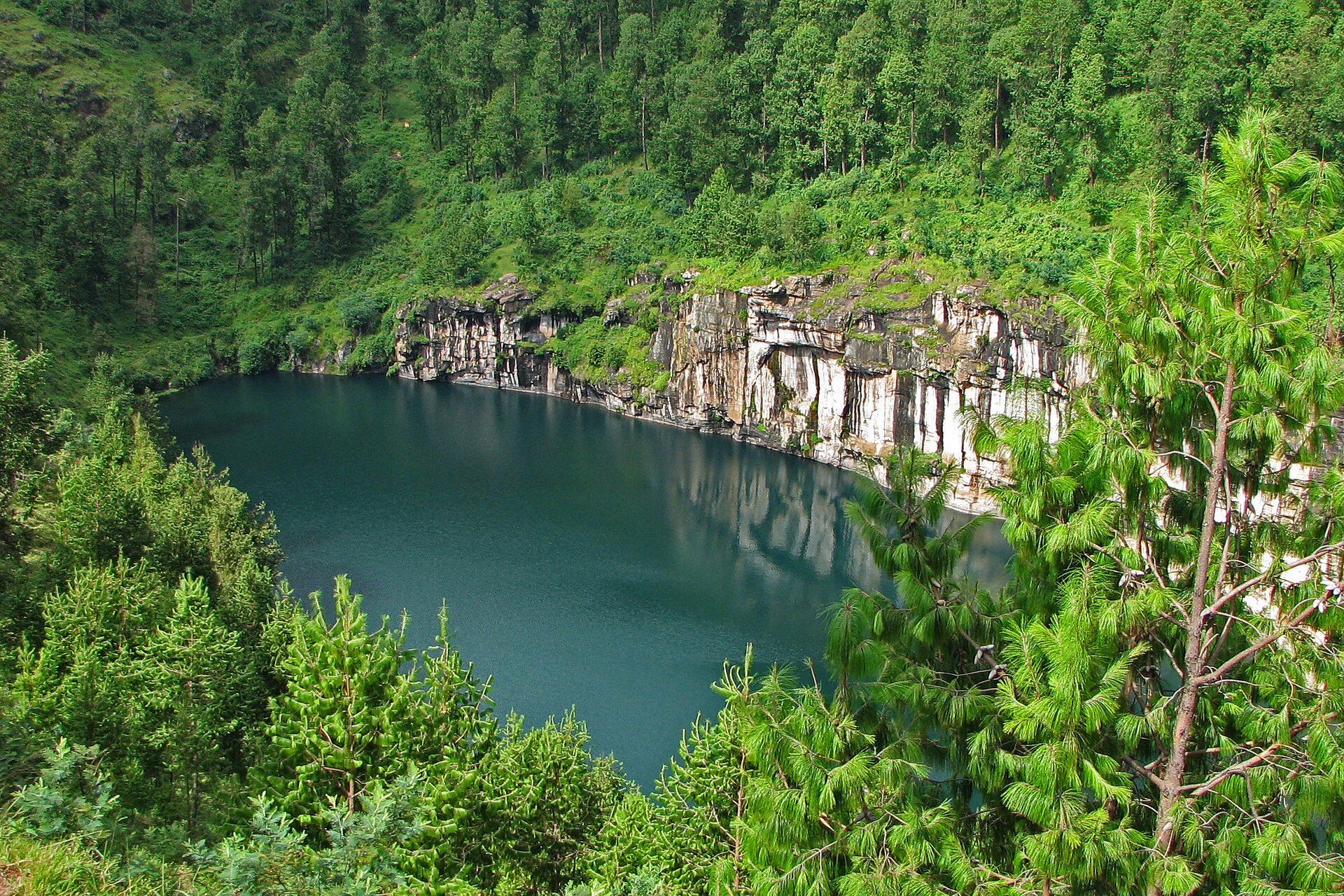
Lake Tritriva sits in the highlands of Madagascar, a short drive from the town of Antsirabe. The road there winds through rolling hills dotted with small villages and patches of farmland, where zebu cattle graze lazily under the sun. The landscape feels quiet and timeless, a place where the pace of life slows down almost immediately. The lake itself is tucked into the crater of an extinct volcano, its dark waters surrounded by steep, jagged cliffs that rise sharply from the shore. There’s something almost otherworldly about the way it sits there, perfectly still, as if holding its breath.
The lake is small but deep, its surface often shrouded in mist during the early mornings. Locals say the water never freezes, no matter how cold the nights get, and that it never overflows, even in the heaviest rains. These stories add to the sense of mystery that surrounds the place. The cliffs around the lake are covered in lush vegetation, and the air carries the scent of damp earth and wild herbs. It’s easy to see why this spot has long been considered sacred by the people who live nearby.
For generations, Lake Tritriva has been a place of legends and rituals. One of the most well-known tales tells of two lovers from rival villages who were forbidden to be together. According to the story, they fled to the lake and, rather than face separation, leapt into its depths. Some say their spirits still linger in the water, and that the lake’s dark surface reflects their eternal bond. Whether or not the story is true, it’s a reminder of how deeply the lake is woven into the cultural fabric of the region. Visitors often leave small offerings at the water’s edge, a sign of respect for the traditions that have shaped this place.
The journey to the lake is as much a part of the experience as the destination itself. The path down to the water is steep and uneven, winding through dense foliage that brushes against your arms as you pass. There are no railings or marked trails, just the natural contours of the land guiding the way. The descent can be slippery after rain, so it’s worth taking your time. Once you reach the shore, the silence is striking. The only sounds are the occasional rustle of leaves and the distant call of birds. It’s a place that invites stillness, where the outside world feels far away.
The lake’s volcanic origins are evident in the rugged terrain that surrounds it. The cliffs are made of dark, porous rock, worn smooth in places by centuries of wind and rain. Geologists believe the crater was formed thousands of years ago, though the exact timeline remains unclear. What is certain is that the lake has been a constant presence in the landscape, shaping the lives of those who live nearby. Farmers in the surrounding hills rely on the water that filters down from the crater, and the lake itself is home to a variety of fish, though fishing is rarely done here out of respect for its sacred status.
There’s a sense of isolation at Lake Tritriva that makes it feel like a hidden gem. Unlike more famous natural sites in Madagascar, it doesn’t attract large crowds. Most visitors are locals or travelers who’ve heard about it through word of mouth. The lack of development means there are no souvenir stalls or guided tours, just the raw beauty of the place. That said, it’s not entirely untouched. A few simple wooden benches have been placed near the water, offering a place to sit and take in the view. Some visitors bring picnics, spreading out blankets on the grassy patches near the shore.
The best time to visit is during the dry season, when the paths are less muddy and the skies are clearer. Mornings are particularly magical, with the mist rising off the water like smoke. If you’re lucky, you might spot some of the local wildlife, like chameleons clinging to the branches or birds flitting between the trees. The lake is also a popular spot for photographers, though capturing its essence can be tricky. The light shifts constantly, and the reflections on the water change with every passing cloud.
For those who make the trip, Lake Tritriva offers more than just a scenic view. It’s a place where history, nature, and legend intersect. The stories told about it may be impossible to verify, but that doesn’t make them any less real to the people who hold them dear. Standing at the water’s edge, it’s easy to understand why this lake has inspired so much reverence. It’s not just a body of water; it’s a living part of the landscape, a silent witness to the passage of time. And for a little while, anyone who visits becomes part of its story too.