Where to Travel in October: Where You Can Still Swim and Where to Explore

Photo: Karpouzi, CC BY-SA 3.0
If you want to swim one last time in October, head to Limassol, Bodrum, Rhodes, or Tunis: the sea temperature there averages 24–25°C, with daytime highs of 26–29°C. If swimming isn’t the priority and you prefer walking all day without hiding from the sun, Tbilisi, Yerevan, or Samarkand are better choices, with daytime temperatures of 19–21°C. Sochi falls somewhere in between. The sea there is still 21°C, but the city sees 137 mm of rainfall over the month.
All figures below are long-term averages from Meteostat and Open-Meteo, meaning they’re based on many years of data. A specific October can be warmer or colder, and rainfall averages are especially unreliable: 3 mm for the month means rain is usually absent, but one storm can exceed that in an evening. It’s best to trust the comparisons—where it’s warmer or drier—rather than the decimal points.
| October | Daytime, °C | Nighttime, °C | Sea, °C | Rainfall for the month, mm | Sunshine, hours per day |
|---|---|---|---|---|---|
| Limassol | 29 | 19 | 25 | 24 | 7 |
| Bodrum | 27 | 19 | 24 | 3 | — |
| Rhodes | 26 | 15 | 24 | 10 | — |
| Tunis | 27 | 18 | 24 | 47 | 7 |
| Sochi | 20 | 12 | 21 | 137 | — |
| Tbilisi | 21 | 8 | — | 57 | — |
| Yerevan | 19 | 9 | — | 6 | 8 |
| Samarkand | 21 | 8 | — | 33 | 8 |
| Batumi | 21 | 14 | 21 | 445 | — |
A dash in the sea column means there’s no sea nearby. A dash in the sunshine column means we don’t have average sunshine data for that city.
Where You Can Still Swim in October
Limassol: The Warmest Sea of the Four
In October, Limassol offers the best beach conditions: the sea is 25°C, daytime temperatures reach 29°C, and nights cool to 19°C. It’s summer without the summer humidity. In August, temperatures hit 34°C, making daytime walks exhausting, but in October, you can both relax by the water and explore the city without planning your day around shade. Sunshine averages about seven hours a day—noticeably less than in summer, but enough for the beach and sightseeing.
In the city itself, visit Limassol Castle: legend says Richard the Lionheart married Berengaria of Navarre here in 1191. The castle is surrounded by old quarters and the municipal market. In the evenings, everyone heads to the Molos Promenade, a long waterfront walk.
The real highlights lie outside the city. Ancient Kourion is an ancient city perched on a cliff overlooking the sea, its theater facing the water. In August, visiting at noon is unbearable, but in October, it’s doable. On the way, stop by the Cyprus Wine Museum, and further along the coast toward Paphos, you’ll find Aphrodite’s Rock, where, according to myth, the goddess emerged from the sea.
Limassol itself is a business city, not a postcard resort. High-rises line the coast, city beaches are narrow with dark sand, and you’ll need to travel for clearer waters. Plus, October brings the return of rain to Cyprus. The average is 24 mm for the month—minimal, but noticeable after September’s 5 mm.
Bodrum: The Driest October
In Bodrum, October averages just 3 mm of rainfall, meaning rain is almost nonexistent. The sea is 24°C, daytime temperatures reach 27°C, and nights stay at 19°C. Nights here are as warm as in Limassol, so dinner by the water doesn’t require a jacket.
The city grew around Bodrum Castle, built by the Knights Hospitaller in the 15th century. Some of the stone came from the ruins of the Halicarnassus Mausoleum, one of the Seven Wonders of the Ancient World. Today, only the foundation and scattered fragments remain. The castle houses the Underwater Archaeology Museum, featuring artifacts from shipwrecks spanning the Bronze Age to the Middle Ages. It’s easy to spend half a day here, and the time is well spent.
Above the city stands the ancient theater, offering views of the entire bay and the castle. On the hilltop, you’ll find windmills. For swimming, head to Bitez Beach, a bay west of the city center.
October is Bodrum’s last dry month. In November, rainfall jumps to 159 mm, making late October a borderline time. If you’re traveling for the sea and sun, the first half of the month is ideal.
Rhodes: Sea at 24°C, but Evenings Require a Sweater
In October, Rhodes has a sea temperature of 24°C, daytime highs of 26°C, and just 10 mm of rainfall for the month. However, pay close attention to the nighttime temperature: 15°C. The difference between day and night here is nearly 12 degrees—more than in Limassol or Bodrum—and an evening by the water in a T-shirt won’t last long.
But October is the best time to explore Rhodes Old Town. At 26°C, you can comfortably walk the Street of the Knights from start to finish, visit the Palace of the Grand Masters, and the Rhodes Archaeological Museum, which occupies the former hospital of the Knights’ order. The palace, however, was largely reconstructed by the Italians in the 1930s, and it shows—it’s not an authentic medieval structure. The hospital is more genuine in that regard.
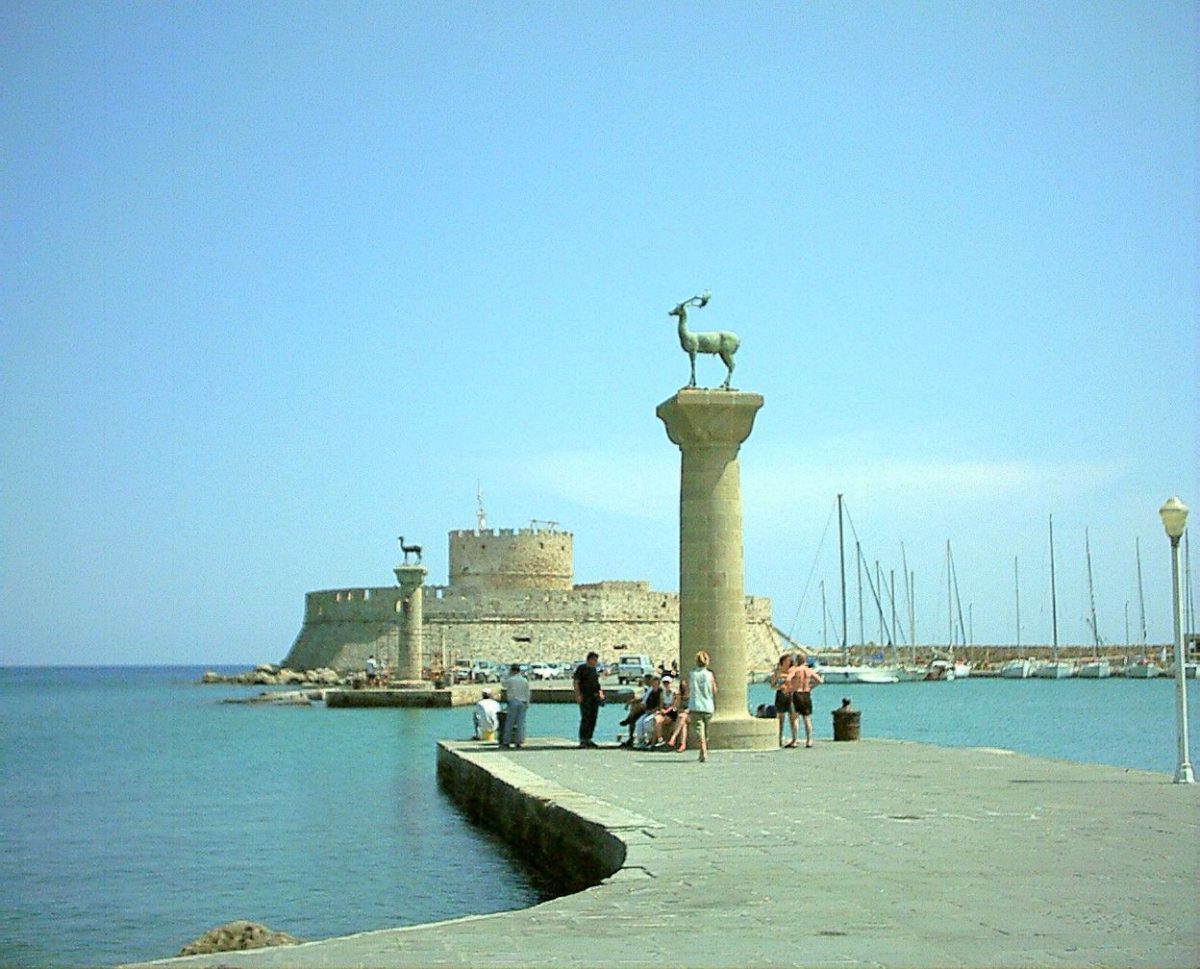
Set aside a full day for the Lindos Acropolis. It sits on a cliff above the sea, and climbing it under the scorching July sun (33°C) is a challenge, but in October, it’s a pleasant walk. Along the way, you can stop at Tsambika Beach. However, visiting Butterfly Valley in Rhodes in October is pointless: butterflies gather there in the summer, and by autumn, few remain.
Rhodes’ weak point is November: rainfall jumps to 215 mm. October is still dry, but by the end of the month, the tourist season on the islands usually winds down.
Tunis: Warm Sea and Carthage Nearby
In terms of water and air temperatures, October in Tunis is nearly identical to Bodrum: the sea is 24°C, daytime highs reach 27°C, and nights cool to 18°C. But Tunis is a capital city, not a resort. Swimming is best at the suburban beaches to the northeast, along the coast near Carthage, while the city itself offers other attractions.
First and foremost is the Bardo Museum, one of the world’s largest collections of Roman mosaics. For those who love antiquity, it alone justifies the trip. Carthage begins at Byrsa Hill, where the Punic city once stood and where Saint Louis Cathedral now stands. Nearby is the Carthage Amphitheatre. In the medina, you’ll find the Hammouda Pacha Mosque, a 17th-century mosque with an octagonal minaret.
If you’re up for longer excursions, there’s Kerkouane on the Cape Bon peninsula—a Punic city that the Romans never built over—and Thuburbo Majus, a Roman city in the hills southwest of the capital. At 27°C, both trips are far more pleasant than in the summer, when temperatures soar to 36°C.
October is the wettest of the four seaside destinations: 47 mm of rain, twice as much as in Limassol and far more than Bodrum’s 3 mm. Sunshine averages about seven hours a day. The sea remains warm, but a dry week isn’t guaranteed.
Antalya also maintains sea temperatures around 26°C in October; we have a separate article about autumn there.
Where October Is Better for Walking Than Swimming
Sochi: The Sea Is Still There, but Rain Decides Everything
Sochi is a transitional option. The sea temperature in October averages 21°C: those who swim in May will find it sufficient, but others won’t. Daytime temperatures reach 20°C, and nights cool to 12°C. The key figure here is rainfall: 137 mm for the month. That’s less than in September (197 mm), but of all the options, only Batumi is wetter.
So, plan your trip to Sochi in October with the expectation that a rainy day won’t ruin your plans. The city has the Dendrarium, Riviera Park, the Marine Terminal with its spire, and the Art Museum, which comes in handy during a downpour. In Adler, there’s the Olympic Park. On clear days, it’s better to leave the city: head to the mountains at Krasnaya Polyana, visit the Agura Waterfalls, or explore the Yew and Boxwood Grove. After autumn rains, there’s more water in the gorges, and the waterfalls look more impressive than in the dry August.
This much rainfall doesn’t mean drizzle—it means several full days of rain. On a short trip, they could coincide entirely. If weather is more important than the sea, Tbilisi, Yerevan, and Samarkand are more reliable.
Tbilisi: 21°C During the Day and a City on Slopes
In October, Tbilisi averages 21°C during the day, 8°C at night, and 57 mm of rainfall. For a city where almost everything of interest lies on slopes, this is ideal. In August, when temperatures hit 33°C, climbing to Narikala Fortress is exhausting, but in October, you can walk there without even noticing the effort.
The classic route can be done in a day. From the Old Town, head to the Sulfur Baths of Abanotubani under their brick domes, then up to Narikala, down to the glass Peace Bridge over the Kura River, and across to the Metekhi Church on the cliff. In the evening, stroll along Rustaveli Avenue. By the way, visiting the baths on a cool October evening is more pleasant than in July. You can also climb to Holy Trinity Cathedral, one of the largest Orthodox churches, completed in 2004.
Near Tbilisi is Mtskheta, the ancient capital with Svetitskhoveli Cathedral, and Jvari Monastery on a hill above the confluence of the Aragvi and Kura rivers. October in Georgia is also the time for Rtveli, the grape harvest.
Nighttime temperatures of 8°C mean a jacket is necessary, and 57 mm of rainfall is more than in Yerevan and Samarkand combined. The cobblestones in the Old Town become slippery when wet. We don’t have sunshine data for Tbilisi, so we can’t say how sunny October is there.
Yerevan: Dry and Eight Hours of Sunshine
In October, Yerevan offers 19°C during the day, 9°C at night, just 6 mm of rainfall for the month, and eight hours of sunshine per day. Among the cities for walking, the weather here is the most predictable: rain is almost nonexistent on average, and the sky is often clear. September is still 25°C, and November drops to 11°C, so October falls right in the middle.
The city is best explored from above. The Cascade, a massive staircase with terraces and contemporary art, leads to a hill with a view of Mount Ararat on clear days. Nearby is the Matenadaran, a repository of ancient manuscripts, and in the center is Republic Square with the National History Museum of Armenia. Separately, on its own hill, stands the Tsitsernakaberd Memorial. It’s a heavy place.
October is the best month for excursions from Yerevan. Garni Temple, an ancient temple above a gorge, and Geghard Monastery, partly carved into the rock, are usually combined into one trip. Khor Virap stands opposite Mount Ararat, and on a dry, clear day, the mountain rises directly behind the monastery walls.
But 9°C at night feels colder than the daytime figures suggest, and at Garni and Geghard, which are higher than the city, evenings are even cooler. And Mount Ararat isn’t guaranteed to be visible: haze can linger even on clear days.
Samarkand: Warm Days and Cold Nights
In October, Samarkand has daytime temperatures of 21°C, nighttime lows of 8°C, and eight hours of sunshine. In July, temperatures reach 36°C, and you have to dash between patches of shade on the squares. In October, you can finally explore the city on foot in a day.
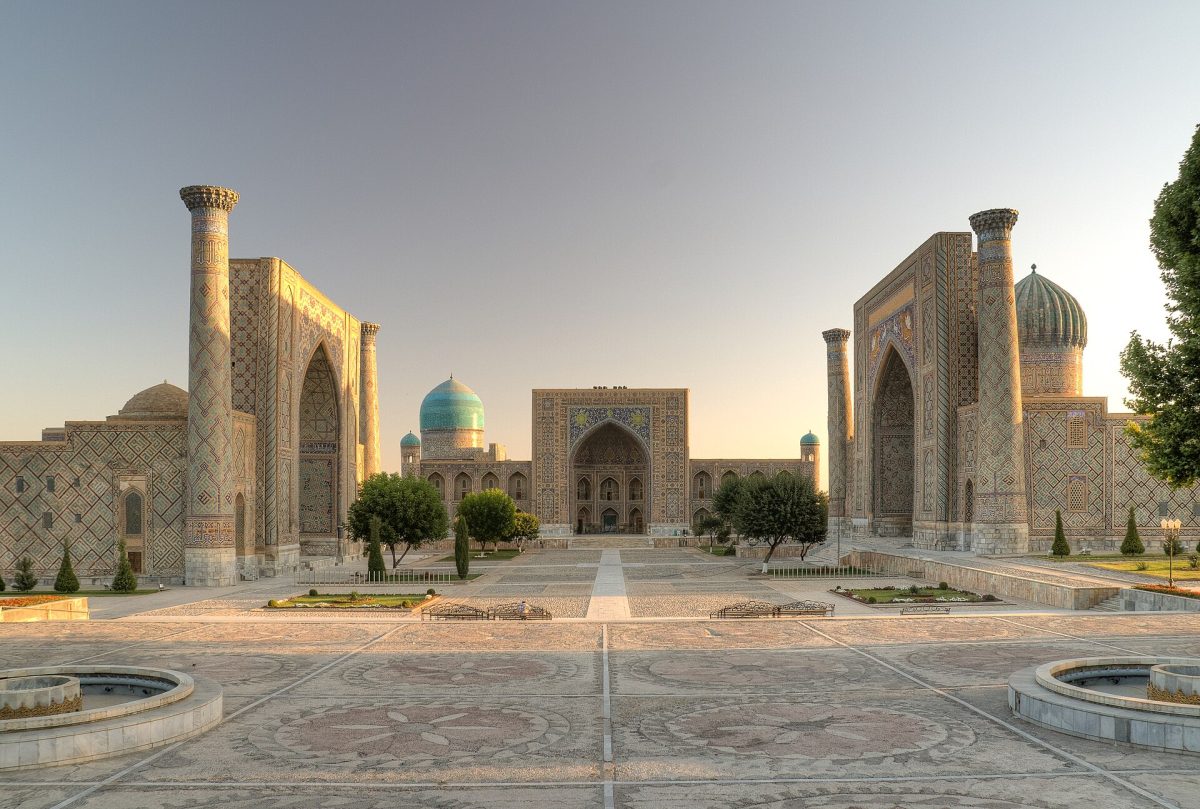
Everything of interest is nearby. Registan Square is enclosed on three sides by madrasas, and it’s best viewed twice: during the day and in the evening. Gur-e-Amir Mausoleum is the burial place of Tamerlane, with a ribbed, turquoise dome. Shakhi-Zinda is a street of mausoleums adorned with tiles and, perhaps, the most striking place in the city. The soft October light suits it better than the harsh summer sun. Bibi-Khanym Mosque impresses with its size, while the Ulugh Beg Observatory fascinates with what remains: a massive arc of a sextant carved into the hill.
The difference between day and night here is 13 degrees, the same as in Tbilisi, so dressing in layers is necessary. October also brings the return of rain: 33 mm, compared to just 2 mm in September. By November, daytime temperatures drop to 14°C. And one more thing: the monuments on the main squares have been heavily restored, and Bibi-Khanym was largely rebuilt.
Batumi in October Is Best Skipped
Georgia’s sea in October is tricky. Batumi averages 445 mm of rainfall in October—three times more than Sochi. The sea is still 21°C, but you’ll likely be looking at it through the rain.
Early or Late in the Month
Averages are monthly means, and October changes quickly. In Bodrum, the sea temperature is 26°C in September, 24°C in October, and 22°C in November. Roughly speaking, the beginning of October is closer to September, and the end is closer to November.
For swimming, the choice is simple: the first half of the month. If your vacation falls in the last days of October, Limassol is the most reliable option. Even in November, the sea there averages 23°C—warmer than the others—and rainfall is just 28 mm, compared to 159 mm in Bodrum and 215 mm in Rhodes.
The same applies to walking, but even more so. In Tbilisi, Yerevan, and Samarkand, November averages seven degrees colder than October, and the last week of the month is noticeably cooler than the first. If your plans include mountain trips around Yerevan or long days on your feet in Samarkand, don’t wait.


