Where It's Warm in November: Sea, Air, and Rain Across Eight Destinations

Photo: Wadiia, CC BY-SA 4.0
In short: November is warm by the Red Sea, the Persian Gulf, in Oman, and further on in Goa and Bali. In Hurghada and Sharm El Sheikh, the water is around 26–27°C, in Dubai, Abu Dhabi, and Muscat — 29°C, near Bali — 30°C, and in Egypt, the UAE, and Oman, there’s almost no rain for the month. The Mediterranean has already closed its swimming season by November, while Phuket, Krabi, and central Vietnam haven’t opened theirs yet.
Every "where to go in November" list features the same description for all destinations: "+30 and sunshine." That doesn’t help you choose. A beach holiday actually depends on four things: how warm the water is, how hot it is during the day, whether the air cools down at night, and how much rain falls in a month. And these factors vary significantly across destinations.
All figures in this article are long-term November averages from Meteostat and Open-Meteo stations. These are multi-year averages, not forecasts: a specific November might be a couple of degrees warmer or cooler, and rain, which is spread out over the month on average, often falls in just two or three days in reality.
November in Numbers
| Destination | Daytime, °C | Nighttime, °C | Sea, °C | Precipitation per month, mm | Sunshine, hours per day |
|---|---|---|---|---|---|
| Hurghada | 29 | 19 | 26 | 0 | — |
| Sharm El Sheikh | 26 | 16 | 27 | — | — |
| Dubai | 32 | 23 | 29 | 10 | — |
| Abu Dhabi | 31 | 23 | 29 | 1 | — |
| Muscat | 29 | 26 | 29 | 2 | — |
| Salalah | 31 | 23 | 28 | 17 | 9 |
| Goa (Panaji) | 33 | 23 | 29 | 52 | 8 |
| Bali (Denpasar) | 31 | 26 | 30 | 66 | 9 |
| Antalya | 22 | 13 | 24 | 105 | 7 |
| Phuket | 32 | 26 | 30 | 196 | — |
| Krabi | 31 | 23 | 30 | 330 | — |
| Da Nang | 29 | 23 | 27 | 442 | 3.5 |
A dash means there’s no data for that location in our sources.
The sea is warm everywhere, even in Antalya, where it can still be called swimmable. The difference lies elsewhere. In Egypt, nights are cool, and you’ll need a sweater by dinner. In Muscat and Bali, the temperature stays at 26°C at night. Meanwhile, Phuket, Krabi, and Da Nang show that warm water doesn’t necessarily mean a perfect holiday: November brings real tropical downpours there.
The Red Sea: Closest and Driest
Hurghada
November in Hurghada is when the heat has receded, but the sea hasn’t cooled yet. In October, daytime temperatures reached 33°C, while the November average is 29°C, with nights at 19°C. The water is 26°C. Rainfall averages zero millimeters: not even a single drop accumulates over the month.
The main attraction here is underwater. Boats take visitors to Giftun Island: it has almost no vegetation, just rocks and sand, but the surrounding coral reefs are perfect for snorkeling. Divers head to Abu Ramada, a small island with a reef stretching along its shore. Those tired of the sea can go on a desert safari just outside the city, while in the evening, they stroll along Hurghada Marina and the city’s waterfront.
At 26°C, the water is the coolest among destinations where November is in season, and by December, the average drops to 24°C. The coastline here is also windy: when it blows, it feels noticeably colder on a boat or an open beach than you’d expect at 29°C in the shade.
Sharm El Sheikh
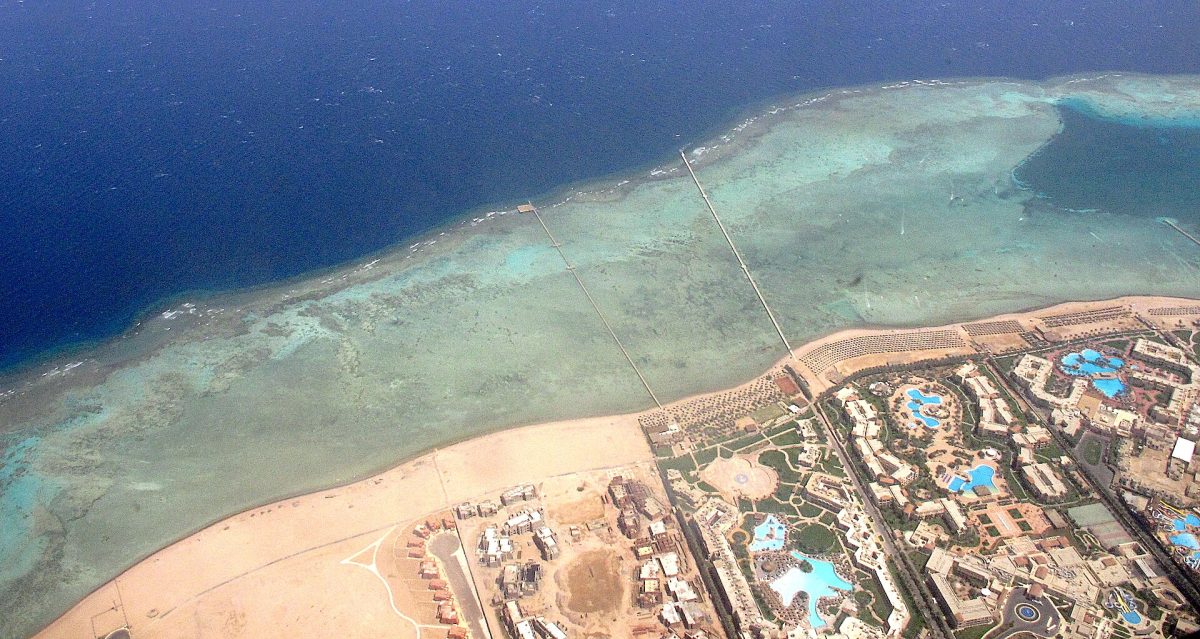
Sharm El Sheikh has a rare November setup: the water is warmer than the air. The sea is at 27°C, while daytime temperatures reach 26°C and drop to 16°C at night. This is ideal for reefs: no heat, and the water is a degree warmer than in Hurghada.
The main reefs are in Ras Mohammed National Park at the southern tip of Sinai, established in 1983 as the country’s first. North of the city, between Sharm and Dahab, lies the Nabq Protected Area, where the desert meets the sea. The oldest and liveliest part of the resort is Naama Bay, while for souvenirs, visitors head to the Old Market. A separate day should be set aside for Mount Sinai (2,285 meters high) and the Monastery of St. Catherine at its foot, as well as the Colored Canyon in the peninsula’s interior, near Nuweiba.
Nights here are chilly: 16°C is no longer a temperature for sitting on a terrace in just a T-shirt. Climbing Mount Sinai at dawn means it’s even colder at the summit before sunrise, so a warm jacket is essential. We don’t have rainfall data for Sharm, so we can’t promise anything about rain.
The Persian Gulf: Warm Sea and City Life
Dubai
November is the month when Dubai becomes livable outdoors again. In October, daytime temperatures reach 36°C, in November — 32°C, and in December — 28°C. Nights are at 23°C. The sea is at 29°C — nearly three degrees warmer than in Hurghada. Precipitation is 10 mm.
People live by the water in Palm Jumeirah and Dubai Marina, a district built around an artificial canal about three kilometers long. In the evening, when the heat subsides, visitors head to the fountain at Dubai Mall and the At the Top observation deck in the Burj Khalifa. Old Dubai is the Al-Fahidi Historical Neighbourhood and the Gold Souk. For mountains and cooler air, they travel to Hatta.
But this is a city, and the beach here is squeezed between skyscrapers and construction sites, not in quiet seclusion. Water at 29°C feels more like a hot bath than a refreshing dip. And the first ten days of November are still close to October’s heat, so it’s better to stay in the shade by midday.
Abu Dhabi
The sea is the same temperature — 29°C, with daytime temperatures at 31°C and nights at 23°C. The difference is in the rain: Abu Dhabi gets just 1 mm in November, almost like Hurghada and noticeably less than Dubai. The city itself is also calmer than Dubai.
The Sheikh Zayed Mosque, opened in 2007, can accommodate over forty thousand people. The Louvre Abu Dhabi, designed by Jean Nouvel, opened in 2017 on Saadiyat Island. Besides these, it’s worth seeing the presidential Qasr Al Watan Palace, Qasr Al Hosn fort, and the Natural History Museum. The Corniche waterfront is best for walks closer to sunset. Yas Island is dedicated to entertainment, with Ferrari World and Yas Waterworld parks.
Abu Dhabi is spread across islands, so you’ll need a taxi to get between the center, Saadiyat, and Yas each time. The mosque only allows visitors in modest clothing, and women need a headscarf: it’s best to think about this at the hotel, not at the entrance.
Oman: Quieter and Warmer at Night
Muscat
Oman’s capital in November offers the same warm sea as the UAE but without skyscrapers: the water is at 29°C, daytime temperatures at 29°C, and just 2 mm of rain. Mountains here come right up to the gulf, and the city stretches in a narrow strip between them and the water.
The Sultan Qaboos Grand Mosque opened in 2001 after six years of construction. The liveliest part of the city is the Matrah Corniche and the Matrah Souq behind it. Overlooking the old city’s bay are the Jalali and Mirani Forts, with the Al-Alam Palace nearby. For evenings, there’s the Mascat Opera House; for daytime, the National Museum of Oman and Beit Al Zubair.
At night, it’s 26°C, almost like daytime: the air is humid, and sleeping without air conditioning is difficult. Tourists aren’t allowed in the mosque all day, so it’s best to check the schedule in advance. In December, the average rainfall jumps to 47 mm, making November the last truly dry month.
Salalah
Salalah is a different side of Oman, on the opposite end of the country by the Arabian Sea. Daytime temperatures reach 31°C, nights are at 23°C, the sea is at 28°C, and there are nine hours of sunshine per day. Rainfall is 17 mm.
Visitors come here for the history of frankincense. Khor Rori is the ruins of the Sumhuram port, founded around the 3rd century BCE: from here, resin was shipped to the Mediterranean and India. The port stands at the mouth of a wadi, where freshwater meets the sea and birds nest. Frankincense is still sold at the Al-Husn market. On Al-Mughsail Beach, there are cliffs with grottos that roar and spout water when waves hit. In the Dhofar Mountains stands the tomb of Job, the prophet Ayyub.
But Salalah’s most famous images — green mountains and waterfalls — are captured during the khareef, the summer monsoon season. By November, Dhofar is brown again, and waterfalls are, at best, thin streams. The coast here is oceanic: Al-Mughsail has waves, making it a place for walks, not calm swimming. And rainfall in November is almost double that of October, though 17 mm is still a small amount in absolute terms.
Long-Haul Flights: Goa and Bali
Goa
In Goa, the monsoon retreats in November. In October, Panaji gets 215 mm of rain, in November — 52 mm, and in December — just 18 mm. The sea is at 29°C, daytime temperatures at 33°C, nights at 23°C, and there are eight hours of sunshine per day.
In the south of the state lies Palolem Beach, a crescent of white sand between two rocky capes. In the north is Anjuna, where hippies gathered in the 1960s. In Old Goa stands the Basilica of Bom Jesus, built between 1594 and 1605, and at the mouth of the Mandovi River is the Portuguese Aguada Fort from 1612. For colorful bazaars, visitors head to Mapusa Market. November is the best time to see Dudhsagar Falls, which cascade in four tiers from a height of about 310 meters: after the monsoon, there’s still plenty of water, but as the dry season progresses, the falls thin out.
At 33°C at midday with high humidity, this is the highest daytime temperature among all destinations. The 52 mm of rain means you might still get caught in a downpour in the first half of the month. The coastline is just shaking off the rainy season in early November, and not all beach cafes have reopened by then.
Bali
The warmest sea among dry destinations — 30°C, with daytime temperatures at 31°C, nights at 26°C, and nine hours of sunshine per day. Precipitation is 66 mm, almost the same as in October. But in December, the average in Denpasar jumps to 213 mm: November is the last month before the rainy season.
The Tanah Lot Temple stands on a rock off the west coast: at high tide, it becomes an island, and at low tide, you can walk to it across the rocks. The Uluwatu Temple is on the edge of a cliff about seventy meters high at the island’s southern tip. Inland Bali features the Taman Ayun and Ulun Danu Bratan temples and Mount Batur, a 1,717-meter volcano inside a caldera about thirteen kilometers in diameter. For swimming with children, Sanur Beach is ideal: the reef tames the waves, and the sun rises right over the sea. The same area has the Le Mayer Museum, while Denpasar itself has the Bali Museum and Badung Market.
Denpasar is the provincial capital, not a resort, so you’ll need to stay elsewhere to be by the sea. Water at 30°C is hardly refreshing. And the closer to December, the higher the chance that the dry season will end early: the second half of November in Bali is already a gamble.
Where It’s Off-Season in November
Antalya in November is no longer summer. Daytime temperatures reach 22°C, nights drop to 13°C, and the sea is at 24°C: only the hardy still swim, but with 105 mm of rain compared to 23 mm in October and seven hours of sunshine per day, it’s a time for the old city and ancient ruins, not the beach.
Phuket and Krabi look great on paper: the sea is at 30°C, and daytime temperatures reach 31–32°C. But Phuket gets 196 mm of rain in November, and Krabi gets 330 mm. That’s an improvement over October, when they get 429 mm and 356 mm, respectively, but the season on the Andaman coast only begins in December, when precipitation drops to 128 mm and 145 mm.
Da Nang is even more extreme: 442 mm of rain and just three and a half hours of sunshine per day. In October, over a meter of rain falls there, and November is just emerging from that peak.
Be cautious with Zanzibar and Sri Lanka too. In Zanzibar, November sees 296 mm of rain according to our averages, over four times more than in October: the short rains are starting. In Colombo, on the west coast, it’s 365 mm.
Early or Late November
Weather changes within the month too, and in different directions. In the UAE and Oman, the later it gets, the milder the air: in Dubai, the daytime average drops from 36°C in October to 28°C in December, but the sea also cools from 32°C to 25°C. In Egypt, the sea is better in early November: in Hurghada, the water goes from 27°C in October to 24°C in December. In Goa, Phuket, and Krabi, the opposite is true: the closer to December, the drier it gets. In Bali, early November is better before the rains gain strength.
If you want a short flight and don’t mind cool evenings, Egypt remains an option: Sharm El Sheikh for the reefs, Hurghada for dry weather. The warmest sea without rain is in Abu Dhabi and Muscat. Salalah suits those who want Arabia without skyscrapers and are prepared for ocean waves. If you have two weeks or more, Goa is better in the second half of the month, and Bali in the first.


