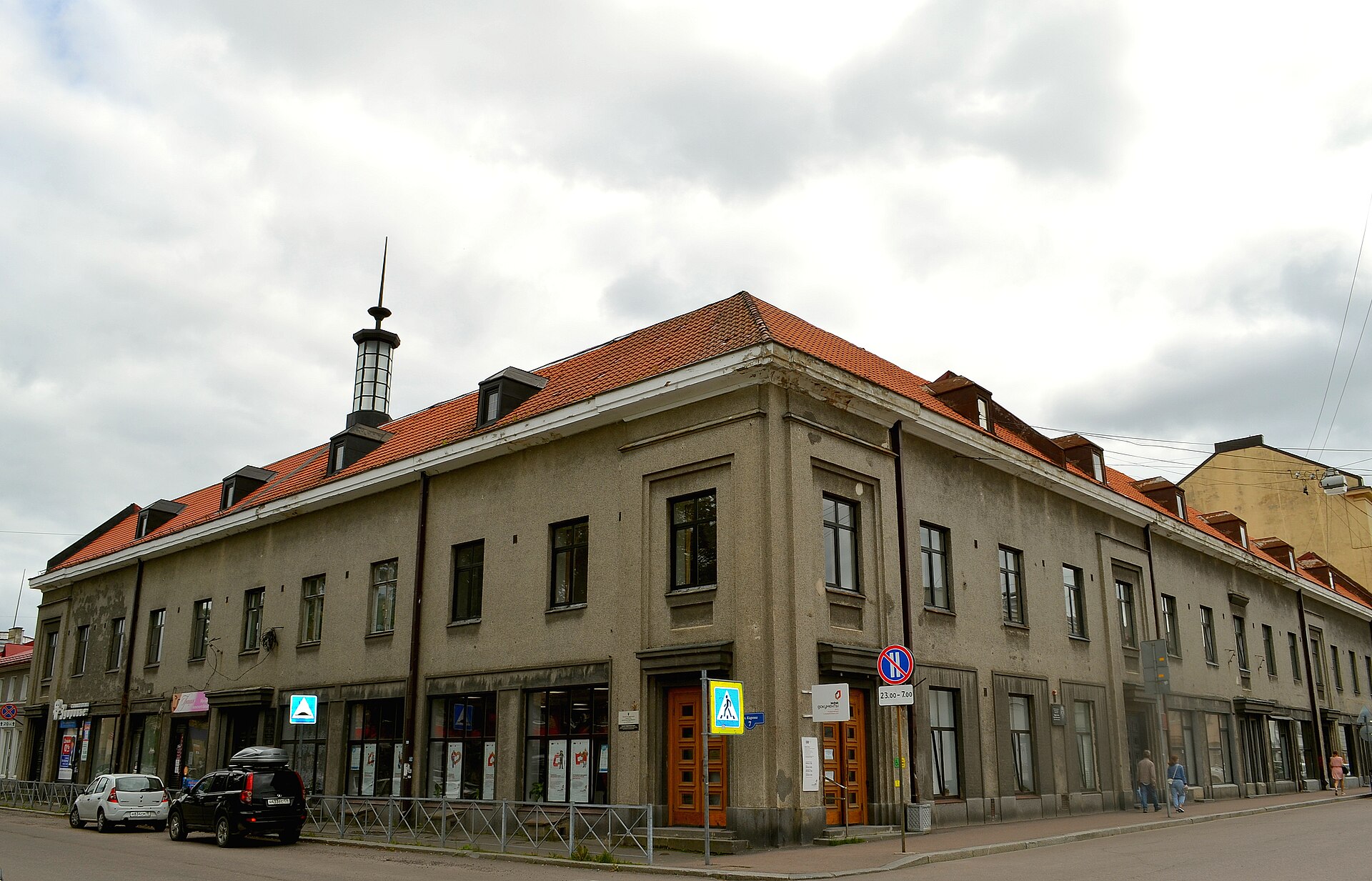
Kirov Square in Sortavala is one of those places where city life moves at its own unhurried pace, steady and unmistakable. There’s no rush here, no metropolitan chaos—just the quiet rhythm of a Karelian town, where history lingers in the air and daily life unfolds with effortless calm. Tucked in the heart of Sortavala, the square changes with the hours, shifting from the crisp stillness of early morning to the soft glow of evening, when lamplight stretches long shadows across the old buildings.
The architecture here tells a story of layers, each era leaving its mark without imposing a single style. Wooden houses with intricate window frames stand beside Soviet-era stone buildings, while hints of Finnish modernism peek through in places—a quiet reminder of the time when Sortavala was part of Finland. The former bank building, constructed in the early 20th century, is particularly striking. Its large windows and decorative details have weathered time gracefully, as if the decades barely touched it.
The square’s history is woven into the fabric of Sortavala itself. Founded in the 17th century, the town spent much of its existence as a borderland, caught between the interests of Russia, Sweden, and Finland. When it became part of the Grand Duchy of Finland in the 19th century, the square emerged as a focal point of urban life. After the revolution and the Soviet-Finnish wars, Sortavala found itself under Soviet rule, and the square was renamed in honor of Sergei Kirov, a prominent Bolshevik leader. Yet for many locals, it remains simply the Central Square, a name that reflects its enduring role in the life of the town.
Today, Kirov Square is more than just an administrative hub—it’s where the threads of daily life converge. Festivals, open-air concerts, and the town’s Christmas tree in winter all find their place here. In summer, cafés spill onto the square, offering a spot to sit with coffee and watch the world go by. Autumn is especially beautiful, when the trees blaze with gold and crimson, and the air carries the scent of fallen leaves. Around the square, small shops, pharmacies, and guesthouses make it a practical center for both residents and visitors.
The most prominent landmark here is the statue of Kirov, a bronze figure on a tall pedestal gazing toward the lake. It’s not a monument that demands attention, but it has become a familiar part of the landscape, as much a fixture as the old streetlamps that flicker on at dusk. Nearby, benches are often filled with locals—retirees enjoying the quiet, young families with children, or travelers exploring northern Karelia.
Kirov Square isn’t a place that dazzles at first glance. There are no grand cathedrals or palaces here, just the quiet authenticity of a town that has seen centuries of change. Walking its paths, you can almost sense the lives that have passed through—how the city adapted under different rulers, how cultures blended and faded. That’s its real value: it doesn’t try to be anything more than what it is. It simply exists, holding onto the past while remaining firmly rooted in the present.
Early mornings on the square are a study in quiet routine. Locals hurry to work or the market, cafés open their doors, and the first sunlight spills across the facades. By evening, the atmosphere softens. Lamplight reflects in windows, voices drift through the air, and the laughter of children blends with the rustle of leaves. In those moments, Kirov Square feels like the heart of Sortavala—a place to pause, breathe in the cool northern air, and let the rhythm of a small Karelian town settle over you.