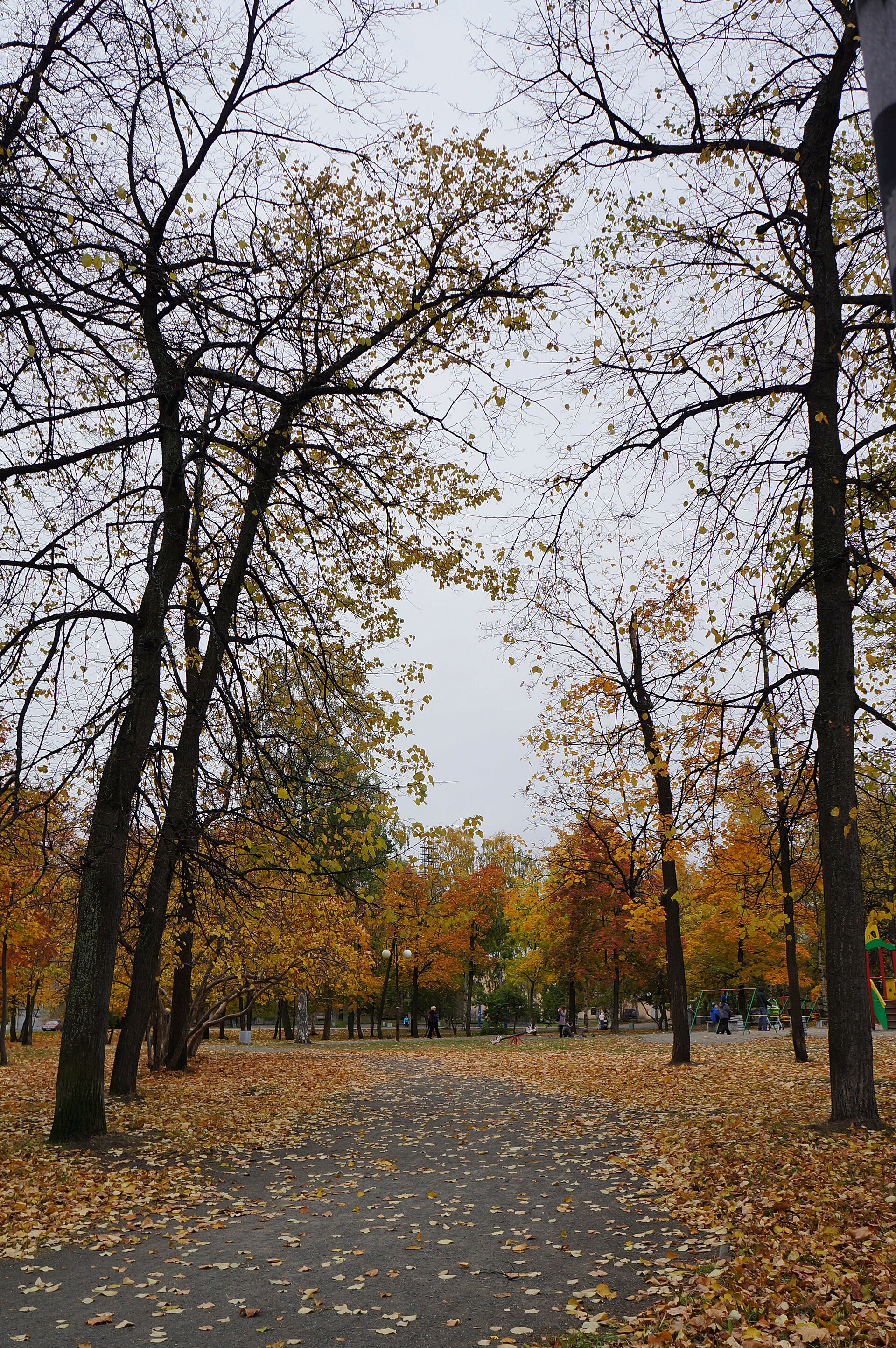
Along the shore of Lake Onega, a short walk from the city center, lies Governor’s Park. It doesn’t announce itself with grand gates or loud signs. Instead, it waits—shaded paths winding past benches, open lawns stretching toward the water, the kind of place where you might sit with a book or let an hour slip by unnoticed.
The park began in the early 1800s, when Petrozavodsk was growing as the administrative center of the Olonets Governorate. Governor Nikolai Emin wanted a public garden here. The spot made sense: the high bank gave views of the lake, and government offices were close by. Over the years, trees were planted, paths were laid, and the park took the shape it has today.
Lindens and maples, some over two centuries old, line the walkways. Their leaves filter the light in summer and rustle in the wind in autumn. Paved paths lead to small squares with benches. At the center, a granite pedestal marks the site of a lost monument. Now, a memorial to those who died in the Great Patriotic War stands there. Nearby, a fountain occasionally runs, its water catching the sunlight.
The park’s edge meets Lake Onega. On clear days, the water seems endless. In summer, fishermen sit along the embankment. In winter, ice fishermen drill holes through the frozen surface. Spring brings apple blossoms and lilacs; autumn turns the trees gold and crimson. Even on gray days, the park feels quiet, as if time moves differently here.
Beyond walks, the park hosts events. Summer brings open-air concerts and theater performances. Winter transforms it with lights and an ice rink on the lake. A small playground draws children, though many prefer to run along the paths or ride bikes.
The park has changed with the city. In the Soviet era, new trees were planted, and sculptures appeared. In the 1960s, it was renamed for the 40th anniversary of the October Revolution. The old name returned later. Today, students cut through on their way to classes, retirees play chess on benches, and families push strollers along the paths.
For locals, the park holds memories. Some remember childhood walks. Others recall first dates under the lindens. Many come simply to think. It doesn’t try to impress. It offers space—a place to rest, to feel connected to the city and its past. Trees, water, sky, and silence.