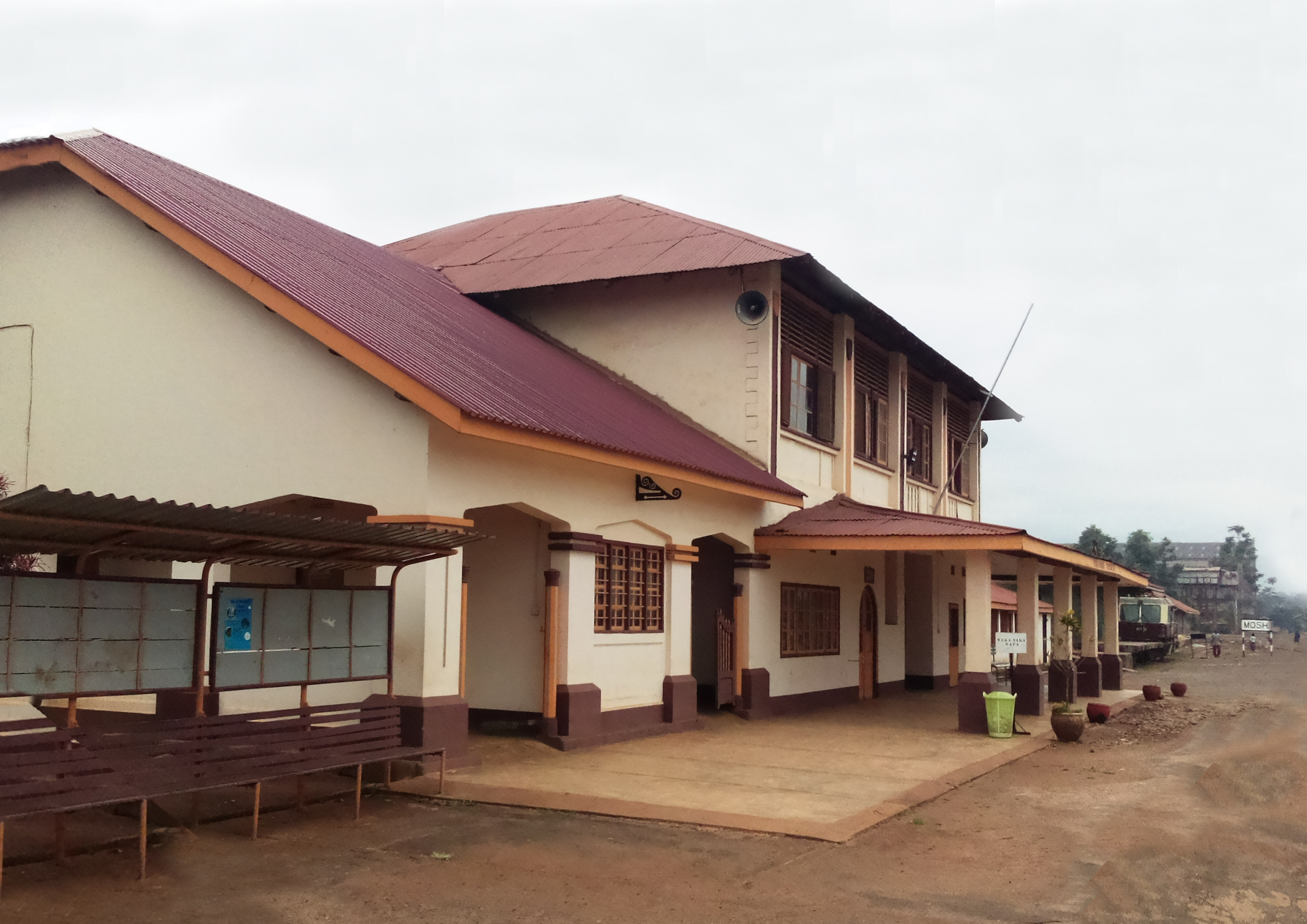
Moshi’s railway station is one of those places that feels suspended in time. Tucked away on the edge of town, it sits where the hum of the streets fades into the quiet of the savanna, where the scent of coffee from nearby plantations mingles with the lingering smoke of old locomotives. Unlike the glass-and-steel transport hubs of today, this station carries the weight of history in every beam and brick. Built in the early 20th century, when Tanzania was part of German East Africa, it was never meant to be just another stop on a map—it was a statement, a lifeline, a piece of the past that refuses to be forgotten.
The architecture is simple but striking. Low arches, sturdy wooden beams, and tall windows filter in soft light, giving the space an almost intimate feel despite its size. The facade is modest, adorned with colonial-era details—arched doorways, slender pilasters, and small corner turrets. Inside, the old wooden benches bear the marks of decades, their surfaces worn smooth by countless travelers. Faded station signs in German and Swahili still cling to the walls, remnants of a time when this place was a gateway to the interior of the country.
The station wasn’t just built for trains—it was built to connect. When the railway first cut through Moshi, it turned a settlement into a trade hub. Coffee, cotton, and other goods flowed through here, linking the coast to the highlands and beyond. Today, trains don’t run as often as they once did, but the station remains a crossroads where farmers, traders, and travelers still pass through.
There’s a slow rhythm to the place. Mornings bring farmers hauling sacks of grain or vegetables, their voices low as they negotiate prices with buyers. By midday, the platform might fill with tourists waiting for the train to Arusha or Dar es Salaam. Vendors weave through the crowd, balancing trays of steaming tea and flatbread. The sounds here are unhurried—the clatter of metal, the murmur of conversations, the occasional laughter of children darting between the carriages.
For all its faded charm, the station is still very much alive. To many in Moshi, it’s more than just a place to catch a train—it’s a gathering spot. If a train is delayed by a few hours, no one seems to mind. People sit on the benches, chat with neighbors, or simply watch the world go by.
The station is a bridge between eras. On one side, it speaks of the colonial past, when railways were tools of empire. On the other, it tells of how those same railways reshaped lives, turning remote villages into towns. Walk along the tracks today, and you’ll see rusted freight cars still in use next to the occasional sleek diesel locomotive. It’s a place where the past isn’t just remembered; it’s still part of the everyday.
For travelers, the station can be an unexpected discovery. There are no souvenir stalls or tourist traps here. Instead, it offers a glimpse of Tanzania as it really is. If you’re lucky, you might see a train pull away from the platform, its carriages heavy with the scent of the savanna.
The station isn’t pristine. Paint peels from the walls, wooden planks creak underfoot, and weeds sometimes push through the cracks in the platform. But that’s part of its appeal. It’s a place that feels lived-in, imperfect, and real. Maybe one day it will be restored, but for now, it remains a quiet, enduring piece of Moshi’s story.