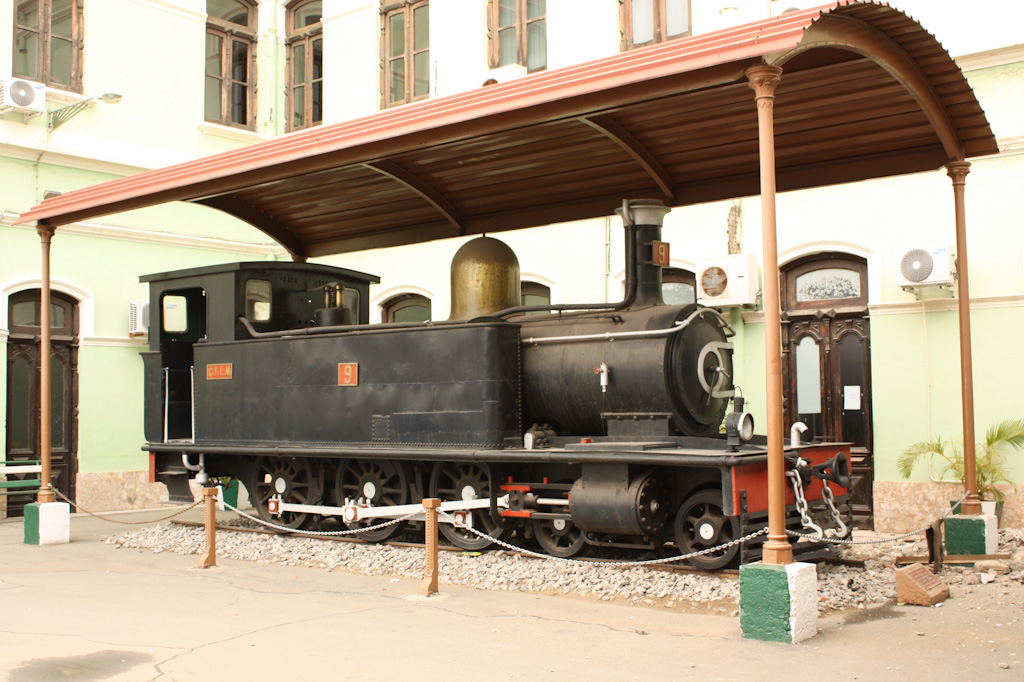
Maputo’s train station is one of those places that feels like a quiet survivor of another era, standing at the edge of the city’s hustle with a kind of dignified patience. Built in the early 20th century, it was designed by Gustave Eiffel’s firm, though the name often sparks debate—some say it was his direct work, others attribute it to his collaborators. Either way, the station carries the unmistakable mark of that time: wrought-iron arches, a sweeping roof, and a sense of grandeur that was meant to impress. It wasn’t just a transport hub; it was a statement, a gateway to the Portuguese colonial ambitions in southern Africa. The railway line it served connected Maputo—then known as Lourenço Marques—to Pretoria, stitching together territories that were politically and economically intertwined.
The architecture is what lingers in the memory. The station’s facade is a mix of neoclassical and industrial elements, with tall windows and a clock tower that still keeps time, though the trains no longer run with the same frequency they once did. Inside, the main hall feels vast, with high ceilings and a checkerboard of light filtering through the ironwork. The platforms, once bustling with passengers and cargo, now see only occasional use, mostly for freight or the rare passenger service. Yet the space doesn’t feel abandoned—it’s more like a place that has settled into a slower rhythm, one that suits the city around it.
For much of the 20th century, the station was the lifeblood of Maputo’s economy. The railway brought in goods from South Africa, Rhodesia (now Zimbabwe), and beyond, feeding the port and the city’s markets. It was a vital link in a network that stretched across the region, and for many Mozambicans, it was the first glimpse of the capital—a place of promise, or at least of work. The station saw waves of migration, from laborers heading to the mines of Johannesburg to families moving between rural areas and the city. Even after independence in 1975, when the country’s name and borders changed, the station remained a constant, though the wars that followed took their toll on the infrastructure.
Today, the station is more of a historical landmark than a functional one. The trains that do run are often delayed, and the once-busy ticket counters now serve only a handful of passengers. But the building itself has been preserved, partly because of its architectural value and partly because it’s a piece of the city’s identity. There’s talk of restoration, of turning it into a museum or a cultural center, but for now, it remains what it has always been: a place of transit, even if the movement has slowed. The station’s clock still ticks, the ironwork still creaks in the heat, and the platforms still wait for trains that may never come.
Walking through the station, you get a sense of the layers of history embedded in its walls. The colonial-era tiles, the faded signs in Portuguese, the graffiti that’s crept in over the years—all of it tells a story. The station was never just about trains; it was about power, about connection, about the way people and goods moved through the world. In its heyday, it must have been a place of noise and urgency, of steam and shouting. Now, it’s quieter, but the echoes are still there. You can almost hear the whistles of the past, the chatter of passengers, the clatter of wheels on the tracks.
The station’s location adds to its character. It sits near the port, where the Indian Ocean meets the city, and the air carries the salt and the warmth of the coast. The surrounding streets are a mix of old colonial buildings and newer, more makeshift structures, reflecting Maputo’s own evolution. Nearby, the Central Market buzzes with activity, selling everything from fresh fish to secondhand clothes, while the streets leading to the station are lined with vendors and minibuses. The station isn’t isolated; it’s part of the city’s fabric, even if its role has changed.
For visitors, the station is worth a stop not just for its architecture, but for the way it captures a moment in time. It’s a reminder of how cities grow and shift, how infrastructure that was once vital can become almost obsolete, yet still hold meaning. The station doesn’t demand attention—it doesn’t have the polished sheen of a tourist attraction—but it has a presence, a quiet authority. You don’t need to know its history to feel it; the weight of the past is there in the details, in the way the light falls through the ironwork, in the way the building seems to breathe with the city around it.
There’s something melancholic about it, too. The station is a relic of a time when rail travel was the height of modernity, when the world felt smaller because of it. Now, it’s a place that time has almost passed by, but not quite. The trains may be fewer, the crowds thinner, but the station endures. It’s a testament to the idea that places, like people, carry their histories with them, even as the world changes around them. And in a city like Maputo, where the past and present are always in conversation, that’s something worth noticing.