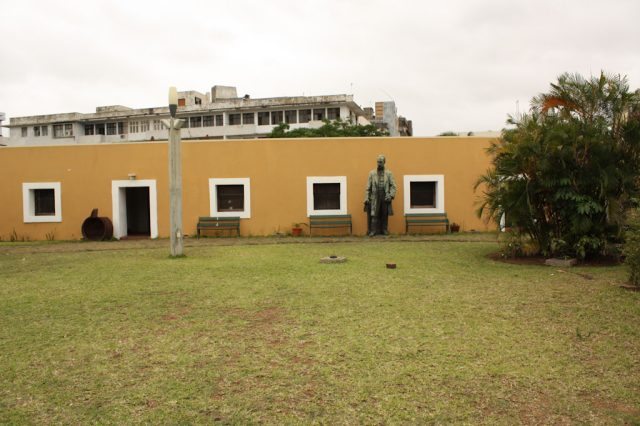
The Money Museum in Maputo might sound like a niche attraction at first glance, but it reveals itself as something far more compelling—a place where currency becomes a lens through which to view the tangled threads of history, politics, and culture in Mozambique. Housed in the country’s capital, the museum does more than display banknotes and coins; it traces the story of a nation through the objects that shaped its economy, its struggles, and its aspirations. There’s nothing dry or academic about the experience. Instead, each exhibit feels like a fragment of a larger narrative, where every coin or bill carries the weight of change, resilience, and sometimes, hardship.
The museum’s origins are deeply tied to Mozambique’s journey as an independent nation. After gaining sovereignty in 1975, the country faced the challenge of building its own financial system from scratch. The Banco de Moçambique, under whose stewardship the museum was established, became a symbol of this new chapter. The collection began with relics from the colonial era—Portuguese escudos, early Mozambican currency, and later, the metical, introduced in 1980. Over time, the exhibits expanded to include rare pieces from across Africa, Europe, and Asia, illustrating how global economic currents have shaped this small nation on the Indian Ocean.
The building itself is part of the story. Located in central Maputo, it occupies one of the city’s colonial-era mansions, once home to Portuguese officials or merchants. High ceilings, heavy wooden doors, and intricate tile floors evoke the days when the city was known as Lourenço Marques, a key trading post between Europe and Asia. The museum has preserved much of this architectural character while integrating modern display cases and interactive elements. It doesn’t feel like a dusty archive but rather a space where the past and present coexist, each enhancing the other.
The exhibits begin with the earliest forms of trade in the region, long before the concept of money as we know it took hold. Visitors can see cowrie shells, which served as currency for centuries, alongside barter items like ivory, spices, and textiles. These artifacts underscore how trade has always been central to life here, long before the Portuguese established their coastal forts. The collection then moves to coins and ingots from the 16th and 17th centuries, when Mozambique became part of the Portuguese colonial empire. Some of these pieces are so rare that their value today is nearly incalculable, offering a glimpse into a time when this land was a crossroads of empires.
A dedicated section of the museum focuses on the fight for independence and the early years of sovereignty. Here, banknotes bearing the portraits of Mozambican leaders sit alongside documents detailing the nationalization of banks and the hurried printing of new currency to replace the Portuguese escudo. This part of the exhibit is particularly striking because it captures a period of rapid, often chaotic change. The 1980s, for instance, saw hyperinflation, and the museum displays banknotes with denominations in the millions of meticais—a stark reminder of those turbulent times. Nearby, coins and bills from the 21st century reflect the country’s gradual stabilization, offering a contrast that highlights both progress and lingering challenges.
What sets the Money Museum apart is its ability to make history tangible. Interactive displays invite visitors to engage with the exhibits in unexpected ways. You can hold a replica of a gold ingot once shipped from Mozambique to Lisbon, or use special equipment to distinguish real banknotes from counterfeits. Workshops for both children and adults explore the evolution of currency production, from hand-struck coins to modern security features, and explain why some banknotes are considered works of art. The museum also houses a small library with books on economics and numismatics, a quiet corner for those who want to delve deeper into the subject.
While the museum’s focus is specific, its appeal is broad. Historians will find echoes of political upheavals, artists can admire the intricate designs of old banknotes, and travelers gain a deeper understanding of how Mozambique’s past has shaped its present. The atmosphere is unhurried, with no crowds to rush you along, allowing time to linger over each exhibit. It’s the kind of place where you might find yourself absorbed in the details of a 19th-century coin or the story behind a particular banknote, only to look up and realize an hour has passed.
Maputo itself is a city of contrasts, where colonial architecture stands alongside modern skyscrapers, and bustling markets give way to quiet streets lined with bougainvillea. The Money Museum fits seamlessly into this mosaic, another piece of the puzzle that helps make sense of the city’s layered identity. After visiting, it’s worth taking a walk through the surrounding streets, stopping at a café in Praça da Independência, or heading to the waterfront to see how the city lives today. Because money, after all, is more than just metal and paper—it’s a reflection of the people who earn it, spend it, and pass it down through generations. The museum doesn’t just tell the story of currency; it tells the story of Mozambique itself.