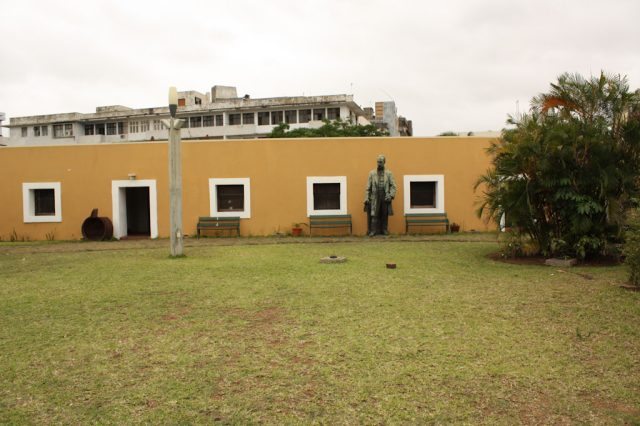
Tunduru Gardens is one of those quiet corners of Maputo where people come not for grand sights or entertainment, but simply to step away from the city’s rush. Tucked between busy avenues in the heart of the capital, the gardens feel like a world apart, where time moves at its own unhurried pace. There are no crowds, no flashy attractions, no set paths to follow—just shaded walkways, benches, and the quiet hum of everyday life. It’s a place where you can sit with a book, watch the world go by, or do nothing at all.
The gardens date back to the early 20th century, when Maputo was still known as Lourenço Marques and served as the administrative hub of Portuguese East Africa. Designed in the style of European urban parks of the era, Tunduru was laid out with symmetrical paths, fountains, and neatly arranged flowerbeds. The name itself comes from a local word meaning a gathering place or a spot for rest, and that’s exactly what it remains today. Over the decades, the gardens have seen periods of neglect and revival, but their essence hasn’t changed—they’ve always been a place where people come together without needing a reason.
There’s nothing grand about the architecture here, but that’s part of its charm. The main avenue leads to a small fountain, surrounded by palms and shrubs, while metal and wooden benches line the paths—many of them still standing from colonial times. Shaded pavilions offer respite from the midday sun, and the gardens are at their most vibrant during the rainy season, when the air is thick with the scent of damp earth and blooming flowers. It’s a place that feels lived-in, not staged.
Unlike botanical gardens or amusement parks, Tunduru doesn’t dazzle with rare plants or elaborate sculptures. Instead, you’ll find the kinds of trees common to Mozambique—mango, fig, acacia, and a few varieties of palm. The effect is understated, as if the gardens have always been part of the city rather than something artificially imposed. Locals often bring their children here to feed the birds or take a leisurely stroll, while on weekends, you might see students debating their studies or elderly men playing chess under the trees.
In recent years, the gardens have become a low-key venue for small cultural events. Occasionally, there are concerts by local musicians, craft fairs, or poetry readings, but these feel more like an extension of the park’s everyday life than formal performances. For visitors, Tunduru offers a glimpse of how Maputo’s residents live when they’re not catering to tourists. There are no overpriced cafes or souvenir stalls, just the occasional street vendor selling fresh fruit or traditional sweets.
The gardens sit close to other landmarks, like the iconic Maputo Railway Station and the bustling Mercado Central, yet they remain a pocket of calm. Mornings here are especially peaceful, with only birdsong and the distant sounds of the waking city breaking the silence. By midday, the first visitors arrive, and by evening, the park comes alive with people chatting, meeting friends, or simply enjoying the cooler air. As dusk falls, the lampposts flicker on, casting a soft glow over the paths and giving the gardens a timeless quality.
For Maputo, Tunduru is more than just a park—it’s a living record of the city’s past. You can see traces of different eras here: the old trees planted at the turn of the century, the weathered benches from colonial times, and the newer additions that have sprung up in recent years. Everything coexists naturally, without any attempt to preserve the past artificially or force it into a modern mold. That might be why the gardens are so beloved by locals—they don’t try to be anything special, they just are.
If you visit Tunduru, it won’t be for guided tours or historical plaques. There’s no one here to tell you what to see or how to feel. Instead, it’s a place where you can experience Maputo as it really is—unfiltered, unhurried, and deeply human. Some come for solitude, others for conversation, and some just to spend an hour in the shade. The gardens don’t offer ready-made experiences; they give you the space to find your own rhythm in the city. And that, in the end, is what makes them worth visiting.