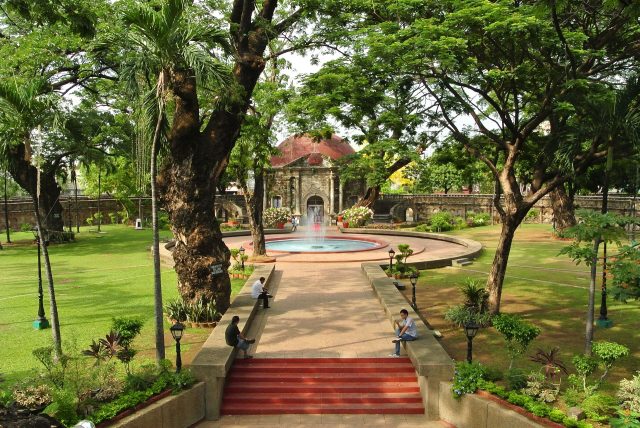
Paco Train Station is one of those quiet corners of Manila that feels suspended in another era. Built in the early 1900s, it once served as a vital link between the capital and the southern provinces, a place where journeys began and ended, where goods and people moved in rhythm with the steam engines that defined progress at the time. Though trains no longer stop here, the station remains, a modest but enduring relic of an age when railroads were more than just transportation—they were a promise of connection and change.
The architecture is unmistakably colonial, with its low arches, sturdy columns, and the warm hue of its tiled roof. The building is small, but its proportions feel just right—solid yet unassuming, as if designed to withstand both time and the weight of countless stories. The wooden doors are worn smooth by decades of use, and the old signs, though faded, still hint at the bustle that once filled the station. There’s a certain dignity in its simplicity, a sense that this was never meant to be grand, just useful.
When the Americans built the Philippine railway system in the early 20th century, the country was still under colonial rule, and the railroads were part of a larger effort to modernize the islands. Paco Station was one of many stops along the line, a place where sugar, copra, and rice made their way from the provinces to Manila’s ports and markets. For generations of Filipinos, it was a gateway—somewhere to say goodbye to loved ones heading south or to welcome them home. The station wasn’t just a building; it was a backdrop to everyday life, a place where the ordinary and the extraordinary intersected.
Today, the station stands in the middle of a city that has long since outgrown it. The streets around it are loud and crowded, filled with the hum of jeepneys, the shouts of vendors, and the constant movement of people. But when you step closer to the old building, the noise seems to fade. It’s easy to imagine the scene a century ago: passengers milling about, porters weaving through the crowd with heavy trunks, the sharp whistle of a departing train cutting through the air. The station may no longer be in use, but it hasn’t been forgotten.
In recent years, there’s been talk of restoring Paco Station, of turning it into a museum or a cultural space that could tell the story of Manila’s railways. So far, those plans haven’t materialized, but the building doesn’t need grand gestures to hold its place in the city. Tourists occasionally stop to take photos, artists sketch its lines, and locals sometimes sit on the benches outside, lost in thought or conversation. It’s a place that doesn’t demand attention but quietly earns it.
For anyone curious about Philippine history, Paco Station is more than just an old building—it’s a piece of a much larger puzzle. It speaks to a time when the country was still finding its footing, when infrastructure was being built not just for efficiency but as a symbol of what the future could hold. The station’s weathered walls don’t reveal their stories easily, but that’s part of what makes them compelling. They’ve seen decades of change, yet they remain, stubbornly unchanged in a city that never stops moving.
The station is also a gateway to Paco itself, one of Manila’s oldest districts. Unlike the polished tourist hubs of Intramuros or Makati, Paco feels lived-in, a place where history isn’t curated but simply exists. The streets are narrow, lined with colonial-era houses and old churches that have stood for generations. There’s no grand narrative here, just the quiet accumulation of time. Walking through the neighborhood, you get the sense that this is the real Manila—the one that doesn’t put on a show for visitors but goes about its business, day after day.
Paco Station isn’t the kind of place that draws crowds. There are no flashy attractions, no must-see sights, no promises of unforgettable experiences. It’s the kind of place you stumble upon, or seek out if you’re the type who finds beauty in the overlooked. It doesn’t shout its importance, but that’s precisely why it matters. In a city that’s constantly reinventing itself, the station is a rare constant, a reminder that some things endure even as everything around them changes. It’s not just a relic of the past; it’s a quiet witness to the lives that have passed through it, and to the ones that still do.