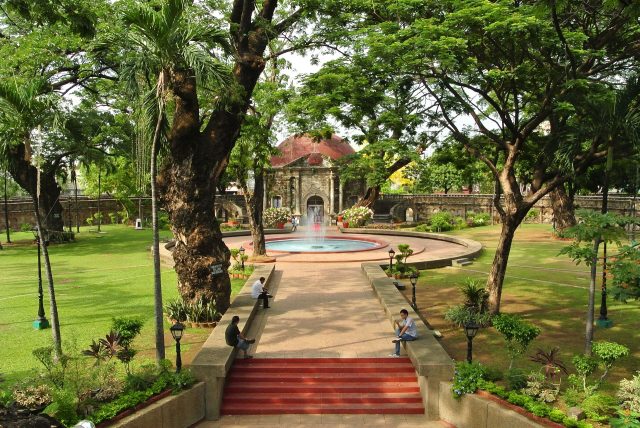
St. Peter’s Church in Paco is one of those quiet places in Manila that feels like a pause in the city’s relentless rhythm. It stands on a side street, away from the usual tourist paths, its white walls and dome rising above the surrounding buildings without overwhelming them. The church doesn’t demand attention, but it holds it—especially for those who wander in not just to pray, but to step into a different pace of life.
The first structure here was a modest wooden chapel built in the mid-1700s, when Paco was little more than a village on the outskirts of Manila. Back then, the church was the heart of the community, a place where people gathered for worship, education, and support. Over time, the wooden chapel was replaced with stone, and by the 19th century, it had taken on the form that still stands today. The architecture is simple—clean lines, rounded arches, and minimal ornamentation—reflecting both the practical needs of the time and the understated elegance of colonial-era design.
Inside, the church feels airy and uncluttered. High windows let in soft, diffused light, and the wooden pews, worn smooth by generations of use, add a sense of warmth. The altar is restrained, almost austere, which only deepens the sense of quiet reflection. There are old icons and relics here, some brought by pilgrims, but the real draw isn’t the artifacts themselves—it’s the stillness they’re part of.
For centuries, St. Peter’s has been more than just a place of worship. During Spanish rule, it served as a center for education and charity, with priests running schools for poor children and offering aid to those in need. The church endured damage during World War II, like much of Manila, but was rebuilt by the community. Today, it remains an active parish, drawing people of all ages, though it’s far from the grand cathedrals that dominate tourist itineraries.
Paco itself is rarely mentioned in guidebooks, which is part of its charm. The streets around the church are lined with small cafes and shops, and the neighborhood has a lived-in, unpolished feel. In the mornings, locals hurry to mass; in the evenings, children play in the nearby square. There’s no attempt to cater to visitors here—just the everyday rhythm of life in Manila, with the church as its steady anchor.
In recent years, St. Peter’s has also become a place for those interested in the Philippines’ colonial history and cultural identity. Guided tours sometimes include the church, offering a glimpse into how Spanish rule shaped the country’s religious and social landscape. The most vivid time to visit is during religious festivals—Christmas, when nativity scenes fill the space, or Holy Week, when processions wind through the streets. These traditions aren’t performed for tourists; they’re part of the fabric of life here, passed down through generations.
What makes St. Peter’s special isn’t just its age or its architecture, but the way it carries history without making a spectacle of it. Manila is a city of contrasts—fast-paced and chaotic, yet full of pockets where time seems to slow. This church is one of them. There are no crowds, no souvenir stalls, no grand pronouncements about its significance. Just a quiet place where the past lingers, not as a relic, but as something still very much alive.