Paco Park sits in Manila’s Paco district, a small green space that feels distant from the city’s noise. Built in the late 18th century as a cemetery for Spanish colonizers and local elites, it later became a park where history remains visible in the old mausoleums and tree roots wrapped around tombstones.
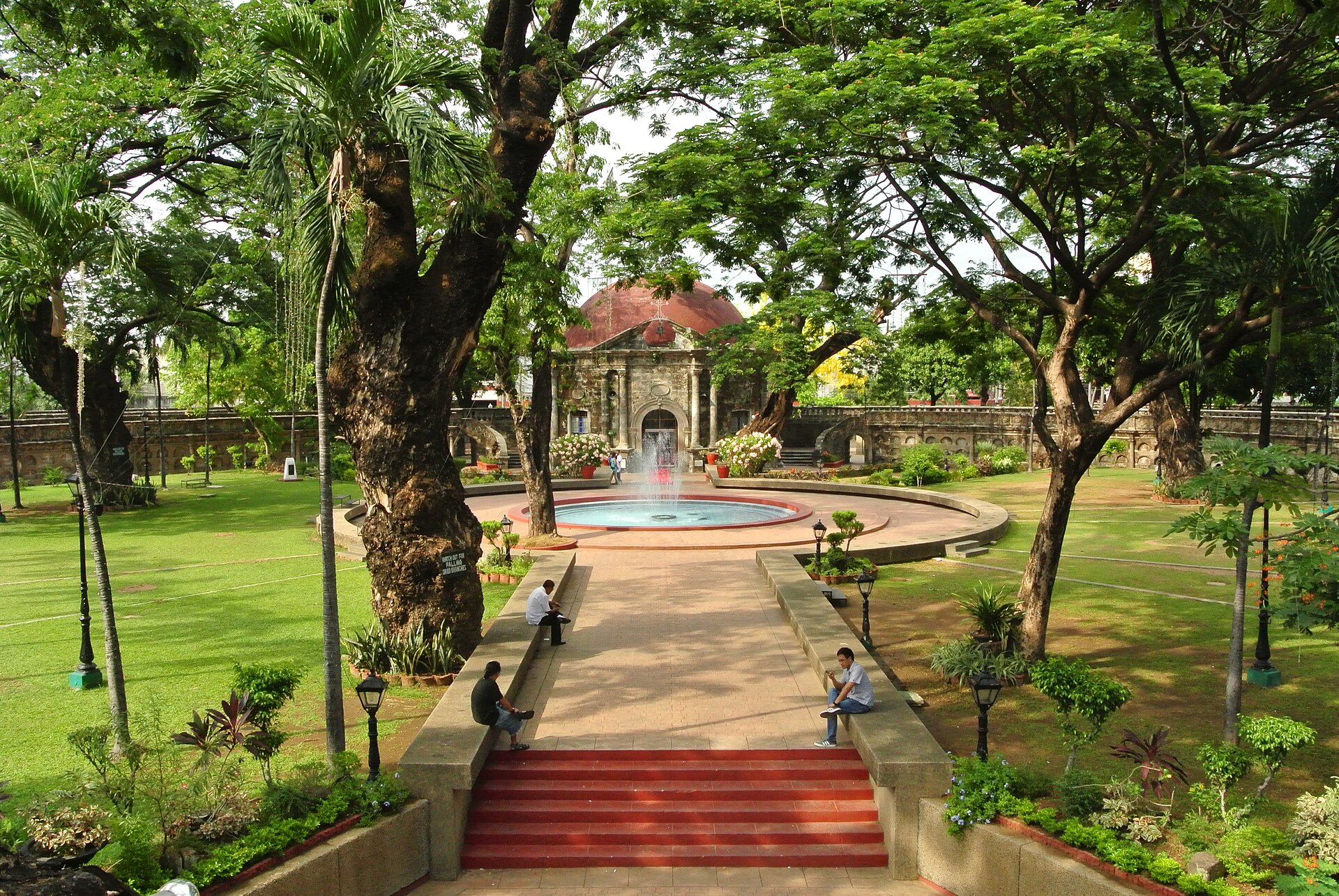
The park is small—just over a hectare—but its size makes it feel intimate. A central path leads to a circular plaza, once the cemetery’s core, now surrounded by low stone walls and tropical plants. Ficus trees grow over weathered graves, their roots blending with the stone. The canopy provides shade on hot afternoons, while evening lights soften the scene, making the past easier to imagine.
At one end stands the Church of Saint Pancratius, built in the late 19th century. Its whitewashed walls and simple neoclassical design give it a quiet presence. Inside, original stained-glass windows and wooden pews remain. On Sundays, hymns spill from the open doors, drawing locals and visitors looking for a break from the city.
The cemetery was abandoned by the mid-20th century. In the 1960s, it was restored as a park—benches added, paths laid, mausoleums preserved. Now, it functions as an open-air museum where people walk among colonial-era remnants while surrounded by greenery.
Weekends bring a little more life. Musicians sometimes play near the entrance. Small art displays appear along the paths. Families picnic on the grass. Unlike crowded city parks, Paco Park stays quiet, with no tour groups, just people who come for its calm. Students read under the trees. Couples walk the paths. Photographers frame its old walls and greenery.
Wedding photos are common here. The mix of stone, plants, and open space works well for portraits. Some couples hold small ceremonies, though most weddings still happen in the nearby church. The park’s simplicity suits moments that feel both personal and lasting.
Paco Park connects different times. Spanish colonial architecture remains, while the 1960s restoration shows how the city rethought its past. Yet the park doesn’t feel stuck in history—it’s part of modern Manila, where past and present exist together without conflict. It doesn’t try to be anything more than a quiet place where history and nature meet.
Manila moves fast, but Paco Park doesn’t. It doesn’t ask for attention or try to stand out. It’s just there—a place where time slows. Come to sit, to escape the heat, or to watch the world pass. The park has welcomed people this way for generations.