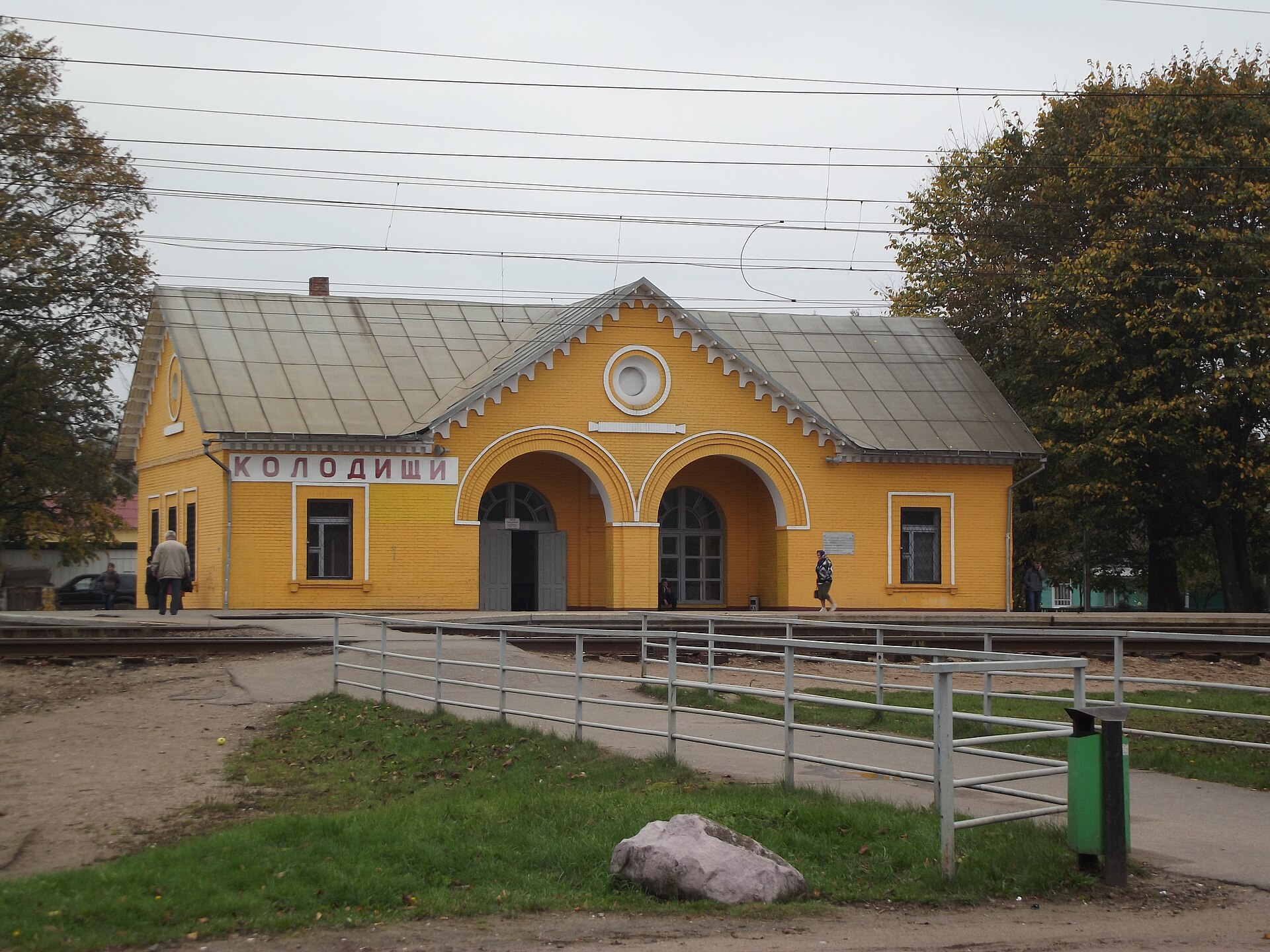
Kolodishchi railway station is one of those unassuming places that seem ordinary until you take a closer look. Tucked on the outskirts of Minsk, where the city’s hustle gradually gives way to the quiet of suburban villages, it exists somewhere between transit and stillness. For most passengers, it’s just a point on the map—a transfer, a brief wait, or a stop on the way to work. But if you linger here for even half an hour, you begin to notice how time moves differently. It doesn’t rush. Instead, it carries the echoes of an era when the railway wasn’t just a means of transport but a lifeline for entire generations.
The station dates back to the late 19th century, when the Moscow-Brest railway line was laid through these lands. Back then, Kolodishchi was little more than a small village, and the railway became its gateway to the wider world. Construction was done by hand, without modern machinery, every kilometer of track a testament to hard labor. The first trains stopped here before proper station buildings even existed—just platforms, simple shelters, and wooden houses for the staff. Over time, the station grew, accumulating outbuildings, warehouses, and workshops. Its role in the region only strengthened, turning it into a vital link between the capital and the countryside.
The architecture here is straightforward and functional, as you’d expect from a transport hub. The main station building is modest, with the clean lines and large windows typical of Soviet modernism—no frills, just purpose. It doesn’t aim for grandeur, but there’s a quiet charm in its simplicity. Nearby stand old warehouses, a water tower, and signal boxes, long since retired from active use but still standing as silent witnesses to a time when the railway was a bustling industry, not just a way to get from point A to point B. Some of these structures have survived since before the war, others were added later, but together they form a patchwork of history.
Today, Kolodishchi is primarily a suburban transport hub. Commuter trains arrive from Minsk, Orsha, and Borisov, while long-distance services make brief stops here. For locals, it’s a familiar place—some travel to the capital for work, others come for shopping, and some simply meet or see off friends and family. The station isn’t noisy, but it’s rarely empty. There’s always movement: people hurrying, others strolling leisurely along the platforms. In summer, it’s especially lively—dacha-goers with heavy bags, cyclists, families with children heading out of the city for a break.
The atmosphere at Kolodishchi is a mix of motion and calm. On one hand, there’s the constant rhythm of arrivals and departures, passengers crossing platforms, the muffled announcements of dispatchers. On the other, there’s something almost meditative about it. Early mornings and late evenings are the quietest, when the crowds thin out and only a few people remain on the platform, waiting in silence. In those moments, the station seems to pause, and you can hear the wind rustling through the trees by the tracks or the distant hum of an approaching train.
For historians and railway enthusiasts, Kolodishchi holds particular interest because of the layers of infrastructure preserved here. Old semaphores, long out of use, still stand along the tracks. Brick depot buildings from the early 20th century remain, their walls bearing the marks of time—chipped paint, worn steps, faded repair dates from decades ago. Most of the equipment has been modernized, but if you look closely, traces of the past are still visible. It gives the place a sense of continuity, as if the station has a life of its own, independent of the thousands of people who pass through it daily.
Despite its unassuming appearance, Kolodishchi plays a crucial role in Belarus’s transport network. It’s one of the key junctions on the route from Minsk to the country’s eastern regions. Without stations like this, the railway system wouldn’t function—these are the unsung nodes that keep cities and villages connected, allowing people to travel and goods to move across long distances. Kolodishchi isn’t just a station; it’s part of a larger mechanism that works seamlessly, even if most passengers never stop to think about how it all comes together.
Like many suburban stations, Kolodishchi has seen changes in recent years. New trains have been introduced, platforms have been renovated, and infrastructure has improved. Yet something essential remains—the spirit of the place, untouched by modernization. Here, you can still feel how the railway bridges past and present, how it remains a vital part of people’s lives even as everything else evolves. That might be why Kolodishchi never becomes just another faceless transport hub. Instead, it remains a place where history and the present coexist, side by side.