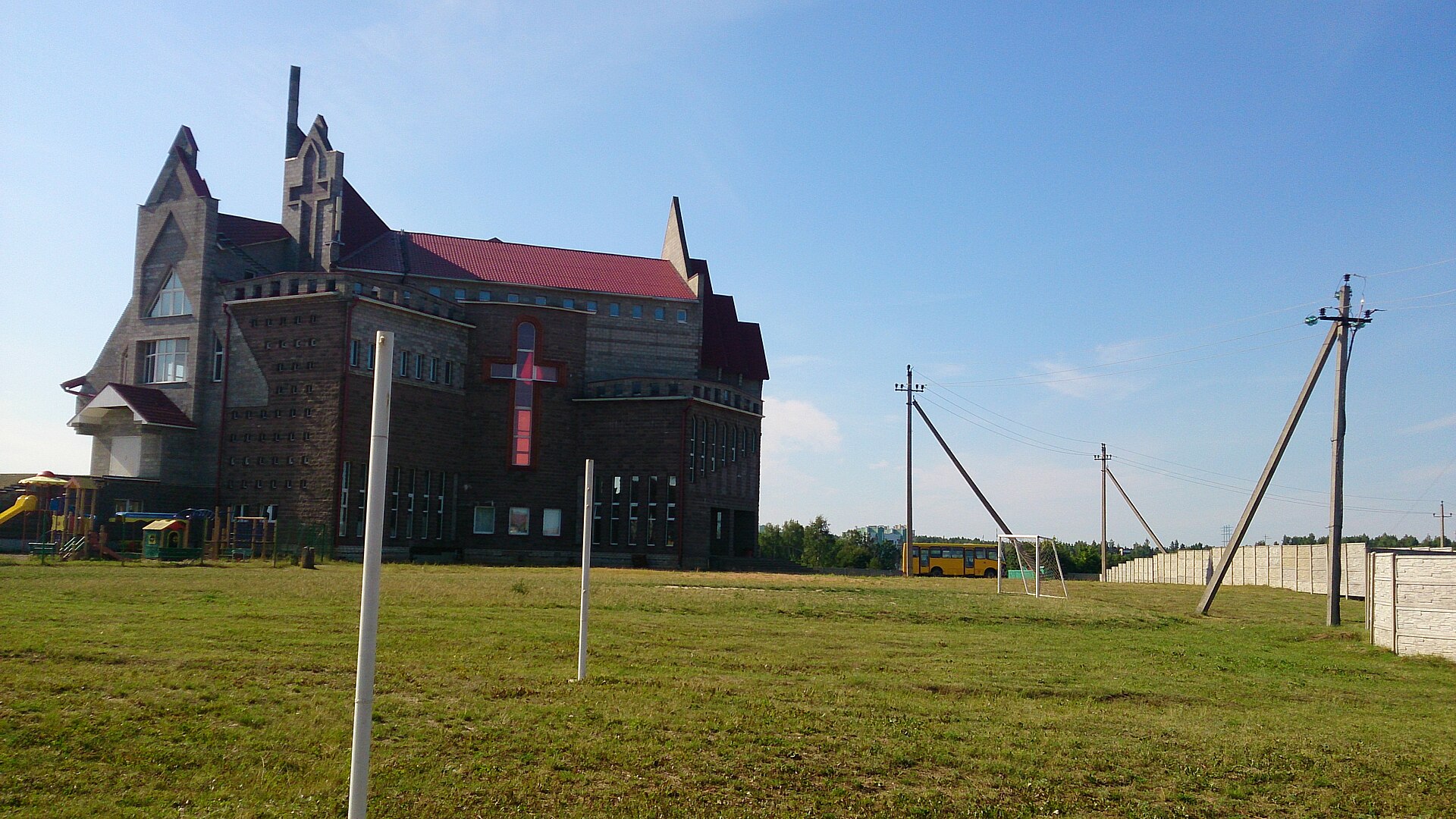
The House of Culture in Kolodishchi is one of those quiet places that quietly weave themselves into the daily life of a small settlement just outside Minsk. It stands on the main street, surrounded by low-rise apartment buildings and old trees, its unassuming presence easy to overlook if you don’t know it’s there. Yet for locals, it’s far more than just a building. This is where community meetings take place, where concerts are held, where clubs rehearse, and where people gather on weekends to spend time together. Such cultural centers were once a staple in nearly every Soviet town or village, and this one is among the few that have retained their purpose, even if in a different form today.
The architecture is typical of the post-war era—simple lines, a symmetrical facade, and large windows that flood the hall with natural light. Inside, the ceilings are high, the walls lined with wooden panels, and the stage draped in heavy velvet curtains. Everything was built to last, without unnecessary frills but with careful attention to durability. Decades ago, this was where films were screened, lectures delivered, and holidays celebrated for both children and adults. The crowds aren’t as large as they were in the 1970s, but the hall still serves as a place where familiar faces gather, live music fills the air, and people simply enjoy each other’s company.
Kolodishchi itself is a settlement with a long history, once a separate village that has now been absorbed into the outskirts of Minsk. In the past, it was home to railway workers, factory employees, and later, those who preferred the quiet over the city’s hustle. The House of Culture appeared here in the mid-20th century, when the settlement was expanding, and quickly became not just a cultural hub but a social one as well. For many longtime residents, it holds memories of youth—first dates, school dances, amateur performances. Even now, when entertainment options have multiplied and people often travel to the city, this place retains a unique atmosphere, one you won’t find in modern shopping malls or coworking spaces.
Today, the House of Culture hosts a variety of clubs for both children and adults. Some come to dance, others to craft, and a few just to play chess or attend a lecture. Occasionally, local artists display their work here, or workshops on traditional crafts are held. On weekends, the hall is often rented for private events—weddings, anniversaries, corporate gatherings. It might sound unusual, but these bookings help keep the place running, providing funds for repairs and upkeep while giving people a chance to celebrate in a familiar setting rather than an impersonal banquet hall.
Like many similar institutions in small towns, the House of Culture faces its share of challenges. Younger generations move away, interest in traditional leisure activities wanes, and state support isn’t always enough. Yet the community here hasn’t given up. Volunteers help with repairs, local businesses occasionally sponsor events, and older residents work to pass on their affection for the place to younger generations. Some days, the hall stands empty, but during holidays, it fills up again, making it clear that such places aren’t just about entertainment—they’re about a sense of belonging.
For visitors, the House of Culture in Kolodishchi is unlikely to be a must-see attraction. There’s no grand architecture, no museum exhibits, no dramatic history to draw crowds. But if you step inside on a weekday, when the foyer smells of fresh coffee and the sounds of a rehearsal drift from the hall, you might catch a glimpse of something more meaningful—the rhythm of life in an ordinary Belarusian settlement. This isn’t a place for tourists; it’s for those who want to understand how people live beyond the big cities, what brings them together, and what they value. In that sense, the true worth of such cultural centers lies not in spectacle but in their ability to preserve a way of life and offer a sense of connection to something larger than oneself.