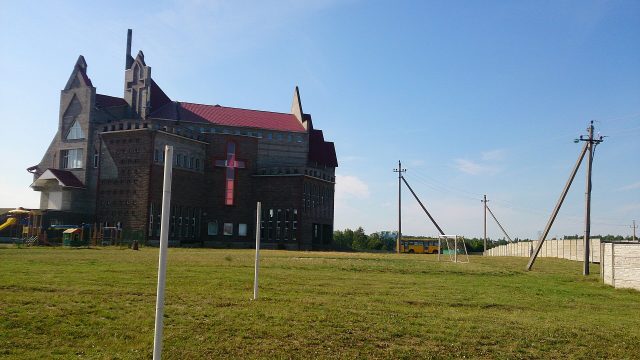
The Church of St. Nicholas the Wonderworker in Kolodishchi sits on a low hill outside Minsk. Its whitewashed walls and single golden dome blend into the landscape, as if it has always been part of the village. The steep, shingled roof of the bell tower and the arched windows follow the design of rural Orthodox churches from the late 1800s. There’s no grand entrance here—just a quiet invitation to step inside.
Kolodishchi was a farming settlement when the church was built in the 1890s. At the time, the Russian Empire was reviving religious architecture, and villages like this one constructed churches to serve as spiritual and social centers. For decades, the church hosted baptisms, weddings, and funerals. Even during the Soviet era, when many churches were destroyed or turned into warehouses, this one remained standing—though empty. Its survival wasn’t accidental; the building endured because the community refused to let it disappear.
The architecture is straightforward. The church follows the Russian-Byzantine style, with a single nave, a refectory, and a bell tower topped by a slender spire. The brickwork is simple, with arched windows and a few ornamental cornices. Inside, light filters through narrow windows, illuminating the iconostasis painted in deep blues and golds. Some of the icons date back to the church’s early years, their surfaces darkened by candle smoke and the touch of worshippers’ hands.
Today, the church is active. Locals attend services, and visitors come seeking quiet. On feast days, especially those honoring St. Nicholas in December and May, the church fills with people. Vendors sell candles and baked goods outside, while inside, the air hums with prayers and conversation. For many, these gatherings are about more than faith—they’re a connection to tradition.
Kolodishchi hasn’t changed much. The village moves slowly, untouched by Minsk’s pace. The church remains at its center, a place where people still gather. Some come to pray; others, to remember. Around it, a small park with linden trees blooms in summer and turns white in winter. Children play nearby, and in warmer months, the scent of flowers mixes with hymns drifting from the open doors.
Artists and photographers often visit the church. Its proportions are modest, but there’s a harmony in how it sits against the landscape—the dome rising above the rooftops, the white walls contrasting with the green trees. At dusk, the setting sun gilds the cross on the dome. In winter, snow softens the building’s lines. In those moments, the church feels timeless.
Beyond the church, the countryside offers more. Old estates, small parks, and fields stretch toward the horizon. In summer, woods fill with mushroom foragers and berry pickers. Autumn turns the lanes golden. The area slows you down, whether you’re here for prayer, history, or a walk.
The Church of St. Nicholas the Wonderworker matters because it’s still alive. The same walls that once heard 19th-century farmers now hear their descendants. The same icons kissed a hundred years ago are kissed today. In a world that changes quickly, the church reminds us that some things endure—faith, memory, and the quiet bonds of community. That’s why people keep returning.