Glenfinnan feels like a place where time moves differently. Tucked away in the western Highlands, it’s the kind of quiet corner where the hills roll into the distance, covered in heather, and Loch Shiel stretches out like a sheet of glass. There’s no rush here, no city noise—just the wind and the occasional call of a bird. Yet for all its stillness, Glenfinnan holds something unexpected: a small railway station that has become far more than just a stop on the line. It’s a piece of living history, a testament to the ambition of the past and the quiet romance of travel.
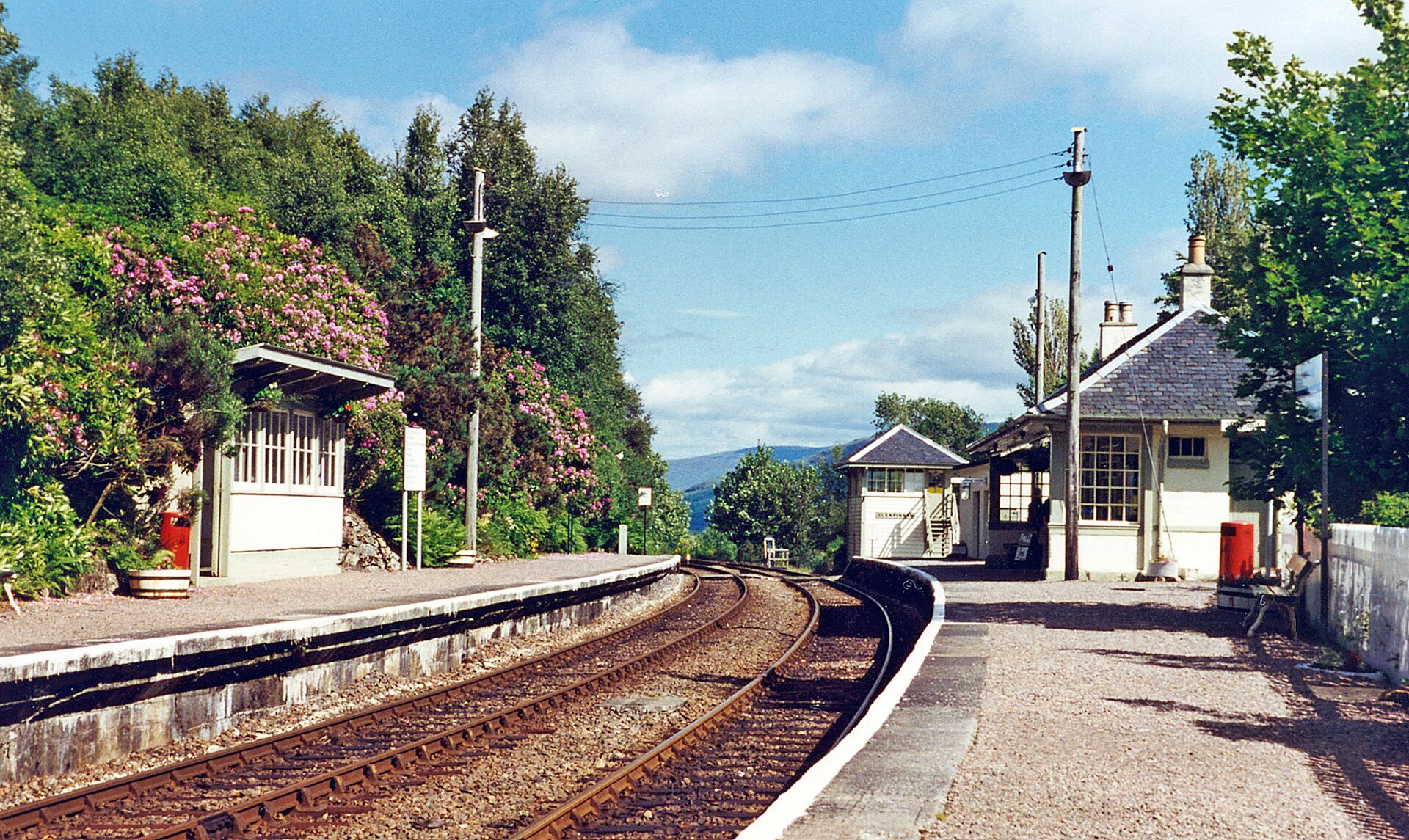
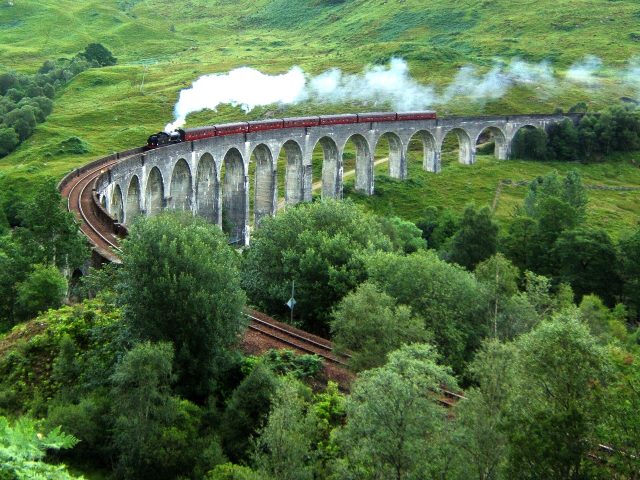
The station itself is unassuming—a low stone building with a single platform, the kind of place that might go unnoticed if not for what lies just beyond it. Built in the late 19th century as part of the West Highland Railway, it opened in 1897, connecting remote Highland communities to the wider world for the first time. But the real marvel isn’t the station; it’s the viaduct that curves gracefully over the valley. With its twenty-one arches stretching across the landscape, the Glenfinnan Viaduct is one of Britain’s most striking feats of engineering. Constructing it wasn’t easy—the ground was boggy, the terrain uneven—but the result was a bridge that seemed to defy the wildness of the land. Today, it stands as a reminder of an era when railways were reshaping the country, stitching together towns and cities with steel and steam.
The station hasn’t changed much since those early days. The wooden benches are still there, worn smooth by decades of waiting passengers. The old timetable signs, faded by sun and rain, hint at a time when travel was slower, when the journey itself was part of the experience. There’s no staff here now, just the occasional visitor wandering the platform, listening to the wind hum through the telegraph wires. In the summer, the Jacobite steam train passes through, its plume of smoke curling against the hills as it crosses the viaduct. The sight draws photographers and railway enthusiasts from all over, but even without the train, the place has a quiet magic. It’s easy to imagine the station in its heyday, when locals would gather to send off livestock or wool to market, or when visitors from the south would step onto the platform, wide-eyed at the rugged beauty of the Highlands.
Glenfinnan’s fame grew even more after it appeared in the Harry Potter films, where the viaduct became the iconic bridge crossed by the Hogwarts Express. For many, that’s the reason they come—to stand where the fictional train rolled through the mist, to feel a little of the story’s enchantment. But the place doesn’t need Hollywood to cast its spell. There’s something inherently atmospheric about it, a sense of history lingering in the air. Over a century ago, this was the edge of the known world for many Highlanders. The railway brought change, linking isolated villages to cities and opening up the region to new possibilities. The station may not be as busy as it once was, but it still feels like a threshold, a place where the past and present meet.
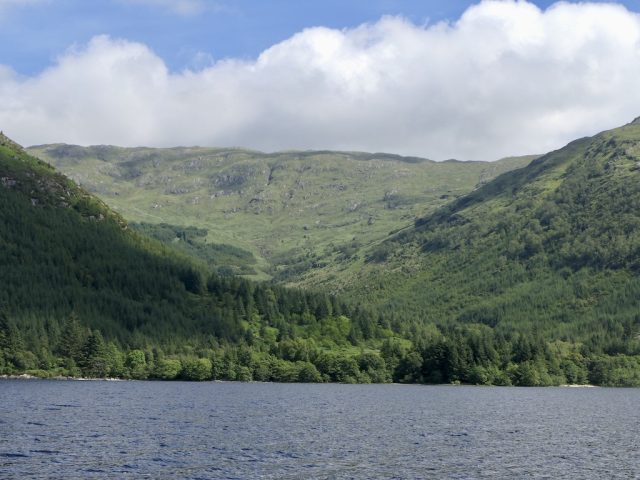
Beyond the station, the landscape unfolds in all its quiet grandeur. Loch Shiel glows under the sunlight, its waters reflecting the sky so perfectly that the horizon seems to dissolve. On clear days, the hills on the far side appear almost close enough to touch, their slopes covered in a patchwork of green and gold. Not far from the viaduct stands the Glenfinnan Monument, a tower built to commemorate the Jacobite uprising of 1745. It’s a stark reminder of the region’s turbulent history, when clans rose against the British crown and the Highlands were a place of rebellion and resilience. The monument, like the viaduct, is a marker of time—one telling a story of defiance, the other of progress.
What makes Glenfinnan special is the way it balances these layers of history with the simplicity of the present. There are no crowds here, no tourist traps, just the land and the sky and the occasional train rumbling over the viaduct. In summer, the hills are alive with the sound of sheep and the rustle of wind through the grass. In winter, the mist rolls in, softening the edges of the landscape, turning the viaduct into a ghostly silhouette. The station, meanwhile, remains a quiet witness to it all. It has seen steam engines give way to diesel, has watched generations come and go, and yet it still feels timeless. For some, it’s a place of nostalgia; for others, a glimpse into a slower, more deliberate way of moving through the world.
Visiting Glenfinnan isn’t just about seeing the viaduct—though that alone is worth the journey. It’s about stepping into a landscape where history feels tangible, where every stone and every bend in the track tells a story. You can walk along the loch’s edge, following paths that have been trodden for centuries, or simply sit on the platform and listen to the silence. There’s no need to fill it with words. The place speaks for itself, in the creak of the old station sign, in the distant echo of a train’s whistle, in the way the light catches the water of Loch Shiel. It’s a reminder that some places don’t need grand attractions to leave a lasting impression. Sometimes, all it takes is a quiet corner of the world, where the past lingers just beneath the surface.