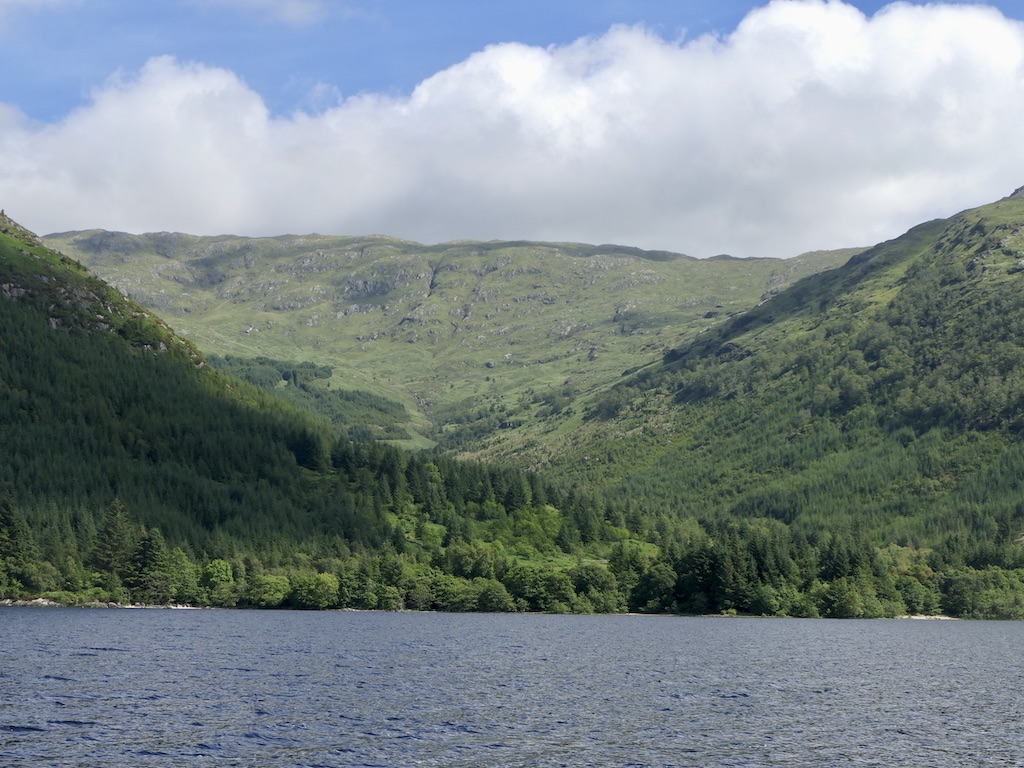
Loch Shiel sits in a quiet corner of Scotland where the landscape feels arranged to stir something deep inside. Tucked into the Glenfinnan valley, it’s framed by hills and forests that mirror themselves in its dark waters. The name comes from the Gaelic *Sìle*, meaning "still water," and that stillness defines the place. The wind moves through the valley as if reluctant to disturb the peace.
This part of Scotland is tied to the Jacobite uprising of the 18th century. In 1745, Charles Edward Stuart—Bonnie Prince Charlie—raised his standard here, rallying supporters to reclaim the throne for the Stuarts. A tall monument stands on the shore, crowned with the figure of a Highlander in traditional dress. From its base, the view stretches across the valley and the loch. The monument is simple, but it lingers, a reminder of a time when loyalty and rebellion shaped the land.
The loch’s shoreline is jagged with small inlets and peninsulas, creating pockets of solitude. The water’s dark hue comes from peat carried by the River Finnan. On overcast days, the surface blends with the sky, turning the scene into a muted canvas. In summer, anglers cast lines for trout or salmon. In autumn, the surrounding trees turn gold and crimson, their reflections rippling across the water.
Walking paths wind around the loch. The most well-trodden leads to the Jacobite monument. Those who stray from the main route find themselves alone with the hills. Locals say that on quiet evenings, the sound of bagpipes drifts across the water. It’s probably legend, but the past doesn’t feel distant here.
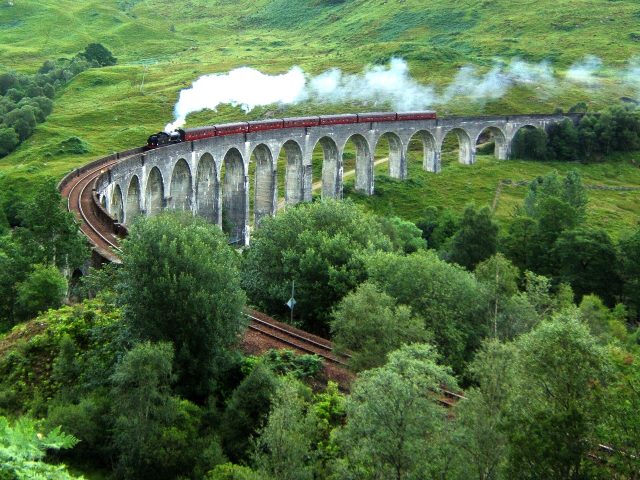
The architecture around Loch Shiel fits naturally into the landscape. Wooden bridges, old farmhouses, and small stone churches look as though they’ve been here for centuries. The most striking man-made feature is the Glenfinnan Viaduct, a railway bridge built in the late 19th century. Its arches curve over the valley, and when the Jacobite steam train passes, it contrasts with the untouched surroundings.
The loch doesn’t announce itself with dramatic scenery. Its beauty unfolds in the way light plays on the water, in the silence over the hills, in the weight of history in the air. It’s a place for quiet walks and long thoughts. No crowds, no souvenir shops—just the land, the water, and the sense that time moves differently here.
In winter, snow blankets the hills, and the water turns nearly black against the white shores. Few visitors come in the colder months, but those who do see Scotland as it might have looked centuries ago. Spring brings meltwater and green hillsides. Even in summer, the loch keeps its calm.
For many, Loch Shiel is more than a scenic spot. It’s a symbol of Scotland’s past, where history feels tangible. The battles are long over, but their echoes remain in the stones and the wind. If you find yourself here, pause to listen. The loch speaks through the quiet, through the light on the water, through the sense that some places hold their memories close.