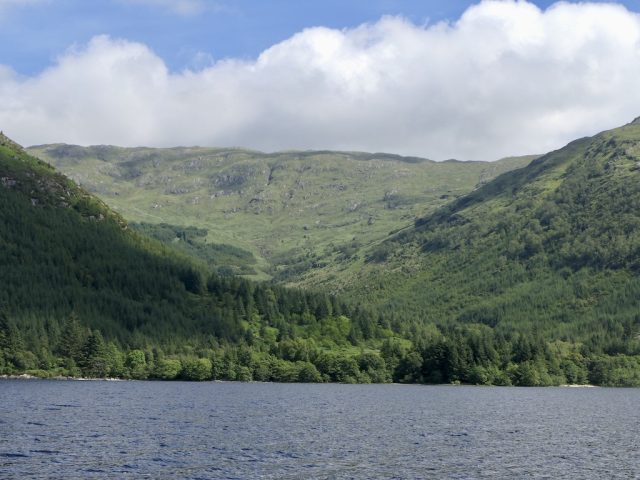
Glenfinnan is a quiet corner of the Scottish Highlands where the land softens into the waters of Loch Shiel. The hills here roll gently, their slopes covered in heather and bracken, while the loch stretches out like a mirror, reflecting the changing skies. It’s a place where history feels close, not just because of the stories it holds, but because the landscape itself seems to remember. At the heart of it stands the Glenfinnan Monument, a tower of grey stone that rises from the shore, its silhouette unmistakable against the horizon. Built in the early 19th century, it wasn’t meant to mark a victory, but a moment of defiance—one that shaped Scotland’s identity in ways that still resonate today.
The monument commemorates the Jacobite rising of 1745, when Charles Edward Stuart, known as Bonnie Prince Charlie, landed on these shores to reclaim the British throne for his family. The Stuarts had ruled Scotland for centuries, and their cause still held sway among the Highland clans. On that August day, Charlie raised his standard here, a signal that the rebellion had begun. For a time, it seemed the Jacobites might succeed—they marched south, gathering support, even reaching as far as Derby before turning back. But the end came at Culloden in 1746, where the last pitched battle on British soil ended in slaughter. The rebellion was crushed, the clans broken, and the Highlands would never be the same. Yet the memory of that struggle didn’t fade. The monument, erected decades later, stands as a quiet testament to those who fought, not just for a king, but for a way of life.
Designed by architect James Gillespie Graham, the tower is simple in its construction—thirty metres of solid stone, its shape echoing the memorials built across Scotland to honour its historical figures. Inside, a spiral staircase winds upward to a viewing platform, where the wind carries the scent of damp earth and pine. From here, the view stretches across the loch and the surrounding glens, a landscape that has changed little since the 18th century. The hills rise in layers, their colours shifting with the seasons—purple in late summer when the heather blooms, gold and russet in autumn, stark and bare in winter. It’s easy to imagine the clans gathering here, their tartan cloaks blending into the moorland, their voices carried on the same breeze that now rustles the grass.
Glenfinnan isn’t just a place for history enthusiasts, though it certainly draws those who want to walk in the footsteps of the Jacobites. The area has a way of slowing time, of making the present feel less urgent. There’s a small museum nearby, its exhibits filled with relics from the period—weapons, letters, fragments of clothing—each piece a reminder of how fragile the past can feel when held in your hands. But the real draw is the land itself. Walking the trails that crisscross the glen, you pass through patches of woodland, cross shallow streams, and emerge onto open hillsides where the only sounds are the cry of a buzzard or the distant bleat of sheep. The monument, standing sentinel by the loch, feels less like a relic and more like a part of the landscape, as if it has always been here.
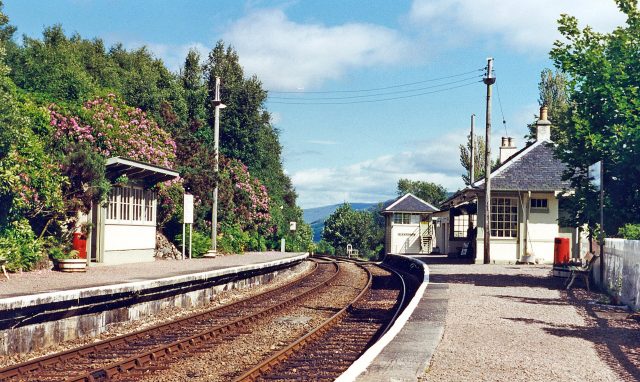
The village itself is little more than a cluster of houses, a handful of inns, and a railway station that sees more tourists than locals these days. It’s the kind of place where people still greet each other by name, where the pace of life is set by the changing light rather than the clock. If you’re lucky, you might hear stories from someone whose family has lived here for generations—tales of the land, of the people who once walked it, passed down like heirlooms. There’s no grand narrative here, just the quiet persistence of memory, the way the past lingers in the names of places and the shape of the hills.
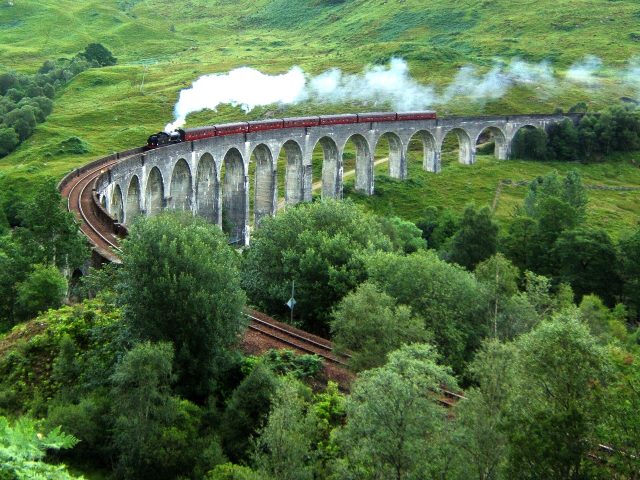
In recent years, Glenfinnan has found a new kind of fame, thanks to the Harry Potter films. The Glenfinnan Viaduct, a sweeping curve of stone and steel that carries the West Highland Line over the valley, became the route of the Hogwarts Express. On certain days, you can stand on the hillside and watch the steam train emerge from the mist, its whistle echoing across the glen. It’s a surreal sight, this blend of fiction and reality, and it’s drawn a different kind of visitor—one who might not know the history of the monument but is drawn to the magic of the place all the same. The viaduct and the monument exist side by side, each telling a different story, yet both rooted in the same land.
What makes Glenfinnan special isn’t just its history or its scenery, but the way it makes you feel. There’s a stillness here, a sense of being in a place where time moves differently. The monument, the loch, the hills—they don’t demand attention, but they reward those who take the time to look. On a clear day, the light is sharp, casting long shadows across the water. In the rain, the landscape softens, the colours muted, the loch shrouded in mist. And in the quiet moments, when the wind dies down and the only sound is the lap of water against the shore, it’s easy to imagine the past isn’t so distant after all. The monument stands as it has for two centuries, not just as a marker of history, but as a reminder that some stories never really end. They live on in the land, in the stones, in the way the light falls across the hills.