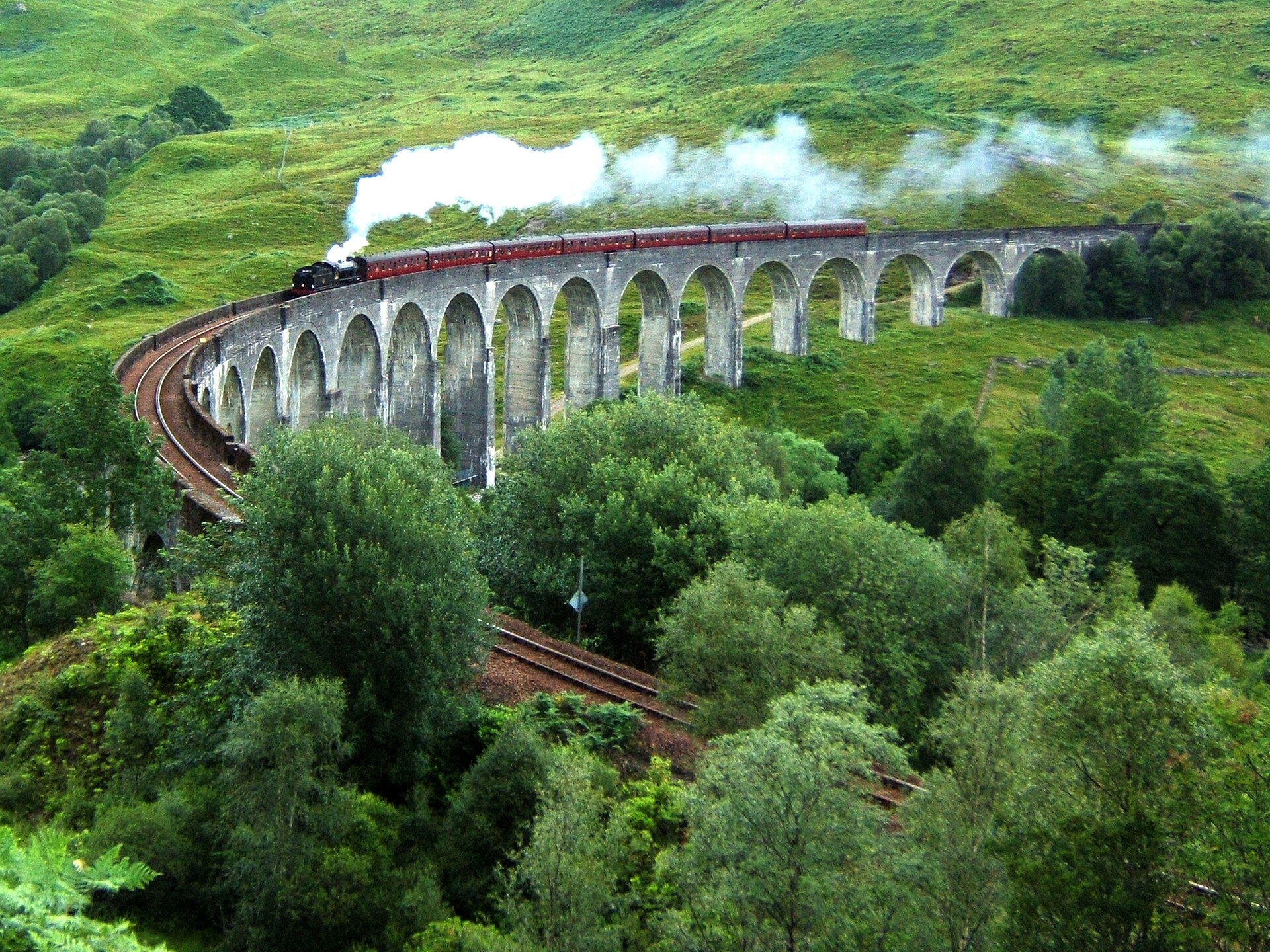
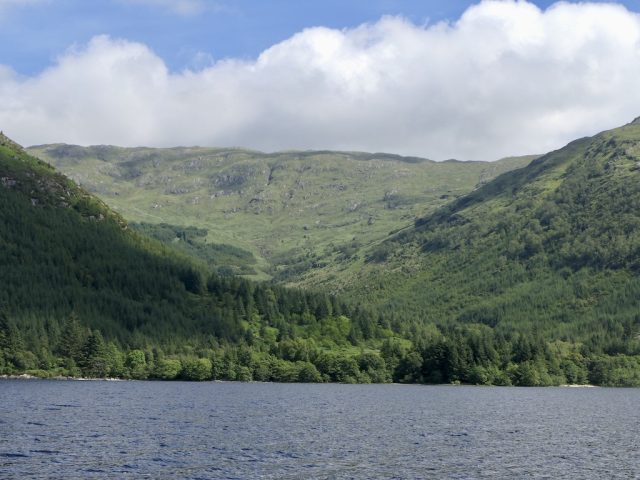
Glenfinnan Viaduct is one of those rare places where the raw beauty of the Scottish Highlands meets the quiet ambition of 19th-century engineering. Stretching across the valley of the River Finnan, this arched stone bridge doesn’t just carry trains—it carries the weight of history, myth, and the ever-changing light of the northern landscape. Against the backdrop of rolling hills and the dark waters of Loch Shiel, its twenty-one graceful spans seem almost too perfect, as if someone had sketched them into the scenery and then forgotten to erase the lines.
The viaduct was built between 1897 and 1900, a time when railways were stitching together the remote corners of Britain. The man behind its design was Robert McAlpine, an engineer whose name became synonymous with bold, enduring structures. Unlike the mass-produced iron bridges of the era, Glenfinnan was crafted the old way—stone by stone, by masons who understood the land as much as they understood mortar. The local rock, weathered by centuries of wind and rain, gave the viaduct a texture that blends seamlessly with the valley. At its highest point, the bridge rises thirty metres above the ground, its arches wide enough to let the light and mist pass through, as if the structure itself were breathing.
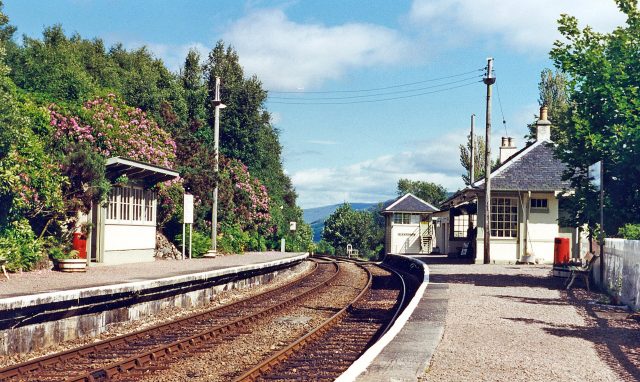
What makes the viaduct more than just a feat of engineering is the railway it serves. The West Highland Line, which runs from Glasgow to the fishing port of Mallaig, is one of the most scenic train routes in the world. The journey itself is an experience—winding through glens, skirting lochs, and climbing into landscapes that feel untouched by time. When the train crosses the viaduct, passengers get a fleeting but unforgettable view of the valley below, the water glinting in the distance, the hills folding into one another like layers of an old map. It’s the kind of moment that makes you forget you’re on a scheduled service and not some slow, meandering expedition.
For many, the viaduct is inseparable from the world of Harry Potter. The Hogwarts Express, that iconic scarlet steam train, was filmed crossing this very bridge, and the image has since become a shorthand for magic and adventure. It’s easy to see why the filmmakers chose this spot—the viaduct has a storybook quality, as if it were built not for industry, but for dreams. Yet even without the cinematic associations, the bridge holds its own. It’s a reminder that real places can feel just as extraordinary as the ones we imagine.
The valley around Glenfinnan is quieter than you might expect. Unlike the crowded streets of Edinburgh or the tourist hubs of the Highlands, this is a place where the rhythm of life is set by the seasons, not by schedules. In summer, the hillsides burst with wildflowers, their colours muted in the soft northern light. In winter, the mist rolls in like a slow tide, obscuring the edges of the landscape and making the viaduct seem like a ghostly apparition. The air here is sharp and clean, carrying the scent of heather and damp earth. Locals will tell you that the bridge has always been part of their lives, not as a monument, but as a neighbour—something solid and dependable in a land of shifting skies.
Just a short walk from the viaduct stands the Glenfinnan Monument, a towering tribute to the Jacobite uprising of 1745. It was here, in this valley, that Charles Edward Stuart—Bonnie Prince Charlie—raised his standard, rallying clans to a cause that would end in bloodshed and exile. The monument, erected a century later, is a stark contrast to the viaduct: where one is a symbol of rebellion, the other is a testament to progress. Yet together, they tell a story of Scotland’s layered history, where the past is never quite buried, just waiting to be rediscovered.
If you want to see the viaduct up close, there are a few ways to do it. The easiest is from the viewing area at its base, where a short path leads to a spot directly beneath the arches. From here, you can watch the trains pass overhead, their wheels clattering against the tracks, the sound echoing through the valley. For a different perspective, climb the hill on the opposite side of the loch. From there, the viaduct appears as a delicate ribbon of stone against the water, its reflection shimmering when the wind is still. The walk isn’t strenuous, but the weather can turn quickly—one minute the sun is out, the next you’re wrapped in a damp, chilly mist. It’s the kind of place where you learn to appreciate the small things: the warmth of a thermos of tea, the way the light catches the edges of the stone, the quiet hum of the landscape when the wind dies down.
What makes Glenfinnan Viaduct special isn’t just its beauty or its history, but the way it feels alive. Trains still cross it every day, not as relics of the past, but as part of the present. The bridge doesn’t just stand in the landscape—it moves with it, bending slightly in the wind, gathering moss in the damp, its stones warmed by the same sun that has shone on this valley for centuries. It’s a place where you can feel the weight of time, not as something heavy, but as something that carries you along. Whether you come for the views, the history, or the quiet thrill of seeing a train cross a bridge in the middle of nowhere, Glenfinnan has a way of staying with you long after you’ve left.