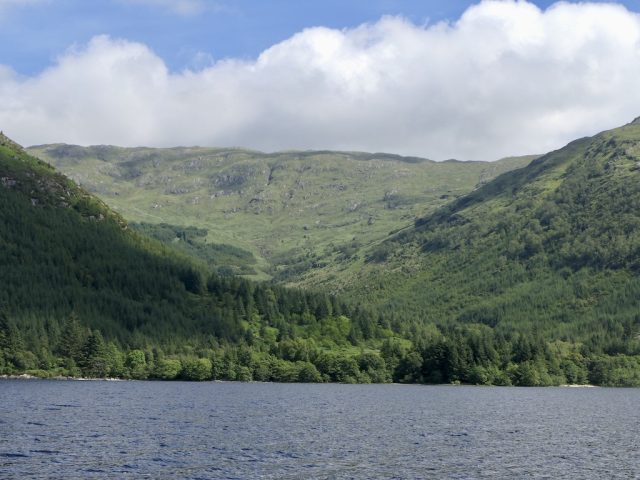
St Finan’s Church sits quietly on a hill above Glenfinnan, where the land folds into itself like an old book left open. The valley below has seen centuries pass—pilgrims, clansmen, travelers—all moving through the same quiet space where the mountains dip toward Loch Shiel. The church wasn’t built here by accident. The spot was chosen for its stillness, for the way the light lingers over the water at dawn, for the sense that time here doesn’t rush but settles, like sediment in a stream.
The building itself is modest, with a steep spire that cuts into the sky. On misty mornings, it appears and disappears between the drifting clouds, as if the landscape is deciding whether to reveal it. The stone is weathered but not worn, the kind that holds the warmth of the sun long after it’s set. Around it, the hills rise in soft waves, covered in heather and bracken, while the loch below reflects the changing seasons with unsettling clarity.
Finan, an Irish monk, is said to have come to this place in the early Middle Ages, drawn by the isolation and the quiet. There’s no trace left of his original chapel, if it ever stood here at all. The church that exists now was built much later, in the 19th century, when Scotland was rediscovering its medieval past. The architect, James Gillespie Graham, designed it to feel like part of the land rather than something imposed upon it. The pointed windows, the simple lines, the way the building seems to grow from the hillside—all of it was meant to blend, not dominate.
Inside, the light falls through tall, narrow windows, casting long shadows across the stone walls and wooden pews. The air is cool, even in summer, and the silence is the kind that feels deliberate, as if the space itself is holding its breath. The altar is unadorned except for a plain cross, and the stained glass, though beautiful, doesn’t tell grand stories—just fragments of color that shift with the sun. There are no crowds here, no guided tours, no signs urging you to hurry. Even in the busiest months, it’s possible to sit alone and listen to the way sound moves in an empty church.
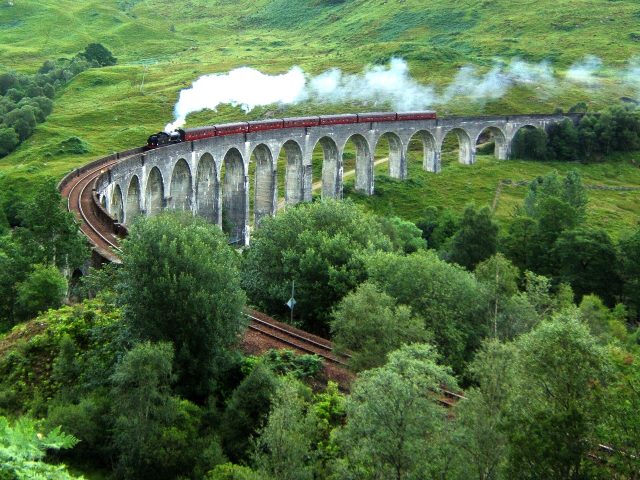
This place has seen more than just prayers. The land around Glenfinnan is steeped in the history of the Highlands, in the struggles of clans and the failed rebellions of the Jacobites. The church stands near a memorial to those who fought for Scottish independence, a reminder that the quiet of the valley was once broken by the clash of swords and the cries of men. The past here isn’t hidden; it’s simply absorbed into the landscape, as natural as the wind through the grass.
The seasons change the church as much as they do the hills. In autumn, the surrounding slopes turn gold and russet, and the building seems to sink into the earth, its stone taking on the same warm hues. Winter brings snow, muffling the world outside, making the church feel like a refuge. Spring arrives slowly, with wildflowers pushing through the damp ground, and by summer, the air is thick with the scent of heather and the distant hum of insects. The view from the hill behind the church is one of those rare things that doesn’t need explaining—Loch Shiel stretching into the distance, the mountains folding into one another, the occasional croft clinging to a slope.
There’s no grand spectacle here, no museum displays or audio guides. The church is open when there’s no service, and inside, there’s nothing but the weight of the stone underfoot, the creak of the floorboards, the way voices carry when there’s no one else around. Sometimes, in the evenings, musicians come to play—chamber pieces, the sound of a violin or an organ filling the space in a way that feels both ancient and new. It’s the kind of place where you might find yourself standing by a window, watching the light change over the loch, and realize you’ve been there longer than you meant to.
Glenfinnan isn’t a place for those who want noise or distraction. It’s for the kind of traveler who notices the way the wind moves through the grass, who understands that history isn’t just in books but in the way a stone feels under your hand. The church isn’t just a building; it’s a pause, a moment where the past and present meet without fanfare. You come here not to be impressed, but to be still. And if you’re lucky, you leave with the quiet sense that some places don’t need to shout to be remembered.