Ashmyany is a quiet town in western Belarus, where time seems to move at its own unhurried pace. Among its low-rise houses and narrow streets stands a building that once served as the heart of the local Jewish community—a former synagogue, built in the late 19th century. At the time, Ashmyany was home to a thriving Jewish population, and this structure was where people gathered for prayer, celebration, and daily life. Though it no longer functions as a place of worship, the building remains a silent witness to a chapter of the town’s history that has largely faded from memory.
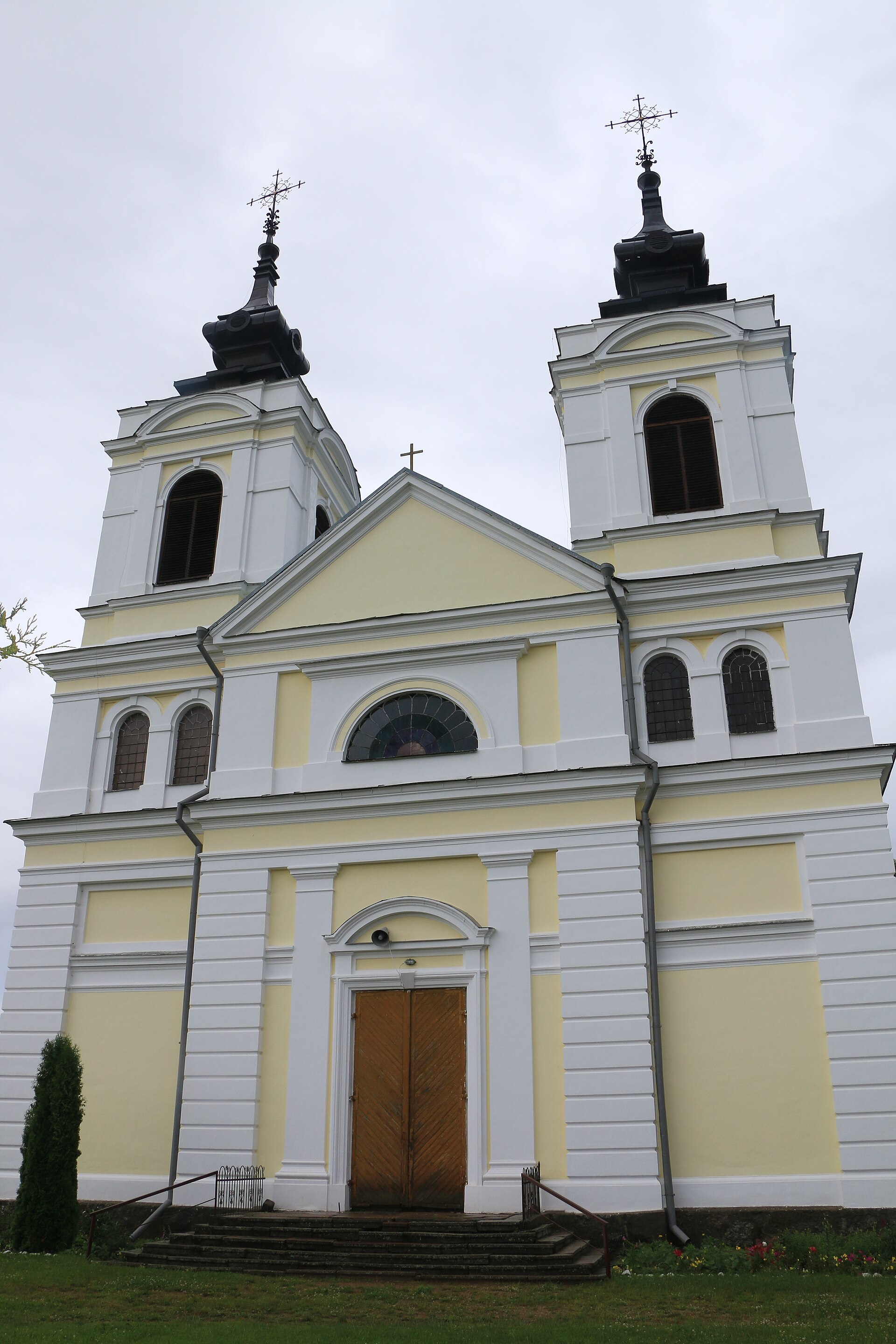
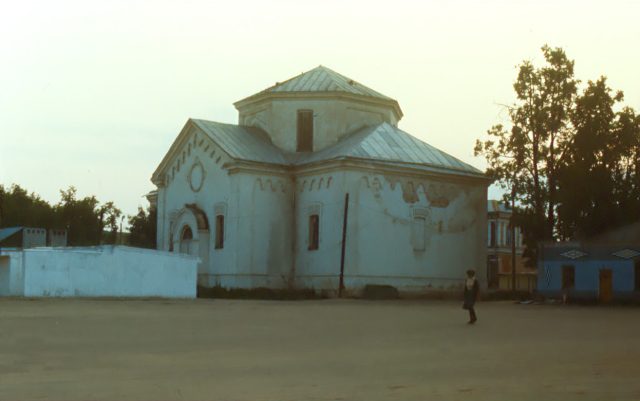
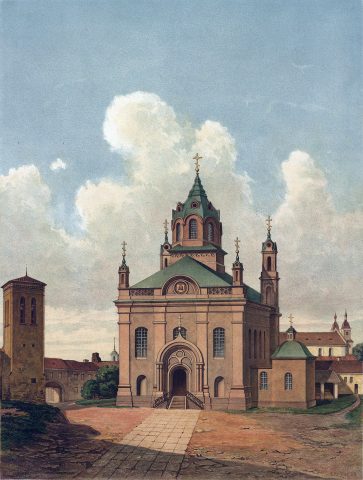
The architecture of the synagogue reflects the styles common to Eastern European Jewish houses of worship from that era. Its brick walls, tall arched windows, and sturdy construction blend elements of Neo-Gothic and Moorish design, a combination often seen in synagogues of the region. The facade is simple yet striking, with decorative arches above the windows, slender pilasters, and small corner turrets. Inside, the main prayer hall once featured a women’s balcony, though little remains of the original interior beyond fragments of plasterwork and faint traces of ceiling murals.
Like many towns in this part of Europe, Ashmyany endured its share of upheavals. The early 20th century brought war and revolution, and the synagogue stood through it all. During World War I, the town saw fighting, and in the interwar years, the building continued to serve the community, though life grew increasingly difficult for its members. World War II brought devastation—most of Ashmyany’s Jewish population was lost, and the synagogue was repurposed as a warehouse or workshop. After the war, it stood abandoned for decades, slowly deteriorating but never losing its historical character.
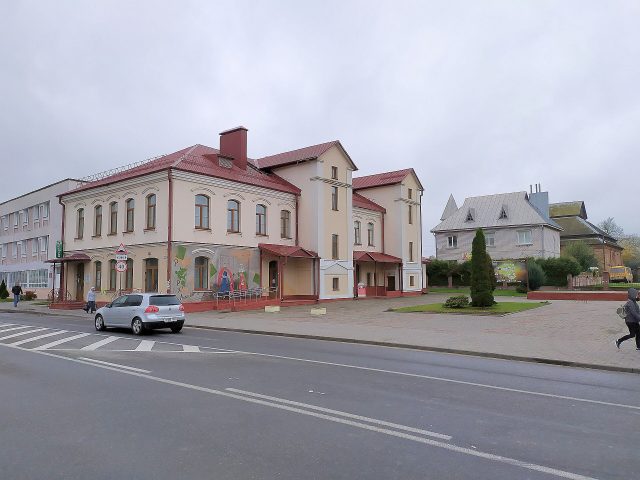
Today, the former synagogue is one of the few tangible reminders of Ashmyany’s Jewish past. The town, like much of Belarus, has seen waves of migration and cultural change, and the once-vibrant Jewish community has all but disappeared. What remains are scattered traces: weathered gravestones in an overgrown cemetery, street names that hint at a different time, and this building, which once anchored religious and social life. Now, it stands as a quiet monument to a world that no longer exists.
In recent years, historians and local researchers have taken an interest in preserving the synagogue, at least as an architectural landmark. Efforts have been made to document its history, though full restoration remains out of reach due to limited funding. Occasionally, the building hosts small exhibitions or guided tours about the town’s past, but more often than not, it sits empty. Trees grow around it, cracks spread across its walls, and time continues to leave its mark.
For those who visit, the synagogue carries a sense of lingering presence. Stepping into its courtyard, it’s easy to imagine the life that once filled these streets—the sound of prayers echoing under its vaulted ceilings, the bustle of people in traditional dress, the rhythm of a community that shaped the town. Ashmyany itself is a place where little seems to change, where the days pass quietly. Yet places like this synagogue remind us that history is never simple, that every town holds layers of stories waiting to be uncovered.
If you ever find yourself in Ashmyany, take your time. Wander through the town center, visit the local market where vendors sell fresh vegetables and homemade cheese, and strike up a conversation with the residents. Some still remember the Ashmyany of old, when the town was a different place. Then, make your way to the synagogue. Stand before its walls, run your fingers over the brickwork, and listen. In moments like these, history feels less like a distant record and more like something alive, woven into the very fabric of the place.