Ashmyany is one of those quiet Belarusian towns where time seems to move at its own unhurried pace, and the Church of St. Michael the Archangel stands as a quiet witness to its layered past. Built in the late 18th century, the church has seen empires rise and fall, borders shift, and generations come and go, yet it remains a steadfast presence in the town’s life. Its walls hold more than just stone and mortar—they carry the stories of those who prayed here, celebrated here, and sought solace within its halls.
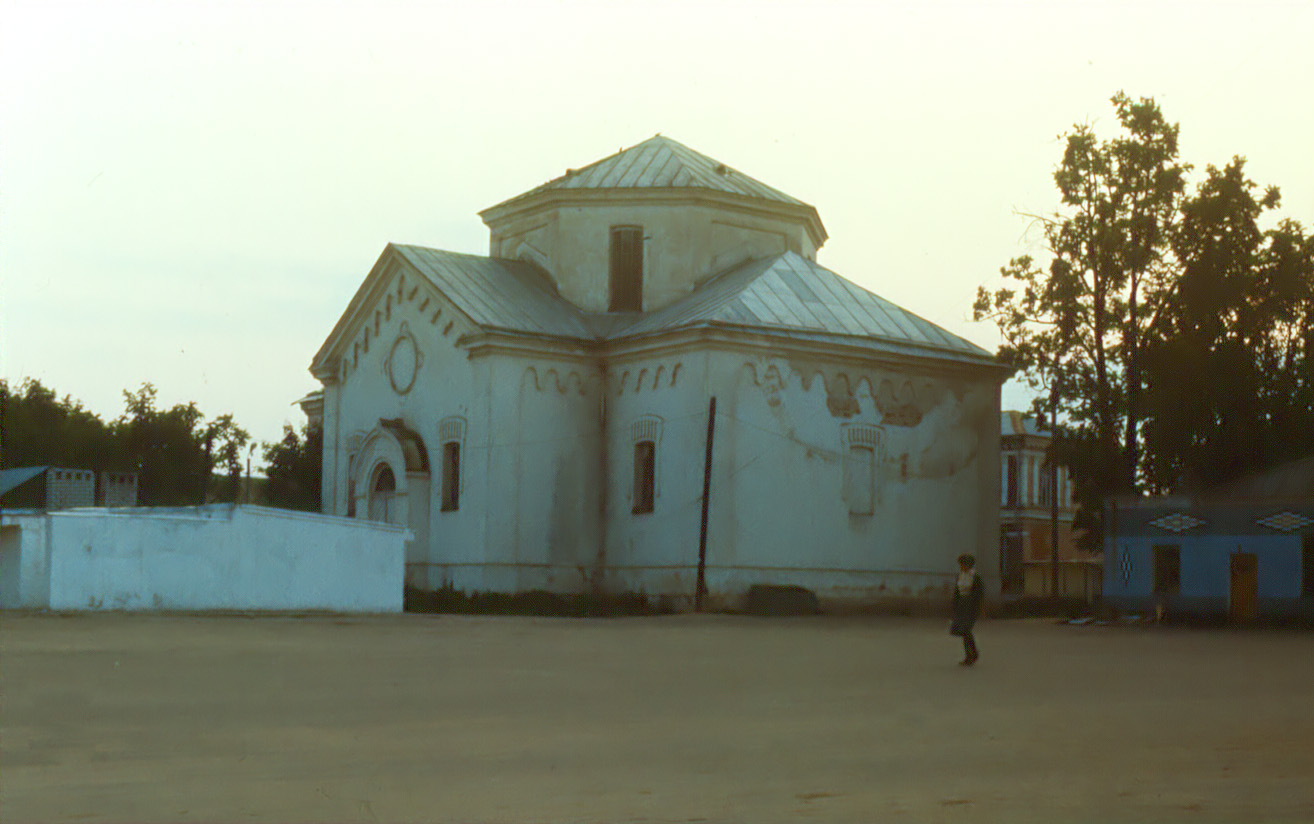
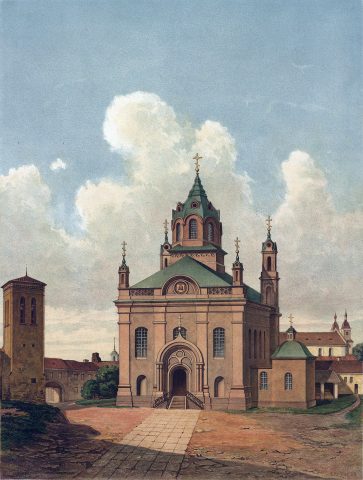
The architecture of the church reflects the transitional period in which it was constructed, blending late Baroque elements with the emerging simplicity of Neoclassicism. The façade is restrained yet elegant, with tall columns framing the entrance and a triangular pediment that gives the building a sense of dignity. Inside, the space feels open and airy, thanks to large windows that flood the interior with natural light. The vaulted ceilings are adorned with subtle stucco work, just enough to add character without overwhelming the senses. The overall effect is one of quiet reverence, a place designed for reflection rather than spectacle.
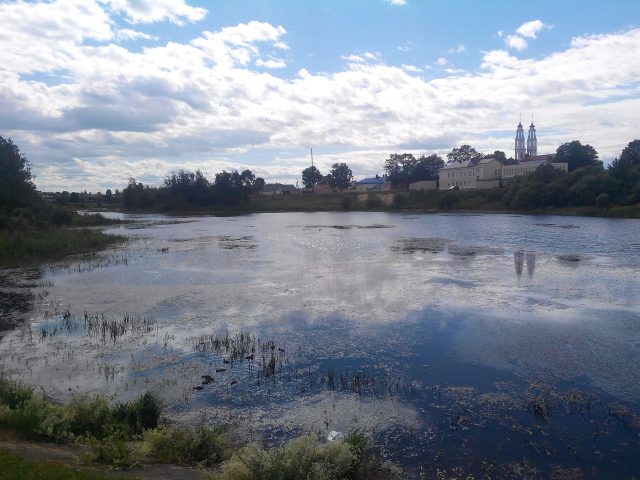
Ashmyany itself has always been a crossroads of sorts, situated near the border with Lithuania and shaped by the ebb and flow of different cultures. When the church was built, the region was part of the Polish-Lithuanian Commonwealth, and Catholicism played a central role in both religious and civic life. The Church of St. Michael wasn’t just a place of worship—it was a gathering point for the community, a symbol of identity in a land where allegiances were often divided. Even today, the church stands as a reminder of that complex heritage, a tangible link to a time when these lands were part of a much larger, multicultural world.
Like many religious sites in this part of Europe, the church has endured its share of upheavals. After the partitions of the Polish-Lithuanian Commonwealth in the late 18th century, the region came under Russian rule, and the role of the Catholic Church diminished. The church continued to function, but its place in society shifted. Later, during the Soviet era, it faced an even greater challenge—religious institutions were suppressed, and many churches were repurposed or left to decay. The Church of St. Michael was no exception, though its survival through those decades speaks to the resilience of the community that valued it.
It wasn’t until Belarus regained independence in the 1990s that the church was fully restored to its original purpose. Today, it serves as both an active place of worship and a historical monument, drawing visitors who are curious about the region’s past. There’s something quietly moving about stepping inside—a sense of continuity, as if the prayers offered here over centuries still linger in the air. The interior is well-preserved but not overly ornate, allowing the space to feel intimate rather than imposing.
What makes the Church of St. Michael particularly compelling is its unassuming nature. Unlike grand cathedrals in major cities, it doesn’t demand attention with towering spires or lavish decorations. Instead, it invites quiet contemplation, a moment of pause in a world that often feels too loud. The small park surrounding the church adds to this atmosphere, offering a place to sit and take in the surroundings. There are no crowds here, no hurried tourists snapping photos—just the occasional visitor or local parishioner, each absorbed in their own thoughts.
For those traveling through Belarus, the church offers a glimpse into the country’s lesser-known corners. Ashmyany itself is a town of modest size, but its history is rich, and the church is one of its most enduring landmarks. It’s the kind of place that doesn’t reveal its significance immediately—you have to slow down, look closely, and listen to the stories it holds. In a way, that’s part of its charm. It doesn’t shout its importance; it simply stands, as it has for centuries, a silent witness to the passage of time.