
Ashmyany
Belarus · 8 places
Photo: Францішак, CC BY-SA 3.0
Oshmyany is one of those quiet Belarusian towns where time seems to slow down just enough to let you notice the details—the way sunlight filters through the leaves of old linden trees, the creak of a wooden gate in a courtyard, or the distant chime of a church bell. Tucked near the Lithuanian border, it carries the subtle imprint of its neighbors, blending into the landscape without fanfare. The streets of the old quarter wind lazily between low wooden houses, their facades weathered but still standing, as if holding onto the stories of merchants and travelers who once passed through. There’s no rush here, no need to fill the silence. You can spend an afternoon wandering along the riverbank, watching the water drift past, or simply sitting on a bench, letting the hours stretch out like shadows in the evening light.
The town’s most enduring landmark is the remains of its medieval castle, though calling it a castle now feels almost generous. What’s left are fragments of walls and a few crumbling towers, their stones worn smooth by centuries of wind and rain. Yet even in this state, they have a presence—a quiet authority that makes it easy to imagine the fortress as it once was, standing guard over the surrounding lands. Locals still speak of its sieges with a mix of pride and nostalgia, and visitors often pause here, trying to picture the battles that once unfolded on these slopes. Nearby, a small chapel offers shelter from the elements, its dim interior a place to gather your thoughts before stepping back into the open air.
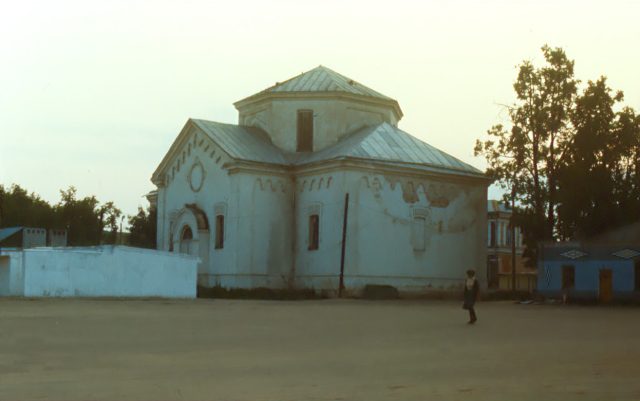
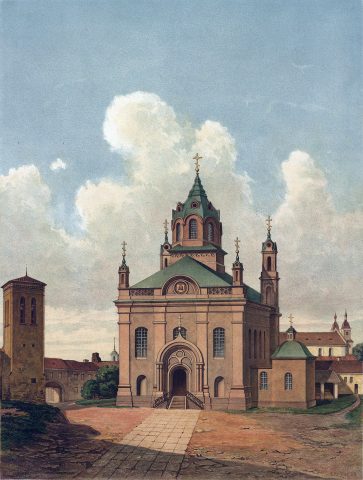
Oshmyany has long been a crossroads of faith, and its religious buildings tell that story in their own way. The Church of St. Michael the Archangel, with its sharp Gothic spires and meticulously kept interiors, stands as a striking contrast to the more modest Orthodox Church of St. Elijah. The latter, though unassuming in appearance, holds its own quiet significance, its walls echoing with the prayers of generations. Then there’s the old synagogue, a reminder of the Jewish community that once thrived here, its presence now woven into the town’s fabric like an old scarf passed down through the years.
Life in Oshmyany moves at its own unhurried pace. The local markets are where the town’s rhythm is most visible—farmers bringing in crates of just-picked vegetables, jars of honey still warm from the hive, and wheels of fresh cheese wrapped in cloth. In summer, the streets come alive with music and festivals, the parks filling with laughter and the scent of grilled sausages. Winter, though, is when the town truly slows down, the snow muffling footsteps and softening the edges of the world. There are no neon lights or crowded bars here, no tourist traps or guided tours. Instead, Oshmyany offers something simpler: a chance to step away from the noise, to breathe in the cool air, and to feel the weight of history in the quiet spaces between the past and the present.
See & Do
All of them
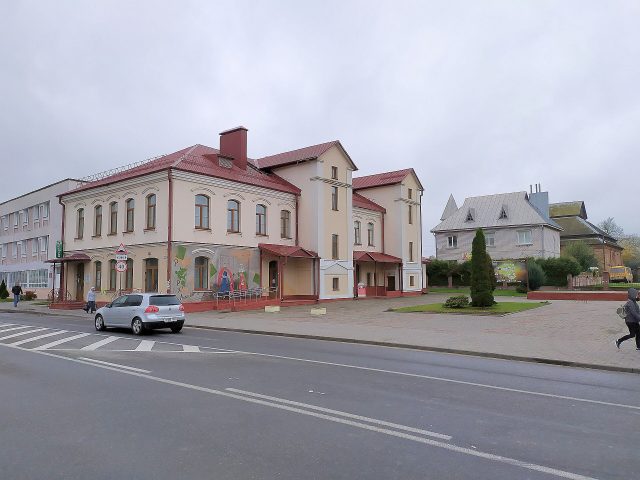
Places on the map
Marker colour follows the categoryClimate and weather
Detailed weather: Ashmyany- Average temperature
- 8 °C
- Precipitation per year
- 626 mm
- Sunshine hours per day
- 5.1 h
Average air temperature
°C
-3
-1
2
8
13
18
19
18
14
8
3
-1
Jan
Feb
Mar
Apr
May
Jun
Jul
Aug
Sep
Oct
Nov
Dec


