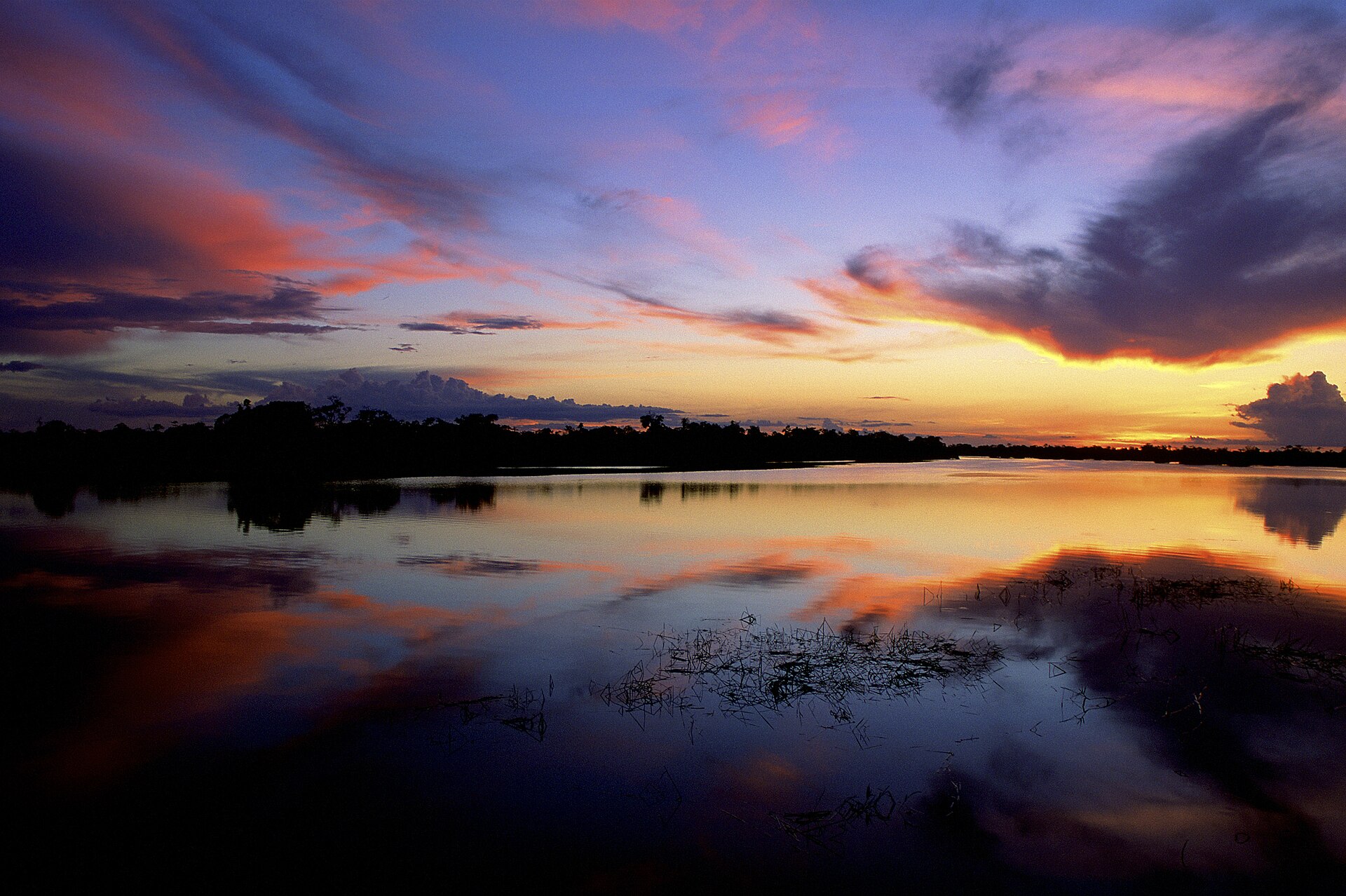
Jau National Park isn’t just a protected area—it’s one of Brazil’s last true wildernesses, a place where the Amazon remains almost untouched. Tucked deep in the state of Amazonas, the park sprawls along the Jau River, a major tributary of the Rio Negro. There are no roads here, no signs of modern life. The only way in is by boat, which means the journey itself is part of the experience. For those who make it, Jau offers something rare: a chance to step into a world that moves to the rhythm of the rainforest, not the clock.
Established in 1980 to safeguard the Amazon’s fragile ecosystems, the park is now a UNESCO World Heritage site. Its boundaries enclose a staggering diversity of life, much of it found nowhere else. Jaguars prowl the undergrowth, giant otters glide through the rivers, and pink river dolphins surface in the dark waters. The forests are a tangle of towering trees, their branches draped with vines and orchids, while the rivers teem with fish, including the legendary arapaima, one of the largest freshwater species in the world. This is a place where nature still dictates the rules, and humans are merely visitors.
For the Indigenous peoples who have called these lands home for centuries, Jau is more than a park—it’s sacred territory. Communities like the Yanomami and Tukano live here much as they always have, hunting, fishing, and gathering in harmony with the forest. Some still follow a semi-nomadic way of life, moving with the seasons. Their presence is a reminder that the Amazon isn’t just a wilderness; it’s a living culture, shaped by generations of knowledge about the land. Visitors might encounter these communities, though their villages are scattered and often remote, accessible only by canoe.
Traveling to Jau isn’t like visiting a typical tourist destination. There are no hotels, no restaurants, no paved paths—just basic camps set up for researchers and the occasional adventurer. Most who come here join organized expeditions, which might include river trips, nighttime wildlife spotting, or visits to Indigenous villages. The days are spent navigating the waterways or trekking through the forest, where every rustle of leaves could mean a monkey swinging overhead or a caiman slipping into the river. At night, the jungle comes alive with sounds: the distant calls of howler monkeys, the hum of insects, the occasional splash of a fish breaking the surface.
The Jau River is the park’s lifeline, its dark waters stained by the tannins of decaying vegetation. During the rainy season, the river swells, flooding vast stretches of forest and turning the landscape into a maze of waterways. Fish thrive in these conditions, and animals retreat to higher ground, creating a temporary world where land and water blur. When the dry season arrives, the waters recede, revealing sandbars and shallow pools perfect for fishing. The river’s moods shape life here, dictating where people can go and what they can do.
There’s no grand architecture in Jau, no monuments or museums—just the quiet presence of the forest itself. The only structures are the simple huts of Indigenous communities, built from wood and palm leaves, blending seamlessly into the surroundings. In a few places, ancient petroglyphs carved into rock offer a glimpse of the past, their meanings lost to time. These markings, left by long-gone peoples, hint at a history far older than the park itself.
Time moves differently in Jau. There are no schedules, no rush—just the slow cycle of days and nights, wet seasons and dry. Visitors often leave feeling as though they’ve stepped into another world, one where the rules of modern life don’t apply. That’s because Jau isn’t just a park; it’s a living, breathing ecosystem, one that exists on its own terms. The forest doesn’t care about your plans. It simply is.
For those who want to understand the Amazon—not as a postcard image, but as a real, breathing place—Jau is one of the best places to start. There are no crowds, no distractions, just the vastness of the rainforest and the quiet power of the river. It’s not a trip for everyone. You’ll trade comfort for something far more valuable: the chance to witness a world that has remained unchanged for centuries. And if you’re lucky, you might leave with the sense that you’ve touched something wild and enduring, something that exists beyond the reach of time.