Barcelos Bridge is one of those places that doesn’t demand attention at first glance but lingers in memory long after you’ve left. Stretching across the wide, slow-moving Negro River, it connects the two sides of a small Amazonian town, a place where life unfolds at the pace of the water below. For locals, it’s not just a structure of steel and concrete—it’s part of daily existence. People cross it to reach work, transport goods, or stroll along its narrow sidewalks on weekends. For visitors, the bridge becomes an unexpected symbol of this quiet, green corner of Brazil, far removed from the usual tourist trails.
The bridge was completed in the late 20th century, back when Barcelos was still finding its place in the world. Before its construction, crossing the river was a time-consuming affair. Ferries ran irregularly, and during the rainy season, the journey could be delayed for weeks. The bridge changed everything. It shortened the route to Manaus, opened up trade opportunities, and made life a little easier. Yet for many who live here, it remains just a bridge—unassuming, functional, but carrying the weight of history in its beams.
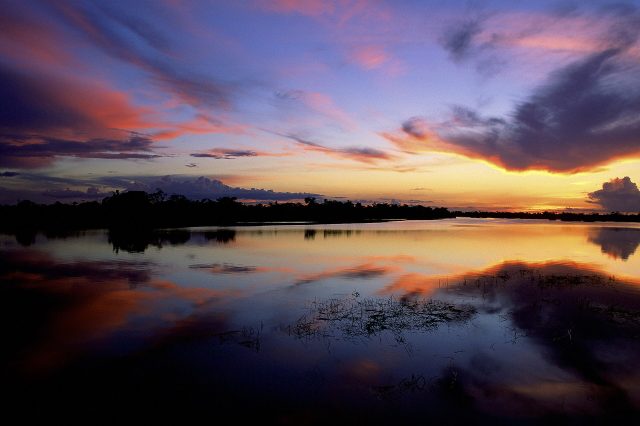
There’s nothing grand about its design. It’s a straightforward reinforced concrete structure with two lanes of traffic and narrow walkways on either side. It doesn’t aim to impress like the landmarks of Rio or São Paulo, and that’s precisely what makes it special. The bridge simply exists—solid, dependable, much like the Amazon itself. At dusk, when the sun dips behind the treetops and the river reflects shades of pink and gold, the bridge takes on a quiet beauty. Watching it from the shore, where fishermen mend their nets or cast their lines, the scene feels almost timeless.
Barcelos isn’t a place for rushing. There are no crowds, no souvenir shops, no bustling cafés. Life here moves to the rhythm of the river, and the bridge is a fitting metaphor for that pace. It doesn’t just connect two banks—it bridges eras. On one side lies modernity: asphalt, the occasional car, the hum of a small town. On the other, the jungle stretches endlessly, home to indigenous communities still living by ancient traditions. Crossing the bridge, you can’t help but feel the thin line between past and present, between the world we’ve built and the one that was here long before us.
For travelers who find themselves in Barcelos, the bridge often becomes a starting point. From here, you can watch the river’s daily life unfold: barges carrying goods, locals in their boats, and sometimes even pink river dolphins gliding close to the shore. During the rainy season, the water rises so high it seems the bridge might disappear beneath the waves. But it stands firm, as it has for decades, a quiet reminder that even in this remote corner of the world, some things endure.
The town around the bridge has its own unhurried rhythm. Mornings bring the market, where vendors sell fresh fish and tropical fruits. Afternoons are quiet, the streets nearly empty under the equatorial sun. By evening, locals gather by the river to talk, laugh, or simply sit in silence. To them, the bridge isn’t a landmark—it’s part of the landscape, as natural as the trees or the sky. And that’s the beauty of it. It doesn’t demand admiration, but if you take a moment to look, you’ll see more than just concrete and steel.
The Amazon doesn’t tolerate haste. Here, everything follows nature’s pace: rivers flood, trees grow, people live in harmony with the land. The Barcelos Bridge is one of the few man-made structures that doesn’t disrupt that balance. It doesn’t compete with the jungle or try to overpower it. Instead, it exists alongside it, another thread in the vast, intricate tapestry of this place. Maybe that’s why it doesn’t feel out of place—it seems as if it’s always been here, as much a part of the landscape as the river or the forest.
If you ever find yourself in this part of Brazil, don’t rush past. Stop on the bridge, watch the water, the boats, the distant shore where the jungle blurs into the horizon. There are no grand declarations here, no flashy attractions. But there is something real—something you won’t find in guidebooks, something that stays with you. After all, not every bridge can tell as many stories as this quiet crossing over the Negro River.