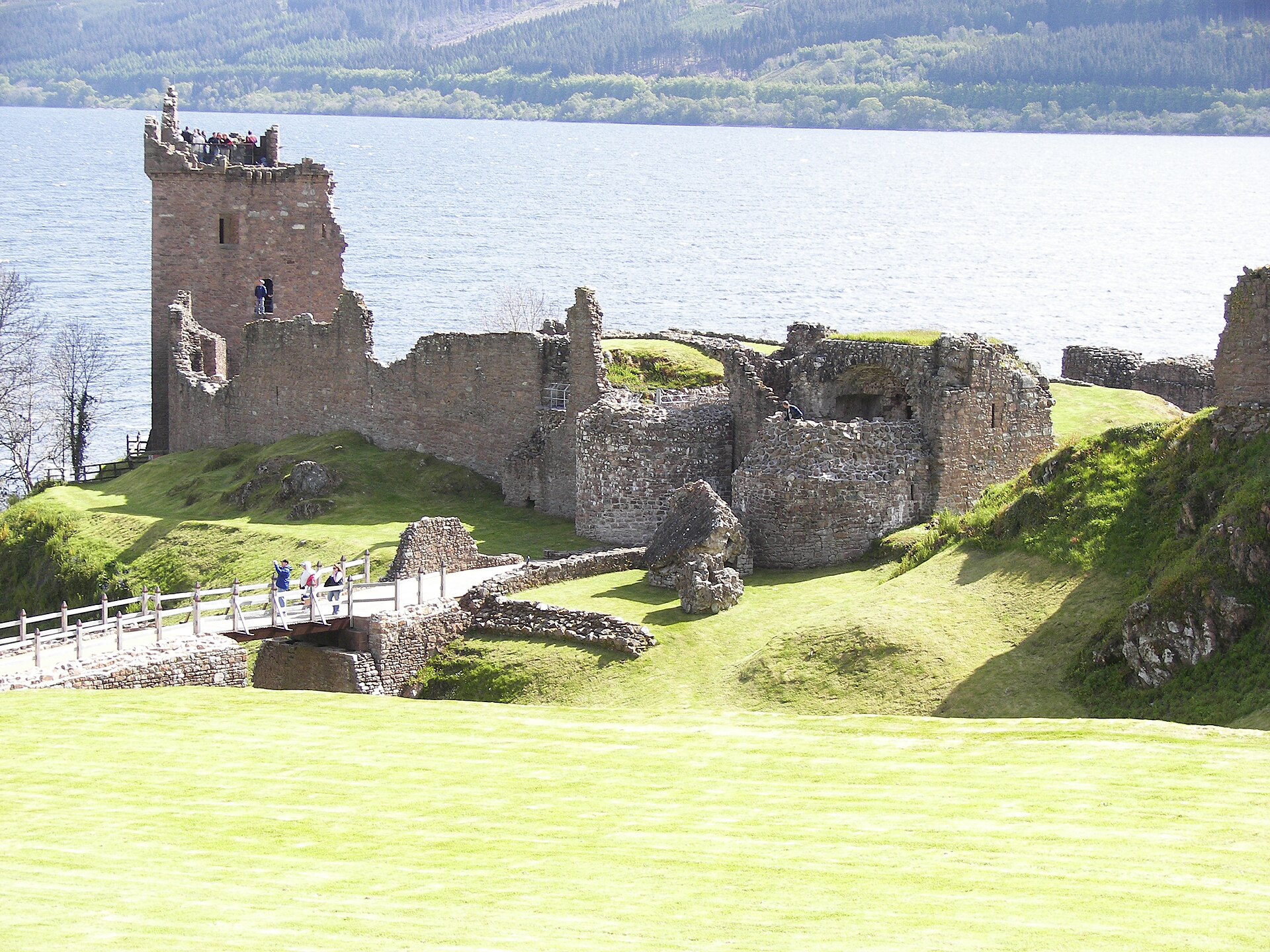
Perched on the shores of Loch Ness, Urquhart Castle stands as a quiet witness to Scotland’s turbulent past. Its weathered stones, draped in moss and ivy, rise from the water’s edge, their crumbling walls hinting at centuries of conflict and power struggles. Today, the ruins draw visitors not just for their historical weight, but for the lingering sense of mystery that clings to the place—one that extends beyond the castle itself to the dark, fathomless waters of the loch below.
The site has been a place of human activity for far longer than the castle’s current form suggests. Archaeological evidence points to early medieval fortifications, though the exact origins remain debated. By the 13th century, Urquhart had become a key stronghold, commanding the crossing of Loch Ness and the trade routes that snaked through the Highlands. Control over the castle meant influence over the region, and it changed hands repeatedly as Scottish kings, nobles, and rival clans vied for dominance.
The 14th century brought some of the castle’s most dramatic moments. During the Wars of Scottish Independence, Urquhart became a pawn in the struggle between Scotland and England. It was besieged, captured, and recaptured, its walls bearing the scars of repeated assaults. In 1303, the castle suffered heavy damage during an English siege, only to be rebuilt and fortified once more. Yet its reputation as an impregnable fortress proved fragile—by 1332, it had fallen again to English forces, and in 1509, it was deliberately destroyed to prevent it from being used by enemies. What remains today is a shadow of its former self, but even in ruin, the structure commands attention.
The most striking feature is the Grant Tower, a massive keep that looms over the rest of the ruins. Inside, the remnants of great halls and chambers offer a glimpse into the lives of the lords and warriors who once gathered here. The dungeons below, dark and cramped, tell a grimmer story. From the top of the tower, the view stretches across Loch Ness, its surface shifting with the light—placid one moment, brooding the next. It’s easy to see why this place has become synonymous with legend.
Urquhart Castle is steeped in atmosphere, a place where history feels almost tangible. The narrow staircases, the echoing halls, the wind whistling through the gaps in the walls—all of it conjures images of sentries on watch, prisoners in chains, and feasts that once filled the great rooms. But the castle’s most enduring association is with the myth of the Loch Ness Monster. There’s no evidence that Nessie exists, of course, yet the setting seems tailor-made for such stories. On misty mornings, when the loch is shrouded in fog, or at dusk, when the water turns inky and still, the sense of mystery deepens.
Beyond the castle, the surrounding landscape is just as compelling. Rolling hills blanketed in heather stretch into the distance, while dense forests provide shelter for red deer and birds of prey. Walking trails wind along the loch’s edge, offering quiet moments to take in the rugged beauty of the Highlands. On clear days, the water takes on an almost surreal shade of blue, and the reflection of the ruins in its surface creates a scene that feels suspended in time.
Urquhart isn’t a place that shouts its history—it lets the stones speak for themselves. Some visitors come for a quick look, snapping photos before moving on, while others linger, exploring every corner or sitting by the water’s edge to soak in the silence. The castle doesn’t give up its secrets easily, and perhaps that’s part of its appeal. There’s always the sense that something remains unseen, something just beyond understanding, hidden in the ancient walls or the depths of the loch.
For those who take the time to wander the ruins, the experience is more than just a history lesson. It’s a chance to step into a story that’s still unfolding, where the past and present blur. The wind carries whispers of battles long forgotten, the water holds its own unspoken tales, and the stones stand as silent witnesses to it all. Leaving Urquhart feels like stepping away from a conversation that’s far from over.