Perched on a gentle hill overlooking the quiet town of Tomar, the castle stands as a silent witness to Portugal’s layered past. Its weathered stone walls, visible from afar, carry the weight of centuries—each block laid by hands that shaped not just a fortress, but the very identity of a nation. Built in the 12th century by the Knights Templar, the castle was more than a military stronghold; it was a symbol of resilience during the Reconquista, the long struggle to reclaim the Iberian Peninsula from Moorish rule. Here, on the frontier between Christian and Muslim territories, the Templars didn’t just defend—they built. Their vision extended beyond battles, laying the groundwork for Portugal’s independence. When the order was dissolved in the early 1300s, the castle passed to the Order of Christ, a successor that would carry forward the Templars’ legacy, turning Tomar into a spiritual and strategic heart of the kingdom.
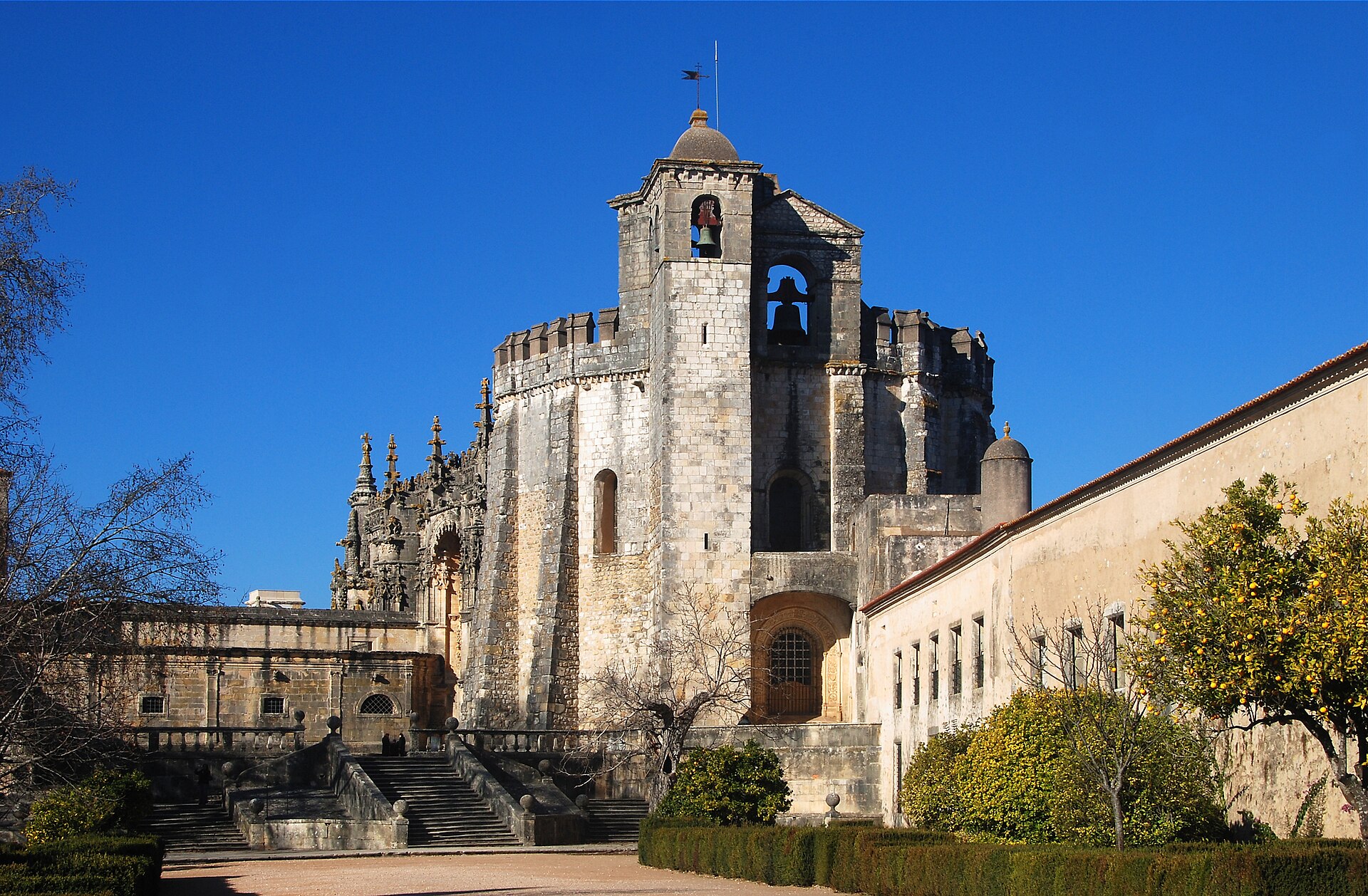
The architecture of the castle reflects its shifting roles over time. The outer walls, thick and unyielding, are punctuated by narrow slits for archers, designed to repel invaders while minimizing exposure. The main gate, flanked by sturdy towers, opens into a courtyard where soldiers once drilled and supplies were stored. A standout feature is the cylindrical keep, a hallmark of Templar design, its rounded shape deflecting siege engines and arrows with brutal efficiency. Later additions soften the fortress’s austere lines—gothic windows, intricate carvings, and arched doorways hint at a time when the castle’s purpose evolved from defense to devotion. Yet the core remains unchanged: a structure built to endure, its stones holding stories of sieges, prayers, and the quiet moments in between.
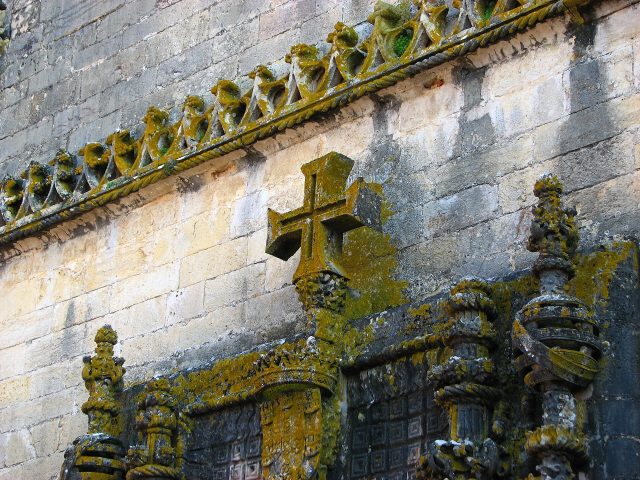
But the true marvel of Tomar lies not within the castle walls, but in the adjoining Convent of Christ. Begun in the 15th century, the convent became a powerhouse of Portugal’s Age of Discoveries, a place where explorers like Prince Henry the Navigator and Vasco da Gama sought blessings before setting sail into the unknown. The convent’s most striking feature is its rotunda, a round church modeled after Jerusalem’s Church of the Holy Sepulchre. Stepping inside, the eye is drawn upward to soaring vaults, stained glass filtering sunlight into jewel-toned hues, and stonework so intricate it seems to breathe. The space feels timeless, as if the murmurs of monks and the rustle of maps being unfurled still linger in the air.
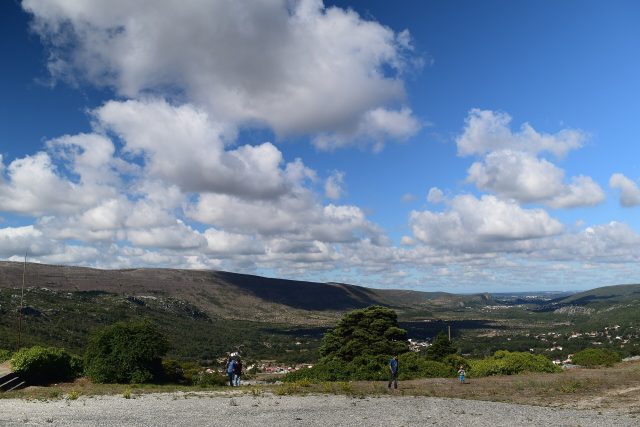
Wandering through the complex, it’s easy to imagine the past unfolding around you. In the castle’s courtyard, the clatter of hooves and the shouts of knights training for battle might almost be heard. The convent’s cloisters, with their arched walkways and manicured gardens, offer a quieter contrast—here, the only sounds are the crunch of gravel underfoot and the occasional whisper of wind through the columns. Climbing to the upper terraces rewards visitors with a sweeping view of Tomar and the surrounding countryside, where the Nabão River winds through green hills dotted with olive groves and vineyards. On clear days, the horizon stretches endlessly, a reminder of the vast world Portugal once set out to explore.
Tomar’s significance to Portugal goes beyond its medieval walls. The town itself feels like a living extension of the castle’s history, its narrow streets and whitewashed houses exuding a calm that belies its past importance. Unlike Lisbon or Porto, Tomar moves at its own unhurried pace, and visitors quickly find themselves slowing down to match it. The central square, lined with cafés, invites lingering over coffee and pastéis de nata, while the riverbanks offer a peaceful spot to watch the water flow. In the evenings, the castle is bathed in golden light, its silhouette a stark contrast against the darkening sky—a visual echo of the days when it stood as the town’s beating heart.
Inside the convent, history is preserved in vivid detail. Frescoes depict biblical scenes with a vibrancy that belies their age, while manuscripts and artifacts offer glimpses into the daily lives of knights and monks. The tombs of grand masters lie in quiet chapels, their effigies carved with care, and altars gleam with gold and lapis lazuli, a testament to the wealth and devotion of the Order of Christ. Each room tells a story, whether of the monks who transcribed texts by candlelight or the navigators who pored over maps, plotting routes to distant lands. The past here isn’t confined to plaques or glass cases; it’s woven into the very fabric of the place.
What makes Tomar’s castle and convent so compelling is their understated power. There are no grand declarations of importance, no gilded halls designed to impress. Instead, the strength of the place lies in its authenticity—its ability to make history feel tangible. The worn steps of the rotunda, the cool shade of the cloisters, the way the light slants through the narrow windows of the castle’s keep all serve as reminders that this was once a living, breathing space. The Templars and the Order of Christ didn’t just leave behind stone and mortar; they left behind a legacy that shaped Portugal’s rise as a global power.
Today, Tomar remains a town out of time, a place where the past and present coexist with ease. The castle and convent are its crown jewels, but the town itself is what makes the experience complete. There’s no rush here, no pressure to tick off sights and move on. Instead, visitors are encouraged to wander, to sit in the shade of a centuries-old tree, to watch the river flow as it has for generations. In a world that often feels disconnected from history, Tomar offers a rare chance to step back—to feel the weight of the past not as a distant concept, but as something real, something that still shapes the present.
For those who take the time to explore, Tomar reveals itself slowly, like the turning of a well-worn page. It’s a place where history isn’t just remembered; it’s lived. The castle’s stones, the convent’s arches, the quiet streets of the town all speak of a Portugal that is deeper and richer than its beaches and fado music. Here, in this unassuming corner of the country, the soul of Portugal is laid bare—a soul forged in faith, courage, and the unshakable belief in the unknown. And that, perhaps, is the greatest discovery of all.