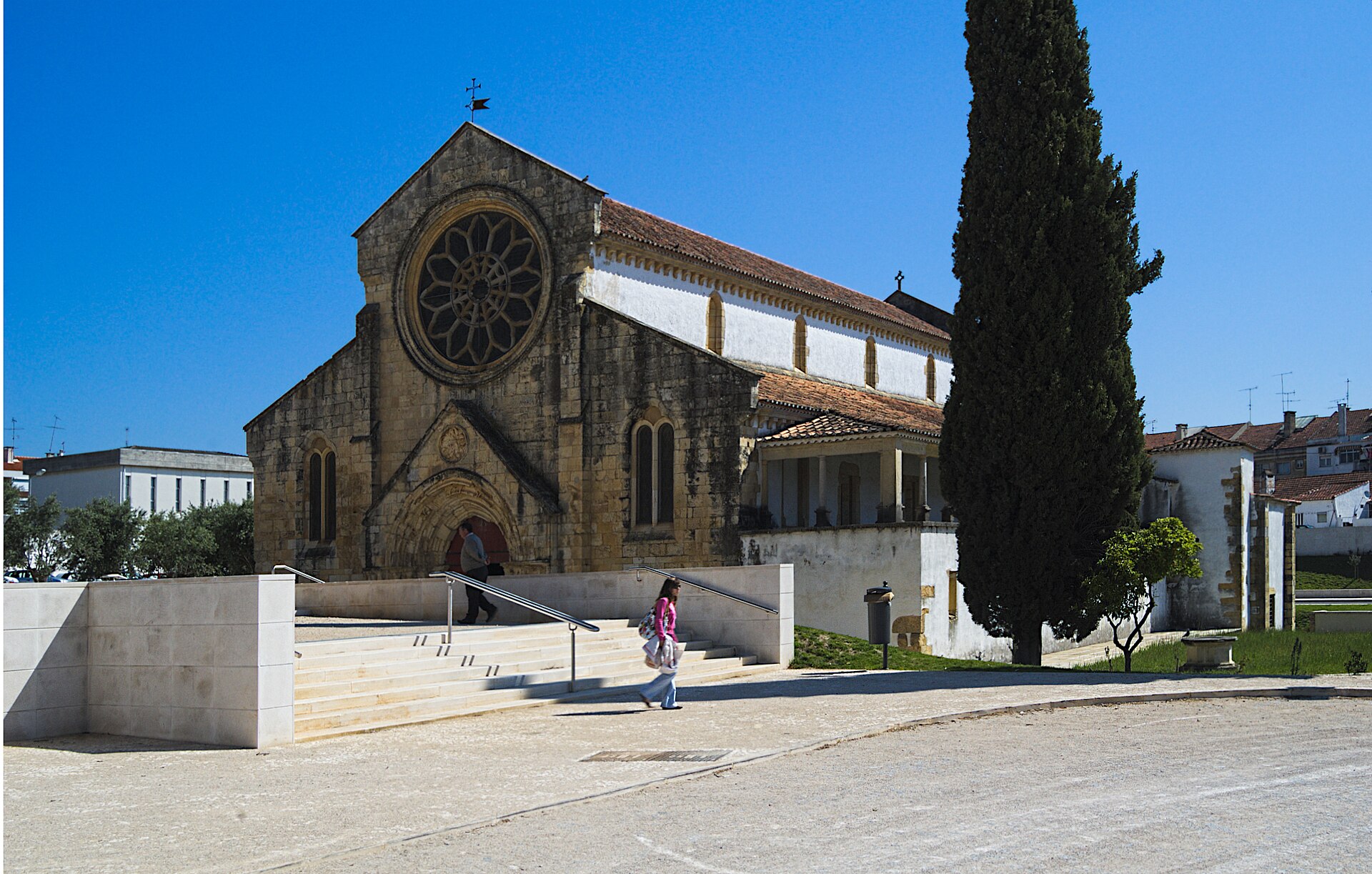
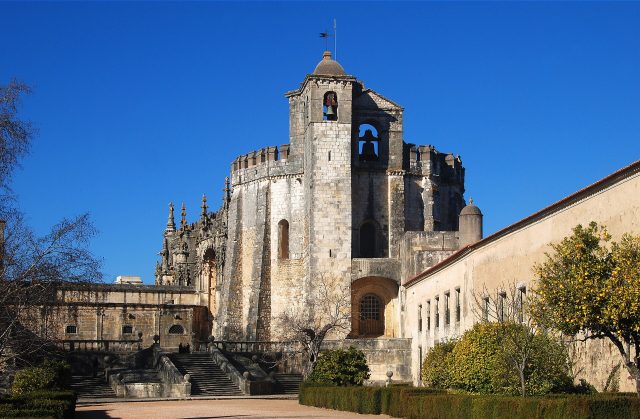
Santa Maria do Olival stands quietly in the heart of Tomar, a town where history feels alive in every stone. Tucked away on a narrow street just steps from the famous Convent of Christ, it rarely draws the same crowds, and that’s part of its charm. The church has a way of making time slow down—locals drift in and out with quiet reverence, while visitors who stumble upon it often linger longer than they planned, as if the stillness of the place has a way of holding them.
Its origins stretch back to the 12th century, when Tomar was still finding its footing as a stronghold of the Knights Templar. The first written records mention the church in 1160, though historians debate whether this was the year it was built or simply when it was first documented. What’s certain is that it began as part of a monastic complex, serving as a place of worship for the knights. Over the centuries, it underwent repairs and renovations, but its Romanesque bones remain visible, a testament to its age. The thick walls and sturdy arches speak of an era when buildings were meant to endure, not just impress.
From the outside, the church is unassuming. The façade is plain, made of rough gray stone, with narrow windows that resemble arrow slits more than sources of light. The entrance is modest, framed by a simple rounded arch. Inside, the space unfolds in three naves, divided by sturdy columns that rise to support the vaulted ceiling. The altar, as tradition dictates, faces east, and the light that filters through the small windows is soft, almost hesitant, as if reluctant to disturb the quiet.
The most striking feature inside is the main altarpiece, a later addition from the 17th century. Crafted in the Mannerist style, it’s a world apart from the church’s medieval simplicity. Gilded carvings, intricate patterns, and figures of saints gleam against the austere stone walls, creating a contrast that feels almost deliberate. It’s as if the church itself is a conversation between eras—one that values both the solemnity of the past and the exuberance of what came after.
For centuries, Santa Maria do Olival was more than just a place of worship. It was the heart of the community, where baptisms, weddings, and funerals marked the rhythms of life in Tomar. The church held relics tied to the town’s history and the Templar Order, though many were lost or moved after the order was dissolved in the early 1300s. Today, only fragments remain, but they’re enough to hint at the church’s former importance. The worn floor tiles, some bearing the names of long-forgotten nobles and knights, tell silent stories of those who chose to be buried here, close to what they considered sacred.
The church still serves its original purpose, though services are less frequent now. On weekdays, the doors are usually open, inviting visitors to step inside. There’s no grand spectacle here, no crowds jostling for the best view. Instead, there’s a sense of intimacy, as if the building has chosen to share its secrets only with those who take the time to listen. The scent of old stone and candle wax lingers in the air, and the creak of the wooden floorboards underfoot feels like a whisper from the past.
Tomar is often called the cradle of Portuguese statehood, and Santa Maria do Olival is one of the threads that weave its history together. It may not have the grandeur of the Convent of Christ or the fame of the Templar Castle, but that’s precisely why it feels so authentic. There’s no need for fanfare here—just the quiet weight of centuries, the echoes of prayers long since spoken, and the knowledge that this place has seen generations come and go. For those who seek it out, it offers something rare: a moment of stillness in a world that moves too fast.