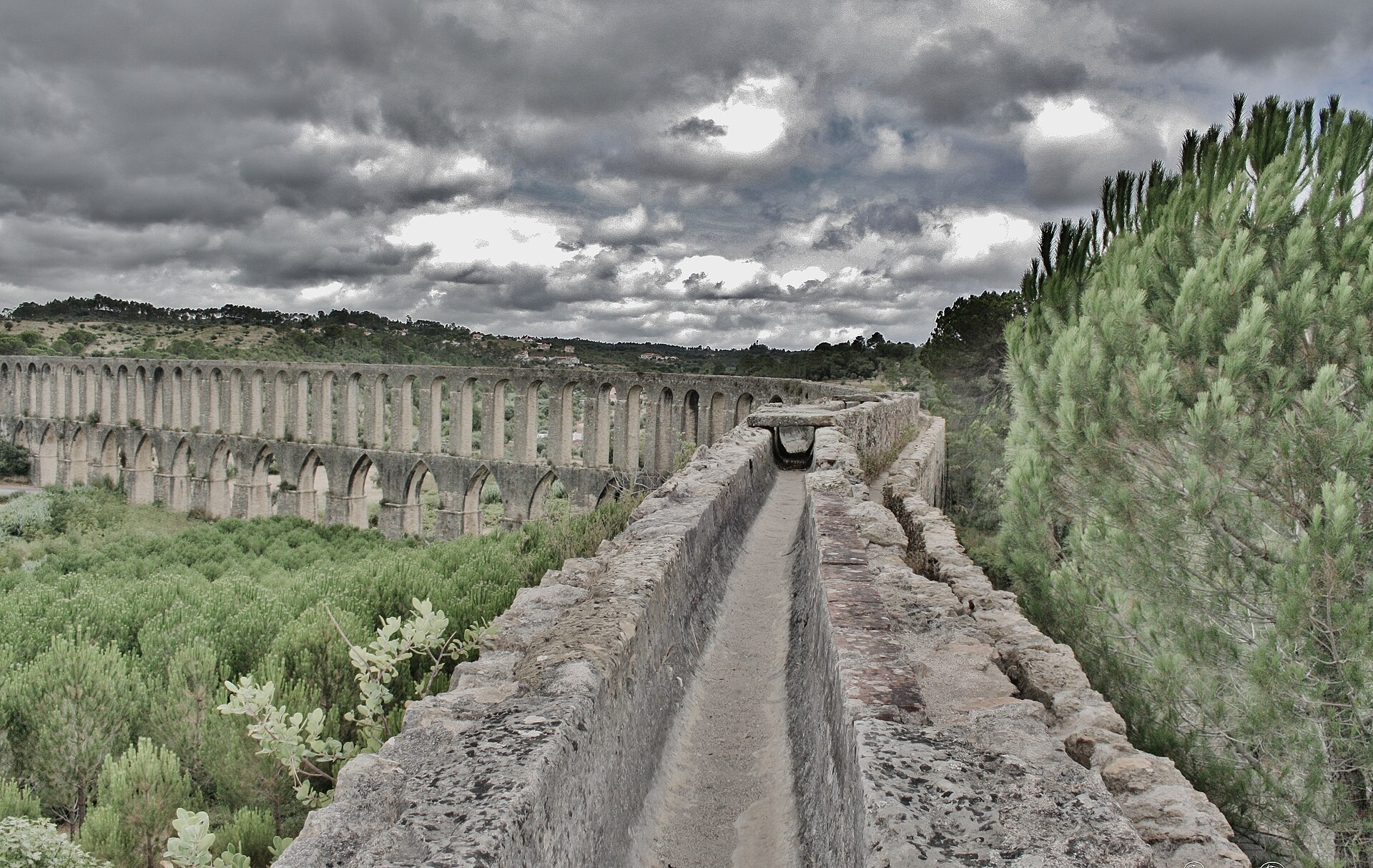
The Pegões Aqueduct stretches across the hills beneath Tomar like a ribbon of stone, its arches rising against the landscape as if carved by time itself. Built in the late 16th century, it was an answer to a pressing problem: Tomar, perched on higher ground, suffered from chronic water shortages, and the Convent of Christ needed a reliable supply. Engineers designed a nearly six-kilometer channel to carry water from mountain springs to the convent and the city’s fountains, a feat that took nearly fifty years to complete.
The aqueduct’s most striking section is where it crosses a valley, its double row of arches creating a tunnel-like effect that seems to stretch into infinity. The stone, a local limestone, was cut and fitted with precision, the blocks still holding firm after centuries. On clear days, the view from the top takes in Tomar’s rooftops and the rolling hills beyond, where vineyards and olive groves ripple in the wind. The height of the arches—some reaching twenty meters—gives the structure an almost gravity-defying lightness, as if the stones were stacked by hands more patient than human.
At its peak, the aqueduct was a lifeline for the city. Water flowed not just to the convent but to public baths, fountains, and private homes, a rare luxury in an era when running water was a privilege. Today, the channel is dry, but the aqueduct remains a testament to persistence, a reminder of how much effort once went into something as simple as bringing water to a thirsty town. The old maintenance hatches and drainage spouts are still visible, their ironwork rusted but intact, hinting at the daily upkeep that once kept the system running.
Walking along the aqueduct is technically off-limits, though that hasn’t stopped visitors from following the narrow path that runs beside the water channel. The climb to the top is unguarded, with no railings to break the fall if you slip. In the rain, the stones darken, and water trickles down the sides, turning the structure into something almost alive. The silence up here is broken only by the wind and the occasional bleat of sheep from the fields below. It’s easy to imagine the aqueduct as it once was, humming with the sound of flowing water, a quiet but vital force in the life of the city.
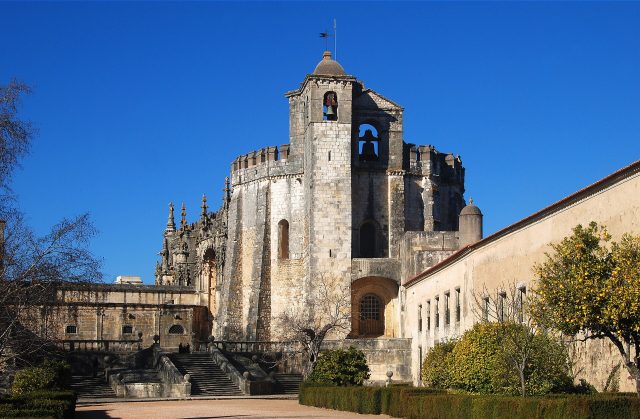
Unlike the Convent of Christ or the Templar Castle, the Pegões Aqueduct doesn’t draw crowds. It stands apart, a quiet giant in the landscape, overshadowed by more famous landmarks but no less impressive. Photographers are drawn to it for the way the light changes its character—cool and austere at dawn, golden and soft at dusk. The lack of signage or tourist infrastructure only adds to its appeal. There are no explanations, no guided tours, just the aqueduct and the land around it, unchanged for centuries.
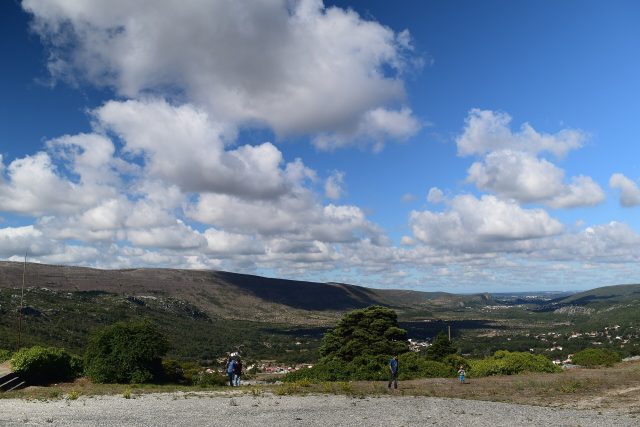
To see the aqueduct properly, you have to leave the main roads behind. The best views are from the road to Leiria, but to get close, you’ll need to take a dirt track and walk. The surrounding countryside is typical of central Portugal: fields of wheat and sunflowers, small farms with terracotta roofs, and the occasional flock of sheep grazing beneath the arches. The air smells of dry grass and wild herbs, and the only sounds are the wind and the distant clatter of a tractor. It’s a place where time moves differently, where the past feels closer than the present.
The aqueduct is protected as a national monument, but it hasn’t been turned into a museum piece. There are no gift shops, no interpretive panels, no crowds. Just stone, sky, and the occasional local taking a stroll or sitting on the grass with a book. It’s one of those rare places where you can be alone with history, undisturbed by the usual trappings of tourism. The lack of fanfare makes it feel more authentic, as if the aqueduct is still doing what it was meant to do—simply existing, quietly and enduringly.
More than just an engineering marvel, the Pegões Aqueduct is a bridge between the past and the present. It shows how human ingenuity can shape the land without overwhelming it. The arches don’t dominate the landscape; they complement it, their curves echoing the hills around them. For some, it’s a technical achievement, a reminder of the skill and labor that went into its construction. For others, it’s a place to think, to walk, to watch the light change over the stones. And for many, it’s just a beautiful thing to look at, a moment of stillness in a world that moves too fast.