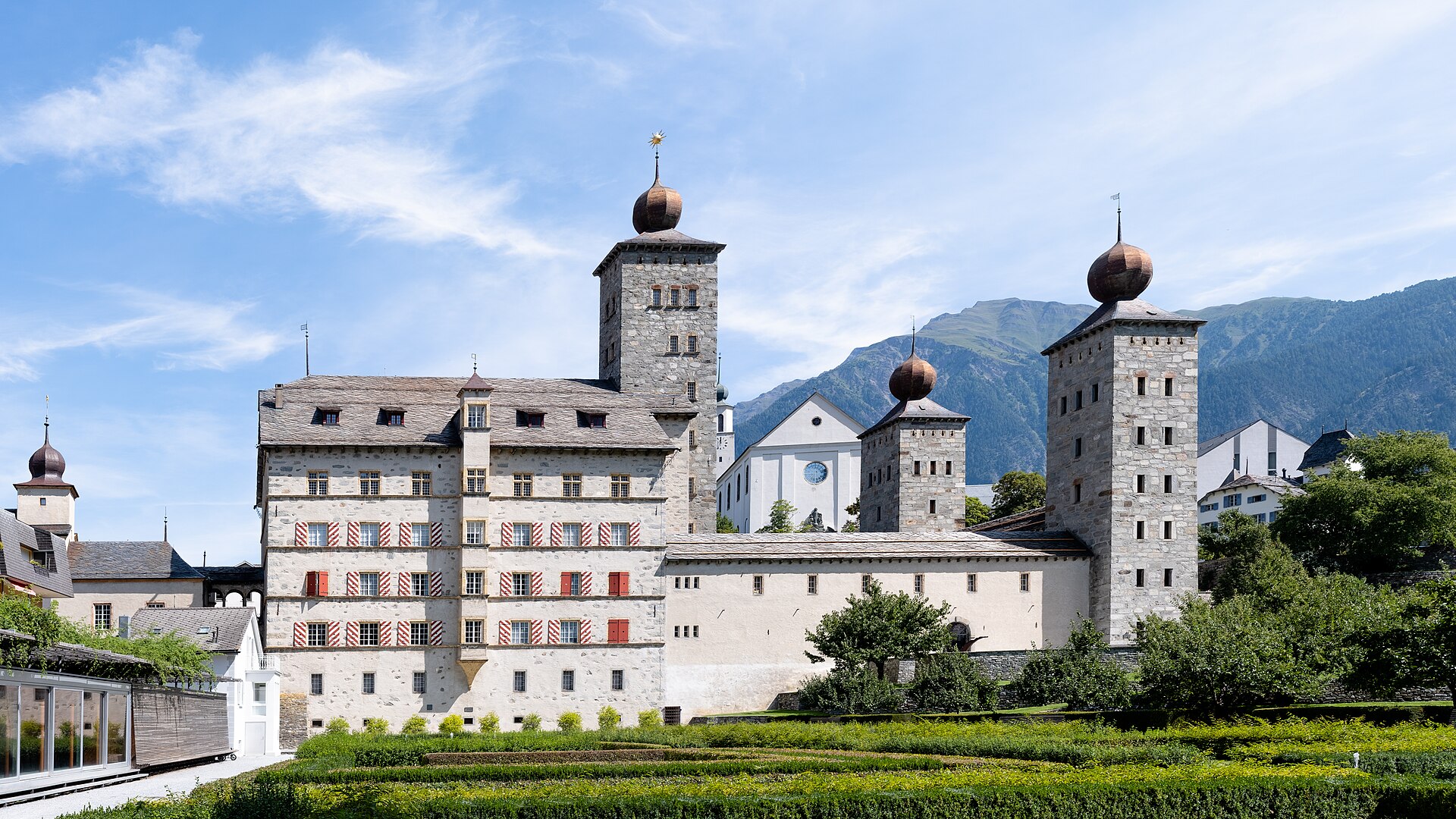
Perched on the edge of Fisch, a quiet town in Upper Valais where the Alps begin to soften into rolling valleys and sun-drenched vineyards, Stockalper Castle commands attention without demanding it. Its pale stone walls and three distinctive towers rise above the landscape, catching the light in a way that makes them seem almost weightless against the mountains. Unlike the grim medieval fortresses that dot Switzerland’s history, this place feels different—less like a stronghold built for war and more like a statement of ambition, a home designed for a man who wanted to live with both power and grace.
The man behind the castle was Kaspar Stockalper, a figure who stood out even in an era of larger-than-life merchants and power brokers. In the 17th century, when Europe’s trade routes were shifting and the Alps were no longer just a barrier but a bridge between north and south, Stockalper saw opportunity where others saw only rugged terrain. He controlled the Simplon and St. Gotthard passes, turning Valais into a vital link between Italy and Northern Europe. His influence stretched far beyond trade—he owned salt mines, customs houses, warehouses, and even a fleet of boats on Lake Geneva. The castle wasn’t just his residence; it was the physical embodiment of his reach, a declaration that this remote corner of Switzerland was, for a time, the center of something much larger.
Construction began in 1658 and took nearly two decades to complete. What emerged was unlike anything else in Switzerland at the time. Instead of the heavy Gothic lines typical of alpine architecture, Stockalper’s castle borrowed from the Renaissance elegance of Italy. The three towers, each crowned with a dome, give the building a lightness that feels almost Mediterranean. The central tower, with its open loggia on the upper floor, offers a sweeping view of the Rhône Valley—a view Stockalper must have enjoyed often, knowing that the roads winding through those hills were his to command. Inside, the grand halls were once adorned with frescoes, intricate plasterwork, and carved furniture, though much of that splendor has faded with time.
Today, the castle is more than just a museum; it’s a place where the past feels tangible. Some of the original painted ceilings remain, their scenes from classical mythology hinting at the cultural influences that shaped Stockalper’s world. In the cellars, massive oak barrels still stand, once used to store wine, salt, and other goods that passed through his hands. The arcaded courtyard, where concerts and exhibitions are held in the summer, adds to the sense that this was always meant to be a place of gathering, not just isolation. Unlike the crowded tourist hotspots elsewhere in Switzerland, Stockalper Castle retains a quiet dignity, as if it’s still waiting for its owner to return.
Fisch itself is the kind of town that moves at its own pace, where life hasn’t changed much in centuries. The local dialect, a mix of German and French, reflects the region’s position between two cultures. Surrounding the castle, vineyards stretch across the hillsides, producing the grapes for Valais’ renowned wines. In autumn, when the harvest begins, the air is thick with the scent of ripening fruit, and the landscape glows in shades of gold and red. The castle, bathed in the soft light of the season, looks like it belongs in an old painting—timeless, almost unreal.
Stockalper wasn’t just a builder; he was a visionary who understood that his success depended on the prosperity of the entire valley. He funded roads, bridges, and even churches, investing in the infrastructure that would keep trade flowing. But empires don’t last forever. After his death in 1691, his business interests fragmented, and the castle passed through various hands before being acquired by the canton of Valais in the 19th century. Today, it’s open to visitors, though it hasn’t been polished into a glossy tourist attraction. That’s part of its charm—it feels lived-in, as if the stories of the people who shaped it are still lingering in the air.
Visiting Stockalper Castle isn’t like stepping into a history book. There’s no sterile museum atmosphere here, no sense that the past has been neatly packaged for display. Instead, it feels like walking through someone’s home—someone who left behind more than just walls and furniture. The energy of the place is still palpable, from the worn stone steps to the echoes in the grand halls. Perhaps that’s because Stockalper built it for himself, not for posterity. Every detail, from the placement of the towers to the view from the loggia, was chosen with intention, reflecting the man who saw himself as the king of these mountains.
If you find yourself in Fisch, take your time. Wander through the narrow streets of the town, where small cafés serve local cheeses and wines that have been made the same way for generations. Then make your way up to the castle, preferably in the late afternoon when the sun casts long shadows across the vineyards. As you stand in the courtyard or look out from the loggia, it’s easy to imagine the scene centuries ago: mule trains laden with goods winding through the passes, merchants haggling in the shade of the arcades, and Stockalper himself, standing on his balcony, surveying the valley that was, for a time, his kingdom. The past doesn’t feel distant here—it feels like it’s just beneath the surface, waiting to be discovered.