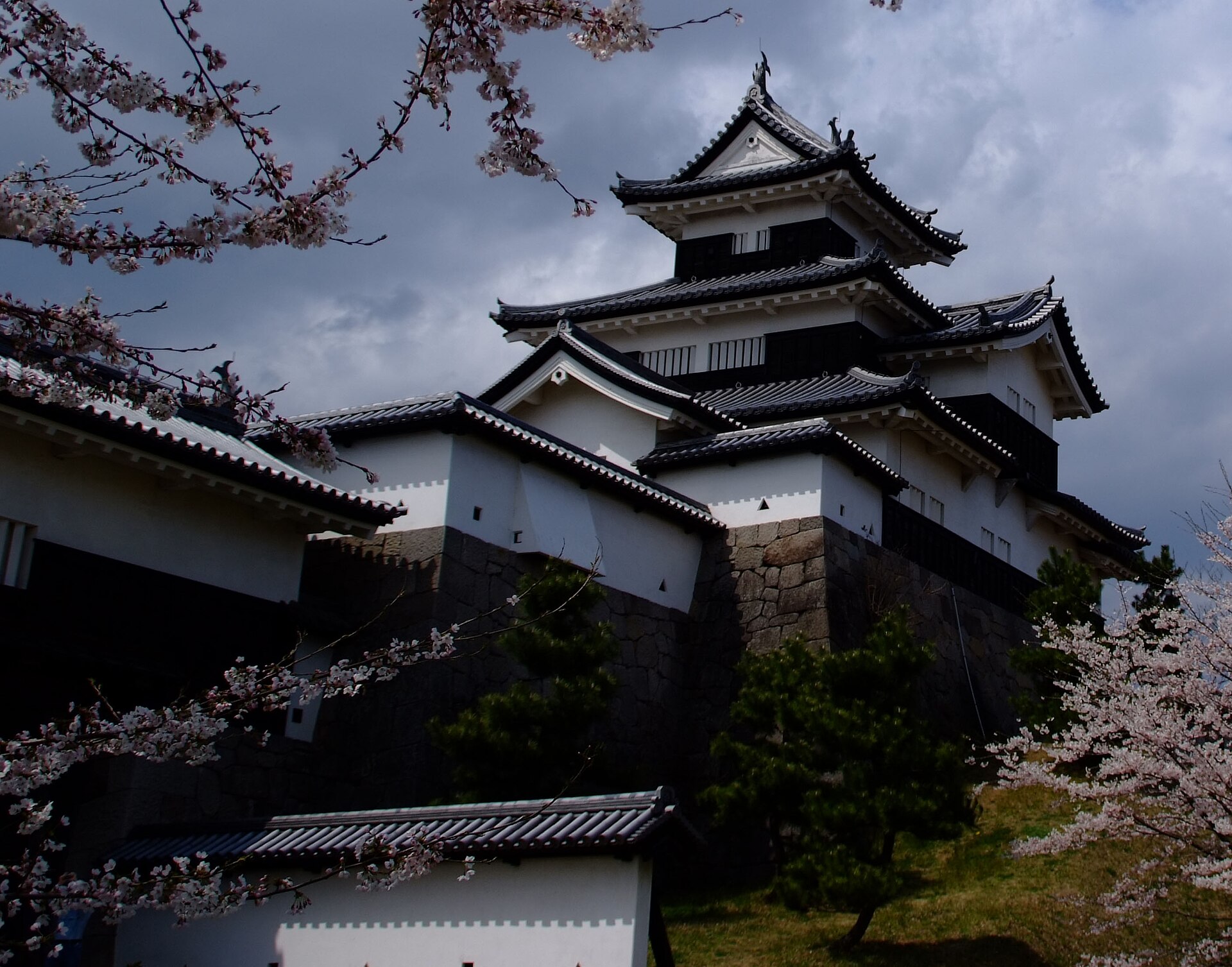
Shirakawa-Komine Castle is one of those rare places in Japan where history doesn’t just exist in books or museums—it lingers in the air, in the worn stones underfoot, in the quiet rustle of leaves around its walls. Perched on a hill in the small town of Shirakawa in northern Honshu, the castle overlooks the valley below like a silent guardian of centuries past. Unlike the meticulously restored fortresses of Himeji or Matsumoto, which often feel like polished relics of another era, Shirakawa-Komine retains a sense of authenticity. Its weathered walls, crumbling ramparts, and overgrown moats speak of battles fought, alliances forged, and the slow passage of time that has softened its edges without erasing its story.
The castle’s origins trace back to the late 16th century, a turbulent period when the region was a battleground for warring samurai clans. Built initially as a fortified outpost, it changed hands multiple times before becoming a stronghold for the Niwa clan in the early 1600s. This was when the castle took on the form that, in broad strokes, survives today. By the Edo period, when Japan entered an era of prolonged peace, Shirakawa-Komine lost its military significance but remained an important administrative center. Like many castles across the country, it fell into disrepair after the Meiji Restoration, only to be partially restored in the 20th century as a historical monument. What stands now is not a reconstruction but a careful preservation of what time left behind—a structure that bears the scars of its past.
The architecture of Shirakawa-Komine is classic for its time, yet it carries its own understated charm. The main keep, or *tenshu*, is modest compared to the towering structures of Himeji or Matsumoto, but its simplicity is its strength. Built on a sturdy stone foundation to resist tunneling and earthquakes, the keep’s wooden interiors—narrow staircases, creaking floors, and exposed beams—offer a glimpse into the practicality of feudal design. The walls, constructed without mortar in the traditional *nozura-zumi* style, were built to withstand tremors, a testament to the ingenuity of the builders. Surrounding the keep are the remnants of defensive walls and moats, now softened by moss and grass, but still hinting at the complex fortifications that once protected the castle. Walking through these ruins, it’s easy to imagine the strategic importance of this hilltop stronghold.
Beyond its physical structure, Shirakawa-Komine is tied to pivotal moments in Japan’s history. In the 17th century, it served as a negotiation site between the Tokugawa shogunate and local *daimyo*, playing a role in the delicate balance of power that defined the Edo period. Later, during the Bakumatsu era, as the shogunate crumbled, the castle became a flashpoint in the conflict between imperial loyalists and shogunate forces. Though these events may not be as widely remembered as the Battle of Sekigahara or the siege of Osaka, they were part of the broader currents that shaped modern Japan. Today, the castle’s walls bear no grand monuments to these moments—just quiet plaques and the occasional visitor tracing the stones with their fingers, piecing together the past.
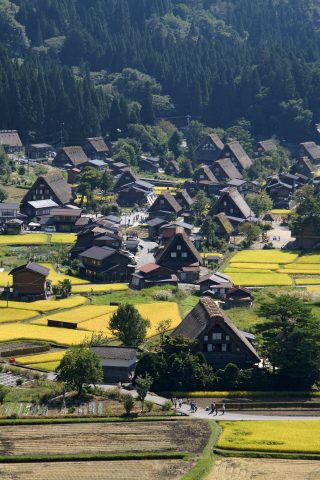
What makes Shirakawa-Komine special is not just its history, but the atmosphere that surrounds it. Shirakawa is a town where life moves at its own unhurried pace, and the castle fits seamlessly into this rhythm. The hill it stands on is encircled by forest, turning the short climb to its gates into a small journey. In spring, cherry blossoms frame the path; in autumn, the maples blaze red and gold; and in winter, the castle is dusted with snow, blending into the white-roofed town below. Unlike the crowded tourist hubs of Kyoto or Tokyo, this is a place where you can wander without jostling for space, where the only sounds are the wind in the trees and the distant murmur of the river. There’s a sense of timelessness here, as if the castle and the town have simply existed side by side for centuries, each shaping the other.
Inside the castle, a small museum houses artifacts unearthed during excavations—fragments of pottery, rusted weapons, and faded documents that offer glimpses into daily life within its walls. The exhibits are modest, but they add depth to the experience. A detailed model of the castle in its prime shows how it once dominated the landscape, while the original wooden beams and staircases of the keep invite visitors to imagine the hushed conversations of samurai in its chambers or the vigilant gaze of sentries scanning the horizon. From the top floor, the view stretches across the valley, revealing why this spot was chosen for a fortress: the land below is a patchwork of fields and rooftops, a quiet testament to the enduring relationship between the castle and the town it once protected.
Shirakawa-Komine is not a castle that dazzles with grandeur. There are no gilded carvings like those in Nikko, no sprawling defensive mazes like Himeji’s. Instead, it offers something rarer—a sense of quiet dignity, of history that doesn’t need to shout to be heard. It stands as it always has, a part of the landscape rather than a spectacle within it. For those who visit, it’s an opportunity to see Japan without the gloss of modernity, where the past isn’t tucked away in museums but lives on in the stones, the trees, and the very air.
The town of Shirakawa itself is worth lingering in. Unlike Japan’s bustling cities, it moves to a slower rhythm, its streets lined with old temples and shrines that have stood for generations. Nearby hot springs offer a chance to unwind after exploring the castle, while the local cuisine provides a taste of the Tohoku region’s traditions. Dishes like *shiitake* mushrooms, *warabi* noodles, and river-caught *ayu* fish are simple but deeply flavorful, a reflection of the land and its seasons. Together, the town and its castle create a sense of place that feels untouched by time, where every meal, every walk, and every quiet moment is a thread in the same tapestry.
Visiting Shirakawa-Komine isn’t about checking a box on a tourist itinerary. There are no flashy exhibits or guided light shows here—just the quiet presence of history waiting to be discovered. It’s a place for those who seek more than just a photograph, who want to step into a story that’s still unfolding, even if its most dramatic chapters are long past. The castle doesn’t tell its tale loudly; it waits for those who are willing to listen. And for those who do, it offers something far more valuable than a souvenir—a connection to the Japan of centuries ago, still alive in the places where time slows down enough to let you catch your breath.