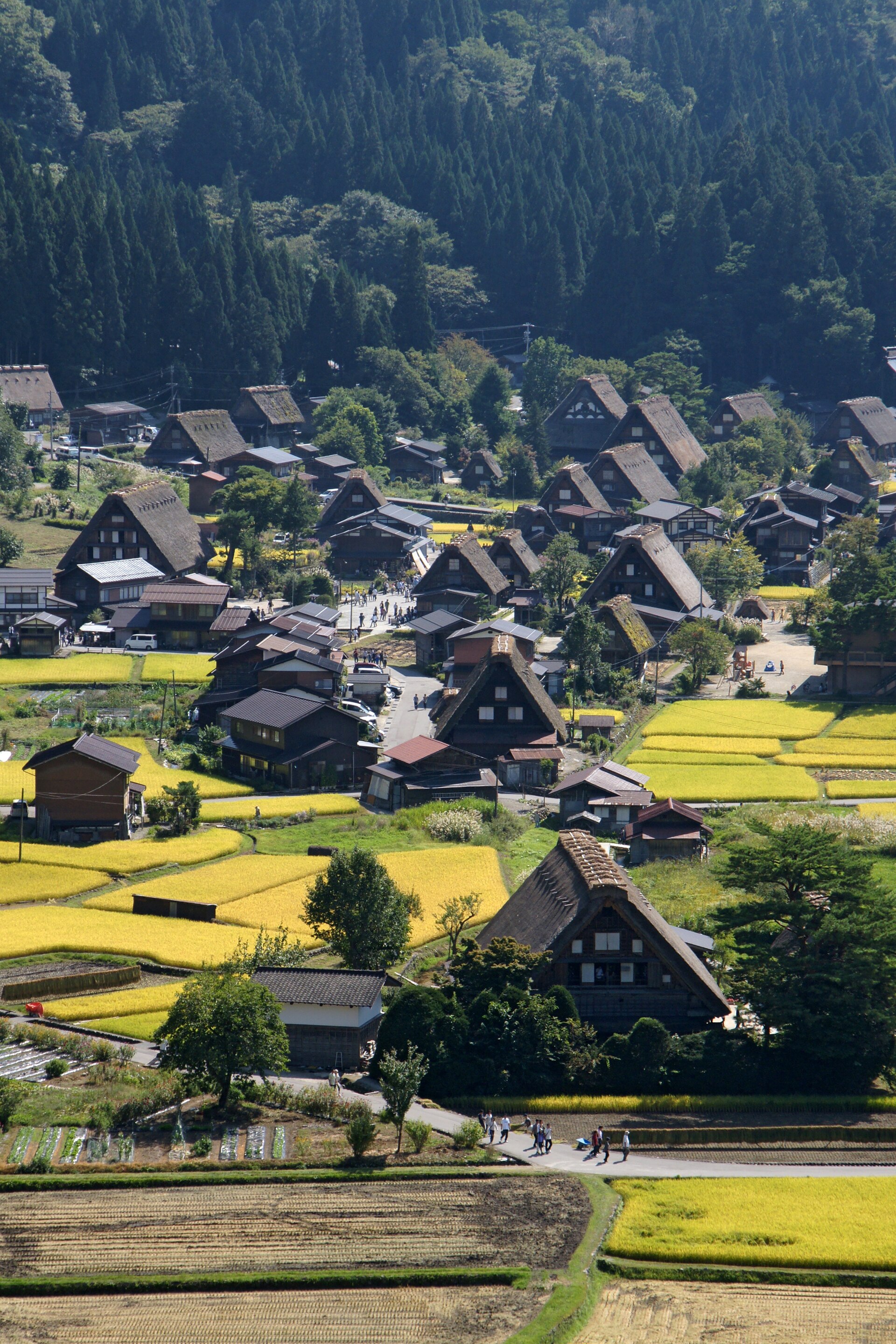
Shirakawa-go feels like a place where time has gently paused, not vanished. Tucked away in the mountains of Gifu Prefecture, the village exists in a quiet rhythm of its own, neither frozen in the past nor swept up in the rush of the present. Its most striking feature is the gassho-zukuri farmhouses, their steep thatched roofs resembling hands pressed together in prayer. The design isn’t just symbolic—it’s practical, built to withstand the heavy snowfalls that blanket the region each winter. These aren’t relics behind glass; some are still homes, where families live much as they have for generations, tending to daily life amid the same wooden beams and earthen floors.
The village’s history stretches back centuries, with the first settlements taking root during the Edo period. Back then, Shirakawa-go sat along a trade route connecting the Hokuriku and Chubu regions, though its isolation from larger cities allowed it to develop in its own way. For much of its existence, the village thrived on sericulture, raising silkworms in the spacious attics of the gassho-zukuri houses. The craft has mostly faded now, but the houses remain, standing as a testament to the resourcefulness of the people who built them. The steep roofs, angled at nearly sixty degrees, shed snow effortlessly, while the thick layers of thatch keep the interiors warm in winter and cool in summer. The structures are held together without nails, relying instead on interlocking wooden joints that have proven remarkably durable over time.
Inside, the houses are simple but purposeful. A central hearth warms the space, while sliding partitions divide the rooms as needed. Low ceilings and wooden floors creak underfoot, and the scent of smoke lingers in the air. A few homes are open to visitors, offering a glimpse into the past—how families cooked, slept, and worked under the same roof, how they stored tools and food in the same spaces where children played. The layout hasn’t changed much, and walking through one of these houses feels like stepping into a living memory.
The village changes with the seasons, each one bringing its own quiet beauty. In spring, cherry blossoms and fresh greenery soften the landscape, while summer turns the surrounding forests lush and deep. Autumn sets the maples ablaze with color, and winter transforms the village into a scene from a storybook, with snowdrifts piling high on the rooftops. The winter nights are especially magical, when the houses glow with warm light, their outlines softened by the snow. Even now, villagers clear the paths by hand, passing shovels from one person to the next, just as their ancestors did.
Shirakawa-go isn’t cut off from the world, though it might seem that way at first. In 1995, it was designated a UNESCO World Heritage site alongside neighboring Gokayama, drawing visitors from across the globe. Yet the village hasn’t turned itself into a theme park. Many of the houses are still lived in, and the few guesthouses and restaurants blend seamlessly into the landscape. There are no crowds here, no hurried footsteps—just the occasional sound of a door sliding open or a child’s laughter echoing down the narrow lanes.
Life moves slowly in Shirakawa-go, and that pace seeps into everything. Mornings begin with the crow of a rooster, afternoons with the murmur of a stream, and evenings with the faint scent of woodsmoke drifting from the hearths. The villagers take pride in their traditions, hosting festivals, teaching visitors how to thatch roofs, and sharing recipes for local dishes. There’s no rush, no urgency, and even those who come as tourists find themselves slowing down, matching the rhythm of the place.
This isn’t just a spot for photographs, though the scenery is undeniably striking. Shirakawa-go is a living museum, where the past and present coexist without tension. You could spend an afternoon wandering the paths between the houses, or stay longer in one of the guesthouses, waking up to the sound of snow melting on the roof. Either way, the village leaves a lasting impression—one of quiet contentment, as if for a little while, you’ve stepped outside of time.
Winter may be the most famous season here, but the other times of year have their own charm. Spring brings plum and cherry blossoms, summer offers mountain hikes through cool forests, and autumn sets the hillsides ablaze with red and gold. There are small museums in the village where you can learn about the history of gassho-zukuri architecture, the old silk trade, and the daily lives of the people who shaped this place. But the real draw isn’t the exhibits—it’s the atmosphere, the way the light falls on the thatched roofs, the way the air smells of wood and earth, the way the silence feels like something you can almost touch.
Shirakawa-go doesn’t feel like other tourist destinations in Japan. There are no neon signs, no bustling streets, no crowds pressing in from all sides. It’s a place for those who seek stillness, for those who want to step away from the noise and see something unfiltered by modernity. The village doesn’t try to impress—it simply exists, as it always has, and that’s what makes it special. Visiting here is a reminder that some things endure, not because they resist change, but because they don’t need to.