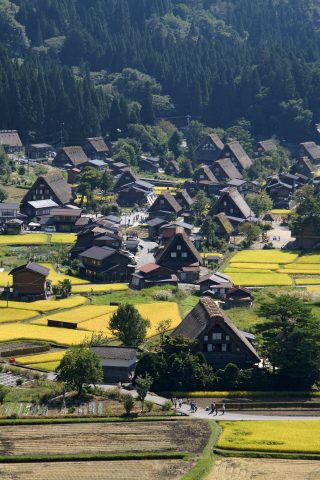
Shirakawa-go feels like a place where time has gently settled into a slower rhythm. Tucked away in the mountains of Gifu Prefecture, this village is best known for its gassho-zukuri farmhouses—traditional wooden homes with steep thatched roofs that resemble hands pressed together in prayer. These aren’t just architectural curiosities; they’re living pieces of history, some dating back to the Edo period, still standing as they have for centuries. The park at the heart of the village extends this sense of quiet continuity, offering a space where the only sounds are the rustle of leaves and the murmur of mountain streams.
The park itself is small, but its size is deceptive. Every path, bridge, and clearing has been shaped to blend seamlessly with the landscape. Wooden walkways arch over shallow ponds, narrow trails wind between towering cedars, and open meadows invite visitors to sit on the grass and simply be. In winter, the scene transforms: snow blankets the thatched roofs and tree branches, turning Shirakawa-go into a scene from a storybook, the kind of place photographers dream of capturing. Summer brings a different kind of beauty—cool greenery and dappled sunlight—while autumn sets the maples ablaze with color.
Gassho-zukuri isn’t just a building style; it’s a way of life adapted to the harsh mountain climate. The roofs, with their sharp 60-degree pitch, were designed to shed heavy snow, preventing collapse under the weight of winter. Inside, the houses retain their original layout: vast attics once used for silkworm cultivation, living spaces centered around sunken hearths called irori, where families gathered for warmth and conversation. Some of these homes are still lived in today, and if you’re lucky, a local might invite you inside to share stories of life in the village.
For most of its history, Shirakawa-go was cut off from the rest of Japan. Its people relied on farming and sericulture, living in relative isolation until the mid-20th century, when travelers began venturing into the mountains, drawn by the unique architecture and untouched scenery. In 1995, the village was designated a UNESCO World Heritage site, recognizing its cultural significance and the need to preserve it. Today, there’s a careful balance between welcoming visitors and maintaining the traditional way of life, and the park plays a key role in that effort.
Walking through the park is a reminder of how people and nature can coexist without one overpowering the other. There are no towering fences or intrusive signs, just small wooden plaques identifying plants and modest displays sharing snippets of the village’s history. In spring, cherry blossoms drift onto the paths like confetti, their fleeting beauty encouraging moments of quiet reflection. Summer brings the sound of children playing near the ponds, while autumn sees elderly locals strolling along the trails at a leisurely pace.
This isn’t a place for shopping sprees or nightlife. There are no neon lights, no crowded restaurants, no distractions from the simple pleasures of the surroundings. Instead, there’s the scent of wood and earth, the soft glow of lanterns as dusk falls, and the unhurried passage of time. The park, like the village itself, doesn’t demand attention—it invites you to slow down, to listen to the wind in the trees, and to remember that beauty often lies in stillness.
For those who want to experience Japan beyond its cities, Shirakawa-go offers something rare: authenticity. There’s no rush here, no pressure to see or do. The park isn’t just a backdrop; it’s a living part of the village, a place where the past and present coexist without fanfare. It’s easy to see why people return—this is a corner of the world where life moves at its own pace, and where the quiet moments often leave the deepest impression.