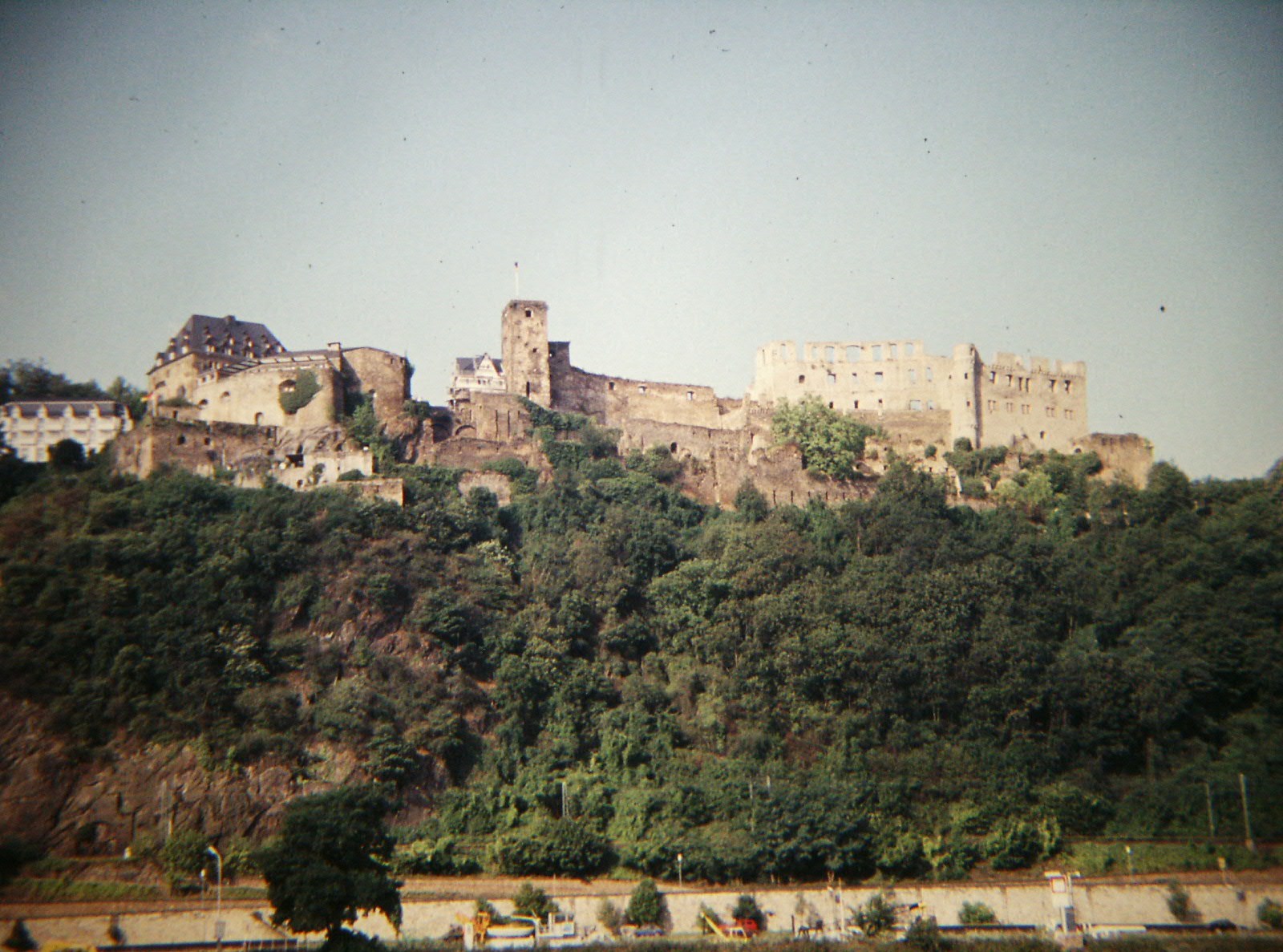
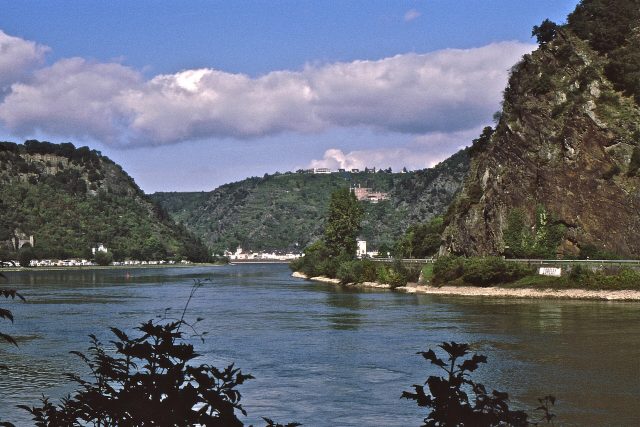
Perched on a rocky outcrop above the Rhine, Rheinfels Castle stands as a quiet witness to centuries of history along this storied river. Its ruins, sprawling across the hillside above the town of St. Goarshausen, feel like a natural extension of the landscape itself—so seamlessly do they blend with the river’s curve and the forested slopes around them. Once one of the most formidable fortresses on the Rhine, its walls now hold the echoes of an era when castles were not just monuments but centers of power, commerce, and conflict.
The story of Rheinfels begins in the mid-13th century, when Count Dietrich von Hochstaden sought to strengthen his influence along the Rhine. In 1245, he laid the foundation for a fortress that would control river traffic and collect tolls from passing ships. The Rhine was one of Europe’s most vital trade routes at the time, and owning a castle along its banks meant wealth and authority. Over the years, Rheinfels expanded into a sprawling medieval complex, complete with thick walls, towers, underground passages, and even a small town within its fortifications.
The castle’s architecture reflects its strategic importance. The central keep, or donjon, served as the last line of defense and a symbol of its rulers’ power. From its heights, the Rhine stretches for miles in both directions—a view that made the fortress nearly impregnable for centuries. The inner courtyards, living quarters, and storage buildings were designed to withstand long sieges. Hidden tunnels and storerooms allowed defenders to move unseen, while deep wells ensured a steady water supply even under the harshest conditions.
By the 15th century, Rheinfels had passed into the hands of the Landgraves of Hesse, who transformed it into one of their primary residences. The castle was expanded and reinforced, its interiors growing more lavish to reflect the status of its new owners. Here, ambassadors were received, feasts were held, and even coins were minted. Yet this golden age was short-lived. During the Thirty Years’ War in the 17th century, Rheinfels withstood several sieges, but in 1692, French troops under Marshal de Lorges captured and partially destroyed it. The fortress never regained its former glory, and by the 18th century, it was deliberately dismantled to prevent it from falling into enemy hands.
Today, the ruins of Rheinfels are more than just a tourist attraction—they are a place where history feels tangible at every turn. Walking along the remaining walls, it’s easy to imagine the castle as it once was: the clang of swords, the creak of carts, the voices of merchants and craftsmen filling the air. The underground passages, once secret routes for defenders, are particularly striking. Some have survived the centuries and can still be explored, though the damp and crumbling stone make them treacherous.
Beyond its military past, Rheinfels is remarkable for how it harmonizes with the natural landscape. From its ramparts, one of the most breathtaking views of the Rhine unfolds: the winding river, the rolling green hills, the vineyards clinging to the slopes, and other castles peeking from behind the bends. On a clear day, the legendary Lorelei rock and the Katz Castle on the opposite bank come into view. This panorama has remained unchanged for centuries, and it’s part of what makes Rheinfels so unforgettable.
The castle is open to visitors year-round, drawing not only history enthusiasts but also those who simply want to soak in the atmosphere of the past. In the summer, guided tours bring the medieval fortress to life, recounting the stories of its inhabitants. You can climb to the observation platforms for sweeping views of the Rhine or wander through the inner courtyard, where a bustling market once stood. In winter, the ruins take on an eerie beauty, their frost-covered walls evoking a sense of timelessness.
Rheinfels is more than just a ruin—it’s a living piece of the Rhine’s history. It serves as a reminder of how fleeting human power can be: from an impregnable stronghold, only fragments remain, yet even these tell a story more vividly than any book could. Here, you can spend hours reflecting on the countless lives that have passed over these stones, the destinies shaped within these walls. Though the castle no longer serves its original purpose, it still preserves the spirit of an age when the Rhine was not just a river but a boundary between worlds.