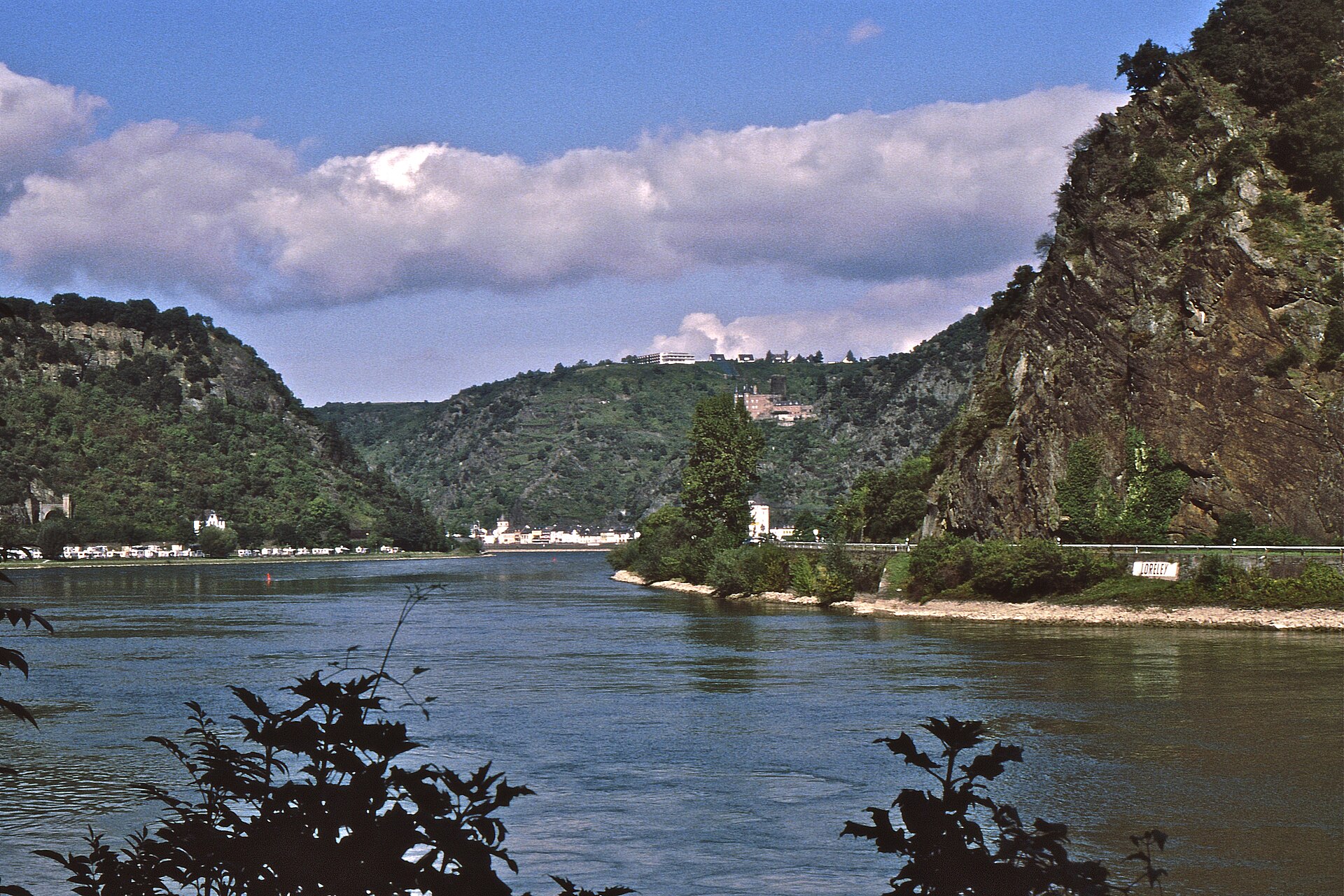
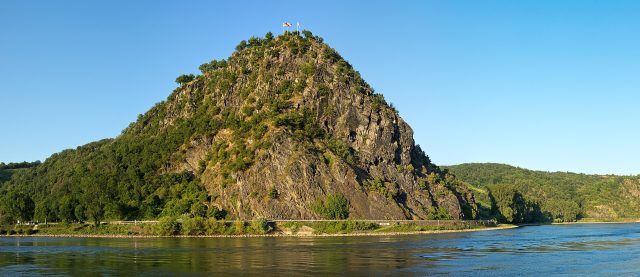
The Lorelei rock rises 120 meters above the Rhine. Its cliffs drop straight into the river, where the current runs fast and dangerous. The Rhine narrows here, its waters churning between the rocks—a stretch once feared by sailors. This landscape inspired the myth of Lorelei, the maiden whose song lured sailors to their deaths on the jagged stones below. Even without the legend, the place feels powerful: steep, forested slopes, the winding river, and the quiet broken only by rushing water and wind.
The viewpoint at the top wasn’t always easy to reach. For centuries, the rock was a difficult climb, accessible only to locals or determined travelers. In the 19th century, as the Rhine became a popular tourist route, the idea of a proper lookout emerged. Early wooden structures were built in the mid-1800s but didn’t last. The modern platform arrived later, after it became clear the site drew visitors. Today, well-maintained paths lead up to the viewpoint, with railings and signs explaining the area’s history and geology.
From the top, the Rhine curves like a horseshoe between vineyards and forests. Small towns with red-tiled roofs line the banks. On clear days, castles appear on the hills—dozens of them, each with its own story. Burg Katz stands out, perched above the river like a floating fortress. In the evening, sunlight turns the water gold, making the scene feel almost unreal.
The legend of Lorelei is part of the region’s culture. Poet Clemens Brentano first recorded it in the early 1800s; Heinrich Heine later made it famous in his poem. The story tells of a siren who sat on the rock, combing her hair and singing. Sailors, mesmerized, would crash their ships. Today, Lorelei’s image appears everywhere—on postcards, in souvenir shops, in the names of cafés and hotels. The rock itself is a symbol of the Rhine.
You can reach the viewpoint in different ways. Drive or take a bus up the mountain to a parking lot near the base, then follow a short, steep trail through the trees. Hike from St. Goarshausen, winding through forests and vineyards with valley views. Or take the funicular from town to the summit. Each route offers a new perspective, and the higher you climb, the more the panorama unfolds.
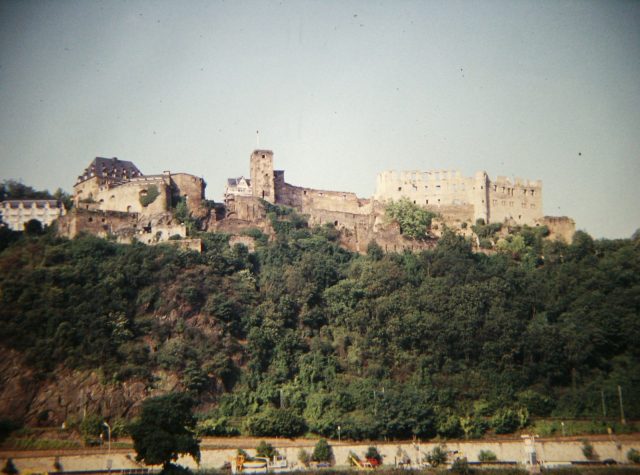
The Rhine Valley here was one of medieval Europe’s key trade routes. Castles above the river served as fortresses and toll stations. Their owners charged passing ships, making this stretch lucrative. Today, many castles are museums or hotels. Burg Rheinfels, once a nearly impregnable stronghold, now welcomes visitors to its ruins.
Time slows at the Lorelei. There’s no noise—just nature. In spring and summer, the slopes bloom. In autumn, vineyards turn gold and red. Winter brings mist over the Rhine and bare trees. No matter the season, history feels close here. You can sit on a bench, watch the river, and think of the travelers who’ve passed this way over centuries.
The Lorelei blurs myth and reality. You can spend hours watching the water, imagining the stories it holds. The Rhine is safer now, but its grandeur remains. So does the allure of the rock that has inspired artists, poets, and dreamers for generations.