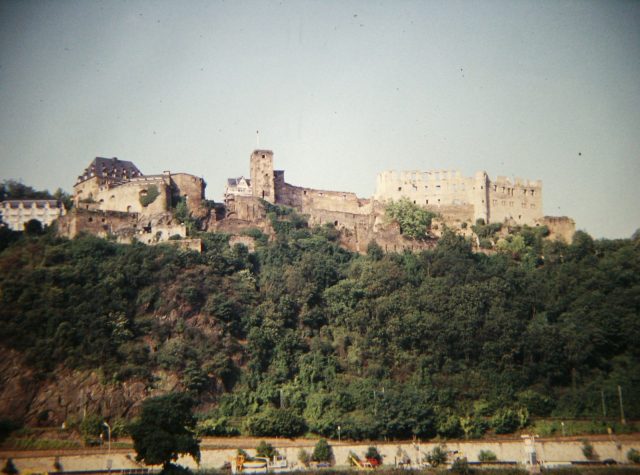
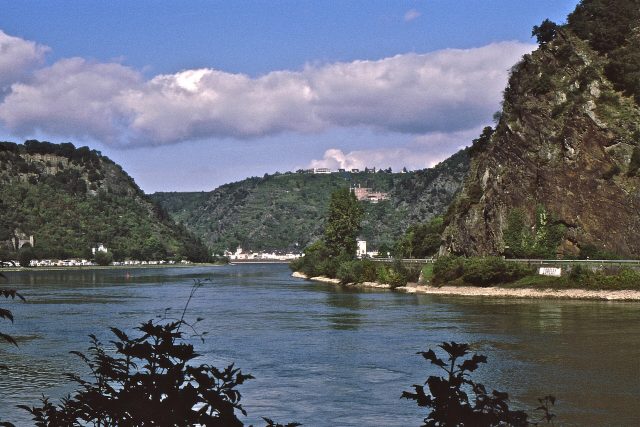
Perched on a rocky outcrop above the town of St. Goarshausen, the ruins of Rheinfels Castle stand as a quiet witness to centuries of history along the Rhine. Unlike many restored fortresses, Rheinfels retains the raw, weathered character of a place that has seen conflict, power, and eventual decay. The castle’s crumbling walls, overgrown with ivy, and its labyrinth of underground passages evoke a sense of time suspended, where the past feels almost tangible. The views from its towers stretch across the river, revealing the dramatic bend of the Rhine and the distant silhouettes of other medieval strongholds.
The story of Rheinfels begins in the 13th century, when Count Diether V of Katzenelnbogen sought to control the lucrative trade route along the Rhine. At the time, the river was both a vital commercial artery and a contested border, making fortifications like Rheinfels essential for dominance. The castle’s strategic position allowed its owners to monitor river traffic, levy tolls, and block enemy vessels if necessary. Over the centuries, Rheinfels withstood sieges, including one by Emperor Ludwig the Bavarian in the 14th century, and later became the opulent residence of the Katzenelnbogen counts, who expanded it into a sprawling palace complex.
The architecture of Rheinfels reflects its evolving purpose. Originally built as a formidable medieval fortress with thick walls, a moat, and a drawbridge, it was later transformed during the Renaissance into a more refined residence. Grand halls with high ceilings, ornate fireplaces, and even a small theater were added, blending military function with aristocratic luxury. Beneath the castle lies an intricate network of tunnels and casemates, designed not only for defense but also for storing supplies. During sieges, these underground passages could shelter hundreds of people, offering a glimpse into the harsh realities of medieval warfare.
By the 16th century, Rheinfels had passed into the hands of the Landgraves of Hesse, who continued to expand it into one of the largest castles on the Rhine, covering nearly four hectares. The castle became a center of courtly life, hosting lavish banquets and welcoming notable figures of the era. Yet its fortunes declined in the 17th century during the Thirty Years’ War, when Swedish forces partially destroyed it. By the 18th century, Rheinfels had lost its military significance, and its stones were gradually reclaimed by nature. What remains today is a hauntingly beautiful ruin, its grandeur undiminished by time.
The castle museum offers a deeper look into its past, with exhibits showcasing medieval artifacts, weapons, armor, and detailed models reconstructing Rheinfels at different stages of its history. But the real draw is the chance to explore the ruins firsthand. Visitors can wander through the same halls where counts and knights once walked, descend into the damp, echoing tunnels that stored wine and grain, and climb to the lookout points for sweeping views of the Rhine Valley. The experience is less about polished displays and more about the atmosphere—the way the wind whispers through empty chambers, the way sunlight filters through broken arches, and the way the river below seems to carry echoes of the past.
Rheinfels is a place where history feels alive, not just preserved. Unlike more tourist-heavy castles, it offers a sense of solitude, allowing visitors to linger without crowds. The ruins invite exploration, from hidden corners to quiet benches overlooking the Rhine, where one can imagine the bustle of medieval life. In summer, occasional medieval fairs and reenactments bring the castle’s history to life, adding a layer of authenticity to the experience. Yet even without events, the site retains a timeless quality, as if the stones themselves remember the people who once called it home.
Beyond its historical significance, Rheinfels is also a gateway to the natural beauty of the Rhine Valley. The castle is surrounded by forests and vineyards, with hiking trails leading to scenic viewpoints. A visit can easily be combined with a walk to the nearby Lorelei rock or a stroll through St. Goarshausen, where narrow streets and cozy cafés offer a taste of local life. The area is ideal for outdoor activities, whether cycling along the river, taking a boat tour, or simply enjoying a leisurely walk along the water’s edge.
What makes Rheinfels special is its ability to connect visitors not just to history, but to the enduring spirit of the Rhine. The castle stands as a reminder of how empires rose and fell, how borders shifted, and how the river remained a constant force in the region’s story. To walk through its ruins is to step beyond the confines of a museum—it’s an encounter with the past in its most unfiltered form. The stones of Rheinfels don’t just tell a story; they let you feel it, in the cool air of its tunnels, the weight of its walls, and the ever-changing light over the Rhine.