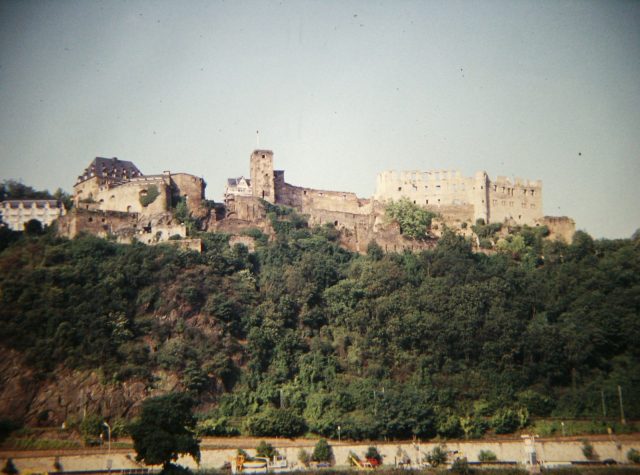
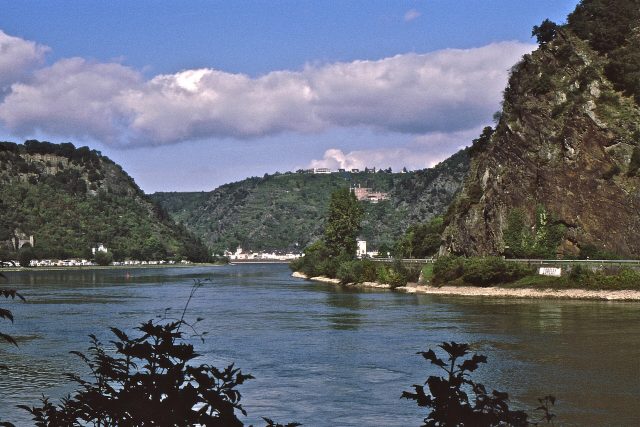
St. Goar’s Catholic Church stands quietly along the Rhine in the small town of St. Goarshausen, where the river bends in one of its most picturesque curves. The place is inseparable from the legacy of Saint Goar, a hermit and preacher who settled here in the sixth century. According to legend, he healed the sick and aided the poor, turning his modest cell into a spiritual hub for the region. Over time, that humble beginning grew into a monastery, and the church today still carries the echoes of an era when faith and daily life were deeply intertwined. The Rhine, which now draws tourists and cargo ships, was once a path for pilgrims, a river of both commerce and devotion.
The church’s architecture reflects the layers of time, though its core remains distinctly Romanesque. Thick walls, sturdy columns, and rounded arches define the style that dominated Europe in the 11th and 12th centuries. Inside, the space feels vast yet unadorned—high vaults stretch overhead, narrow windows filter the pale northern light, and the walls are nearly bare. A few faded frescoes hint at a more colorful past, but time and the Reformation have stripped away much of the ornamentation. What remains is a sense of quiet endurance, a place built to last rather than to impress.
At the heart of the church is the altar dedicated to Saint Goar. The scenes depicted there tell the story of his life—his prayers, his miracles, and his interactions with the local people. The saint is shown in simple robes, holding a staff, a figure that has become symbolic of this stretch of the Rhine. Beside the altar rests a reliquary, a small chest said to contain his relics. For the faithful, it’s a site of pilgrimage, though even casual visitors often pause here, drawn by the atmosphere of medieval piety that lingers in the air.
The church hasn’t always been Catholic. During the Reformation, when Protestantism swept through Germany, it became a Lutheran place of worship. It wasn’t until the 19th century that it returned to the Catholic fold after years of debate and shifting allegiances. These changes left their mark on the interior—some corners retain the austerity of Protestant influence, while others show attempts to restore lost grandeur. The organ, installed in the 1800s, still fills the space with music during services and occasional concerts, its sound weaving through the centuries-old stone.
From the outside, the church is unassuming, blending into the old buildings of St. Goarshausen. Its tower is modest, its facade weathered by time, built from local stone that has darkened under the rain and wind. There’s no attempt at grandeur here, no soaring spires like those of Cologne or Mainz. Instead, it invites a closer look, a step inside to discover something more than just mortar and timber. Unlike the nearby Lorelei Rock, which draws crowds of tourists, this place offers solitude. You can take your time, lingering in the stillness without the press of other visitors.
The Rhine has always been part of the church’s story. In the Middle Ages, pilgrims arrived by boat, and locals gathered by the water to pray before journeys. Today, the river still shapes the rhythm of life in the town. From the water, the church is visible along the shore, its bells carrying across to the opposite bank. On clear days, when sunlight dances on the waves and the hills are draped in vineyards, the scene feels timeless, a quiet corner where the past and present meet.
St. Goar’s Church is more than just an architectural landmark; it’s a living piece of the region’s history. It has weathered wars, religious upheavals, and economic hardships, yet it remains a place where people still gather to pray, reflect, and mark life’s milestones. There are no grand ceremonies here, no ornate displays—just a simple, enduring presence. On a weekday, when the church is empty, you can sit on one of the wooden pews and listen to the silence, imagining the generations who have passed through these doors.
For those curious about history, the church holds small but intriguing traces of the past. A few artifacts from the medieval monastery survive—old books, documents, and everyday objects that offer glimpses into the lives of the monks who once lived here. Much was lost during wars, but what remains paints a picture of devotion and routine. In the sacristy, you might find vestments embroidered by hand in the 18th century, their stitches still holding after centuries.
St. Goarshausen itself is a quiet town, where life moves at a slower pace than in the bustling tourist hubs along the Rhine. Here, the church isn’t just a sight to see; it’s part of the fabric of daily life. Locals come for services, baptisms, and weddings, while visitors stop to pause and look around. In this place, history isn’t something confined to the past—it’s still alive, a reminder that faith, patience, and perseverance can outlast the centuries.