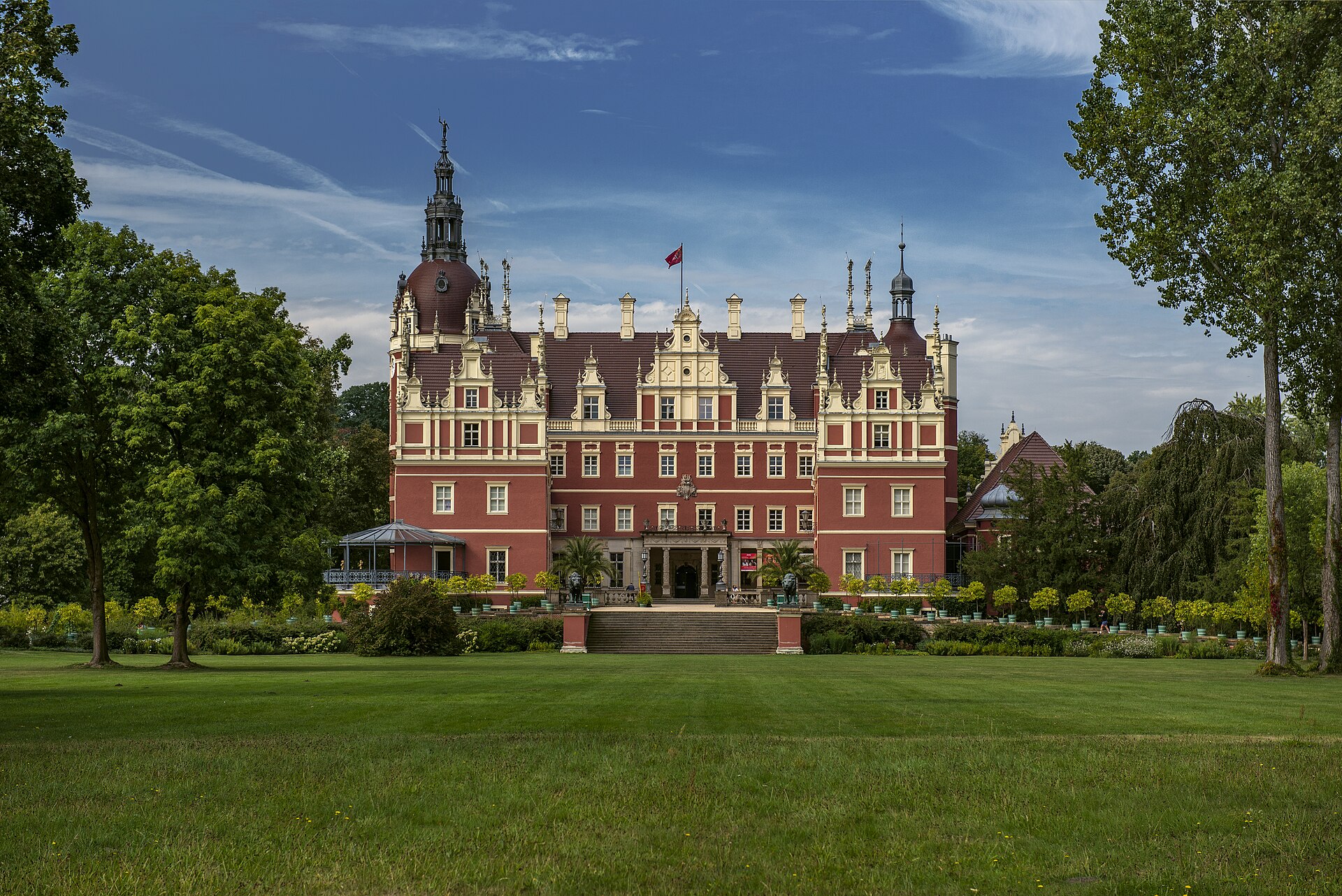
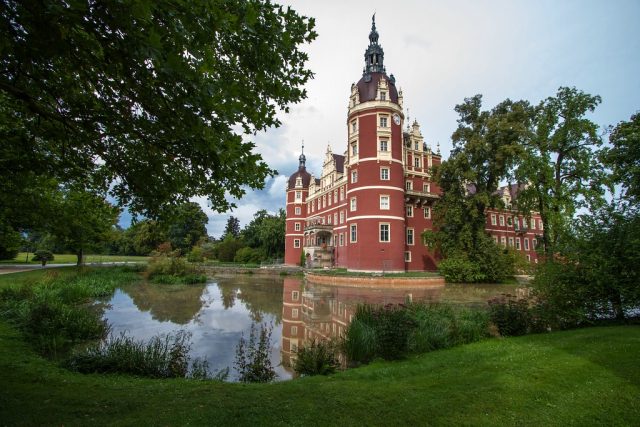
Muskau Castle sits on the banks of the Neisse River, a quiet waterway that now marks the border between Germany and Poland. Its origins trace back to the 13th century, when a modest fortress was built here to guard a river crossing. Over time, the structure grew, evolving from a defensive stronghold into a noble residence and eventually into the castle we see today. The building underwent countless renovations, but its current appearance took shape in the 19th century under the ownership of Prince Hermann von Pückler-Muskau—a man whose life was as colorful as the landscapes he loved.
Pückler-Muskau was an aristocrat with many passions: a traveler, a writer, and, above all, a landscape architect. His eccentricities were legendary, but his true legacy lies in the park he created around the castle. Muskau Park, which stretches across both sides of the modern border, became his life’s work. He spared no effort or expense in shaping the land into a masterpiece of natural beauty, where every hill, pond, and pathway was carefully designed to blend seamlessly with the surroundings. The castle itself was more than just a home to him—it was the heart of this vast garden, offering the best views of the landscape he had so meticulously crafted.
The architecture of the castle reflects its long history, though its most striking features belong to the 19th century. The main building, with its tall tower and pointed windows, looks like something out of a medieval tale, yet much of it was rebuilt in the Romantic style of Pückler’s time. Inside, the rooms still carry the atmosphere of that era. Visitors can see antique furniture, portraits of past owners, collections of weapons, and artworks that hint at the tastes of those who lived here. The library is particularly noteworthy, filled with rare books and manuscripts Pückler collected during his travels.
After World War II, the castle found itself on Polish soil, while the Neisse River became a dividing line between two nations. The park, once a single entity, was split, but both sides retained their beauty and integrity. Today, the entire park is recognized as a UNESCO World Heritage Site. The castle itself stood abandoned for decades before restoration began in the early 2000s. Now, it houses a museum dedicated to the estate’s history and its creators, along with rotating exhibitions and cultural events.
A visit to Muskau Castle is more than just a step into the past—it’s a chance to see how human creativity can shape nature without overpowering it. The park surrounding the castle remains as impressive as ever. Dense forests give way to open meadows, artificial ponds reflect the sky, and hidden bridges and gazebos invite exploration. The seasons bring their own magic: autumn paints the trees in gold and crimson, while spring fills the air with the scent of magnolias and rhododendrons.
The appeal of this place goes beyond its history. Locals and visitors come here for the atmosphere—a sense of quiet that’s hard to find elsewhere. The park is vast enough to wander for hours without encountering crowds, the only sounds being the rustle of leaves and birdsong. In summer, people picnic on the grass; in winter, the paths are perfect for cross-country skiing. The castle, despite its age, doesn’t feel like a relic. It’s a living space where concerts, lectures, and even weddings take place, blending the old with the new.
Bad Muskau, the small town nearby, has a deep connection to the castle and its creator. Pückler’s influence is everywhere—his statue stands in the park, his books are sold in local shops, and his ideas continue to inspire landscape designers. For those interested in garden history or simply looking for a peaceful retreat, this place offers something rare. It’s not as famous as other European castles, which means it retains an authenticity untouched by mass tourism.
If you find yourself in this part of the world, it’s worth spending at least a day here. Walk through the park, climb the castle tower for a view of the surrounding countryside, then make your way down to the riverbank. Sit by the water, watch the Neisse flow by, and let the quiet settle in. There’s no rush, no need to move on to the next attraction. Time slows down here, much like the river itself, and that’s perhaps the greatest charm of Muskau.