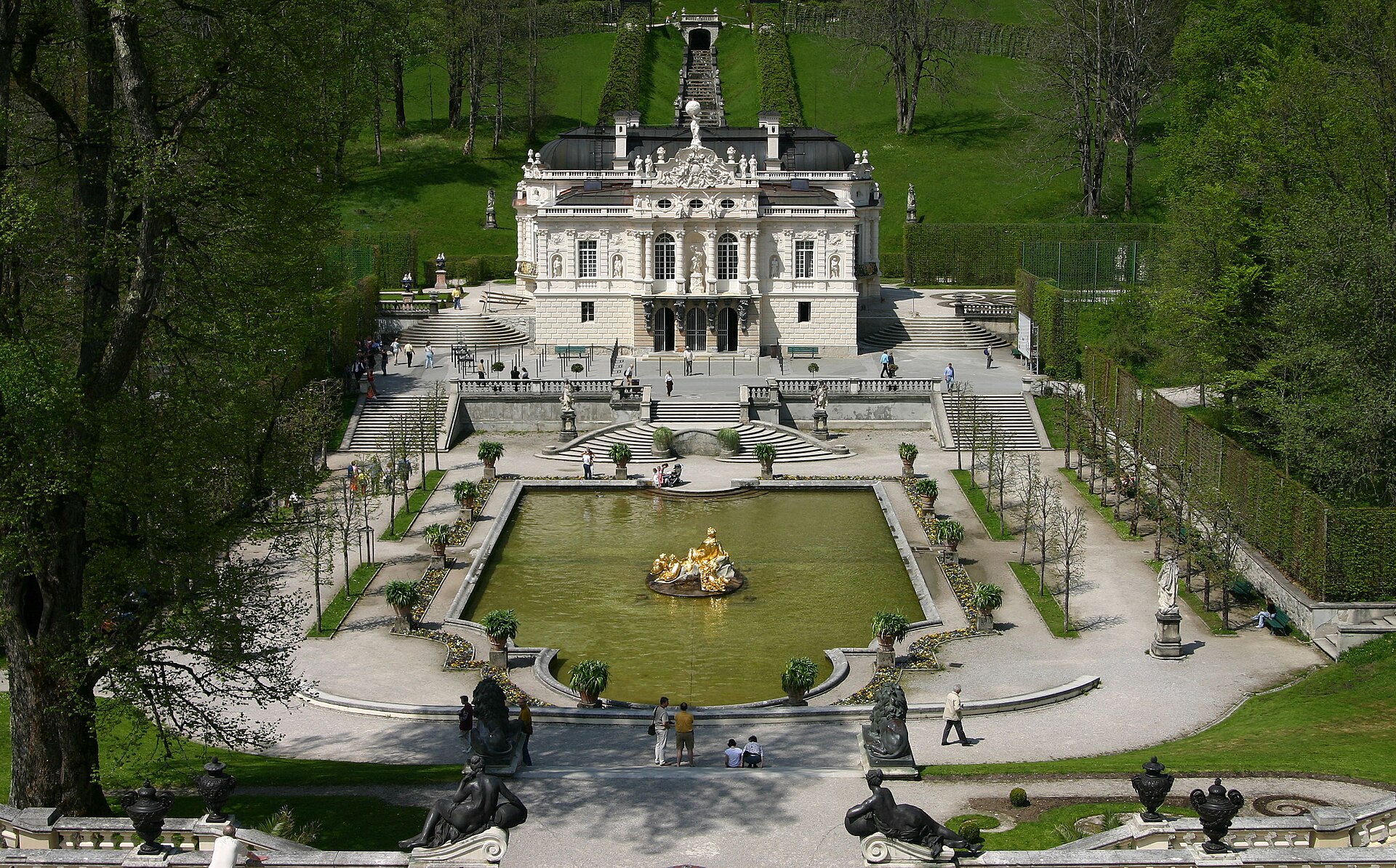
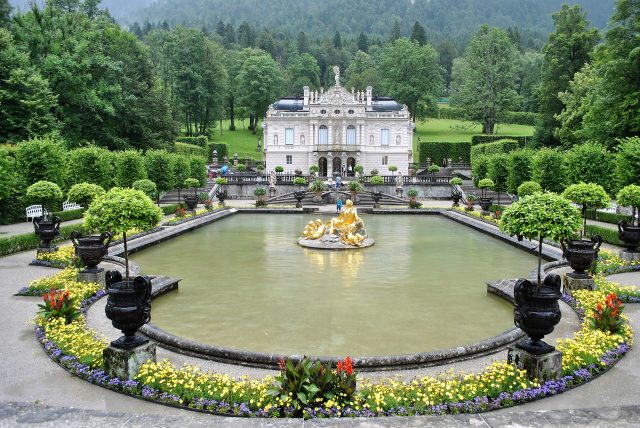
Linderhof Palace sits quietly in the foothills of the Bavarian Alps, where the air carries the scent of pine and mountain streams. Unlike the grand fortresses and imposing castles that dot Germany’s landscape, this place was never meant to intimidate or dominate. It was built for one man—King Ludwig II of Bavaria—a dreamer who wanted a retreat where reality could blur into fantasy. The palace feels like something plucked from a storybook, not just because of its architecture, but because of the way it harmonizes with the surrounding forests and gentle hills.
Construction began in the 1870s, when Ludwig was already deeply immersed in his vision of beauty. The architects drew inspiration from the Rococo style, but reinterpreted it with a lightness that makes the palace seem almost weightless. The facades are adorned with delicate stucco work, wrought-iron balconies, and statues that appear to float above the ground. Inside, the opulence is overwhelming—gilded details, silk wall coverings, crystal chandeliers, and frescoes create an atmosphere of perpetual celebration. The Hall of Mirrors is particularly striking, where walls and ceilings reflect the glow of countless candles, turning the room into a shimmering, endless space.
Ludwig chose this location deliberately. He craved solitude and often retreated here to escape the pressures of court life, losing himself in his own imaginings. A devoted admirer of Richard Wagner’s operas, he filled Linderhof with details inspired by the composer’s works. The Venus Grotto, an artificial cave with a waterfall and colored lighting, was designed as a stage for *Tannhäuser*. The grotto’s lighting system could shift hues to mimic moonlight or sunset, a technical marvel of its time. Today, it feels slightly dated, but that only adds to its charm, as if time has stood still since the late 19th century.
The palace gardens are just as captivating as the building itself. Designed in the English landscape style, they feature winding paths, tranquil ponds, and secluded pavilions, though elements of a more formal French garden are also present. Among the most unusual additions are the Moorish Kiosk, a small domed structure with intricate mosaics reminiscent of Andalusian palaces, and the Moroccan House, which Ludwig acquired from the Paris World’s Fair. These exotic touches feel out of place in the Bavarian countryside, but that’s precisely what makes Linderhof so intriguing. Ludwig refused to be confined by European traditions, freely blending styles and influences.
Today, visitors can wander through the palace’s rooms, where original furniture, paintings, and personal belongings still evoke the presence of Ludwig II. The atmosphere is especially vivid in the summer, when the gardens are alive with tourists, though quiet corners can still be found where the only sounds are birdsong and rustling leaves. In winter, Linderhof transforms into a fairy-tale scene, with snow dusting the rooftops, trees, and statues, making the palace seem even more mysterious.
Linderhof is often compared to Neuschwanstein, Ludwig’s other famous castle, but the two could not be more different. Neuschwanstein is a theatrical spectacle perched on a cliff, while Linderhof is an intimate sanctuary built for one man’s private world. There’s no pomp here, only a pursuit of beauty and harmony. That’s perhaps why the palace still resonates so deeply—it’s not just an architectural monument, but a glimpse into the soul of its creator.
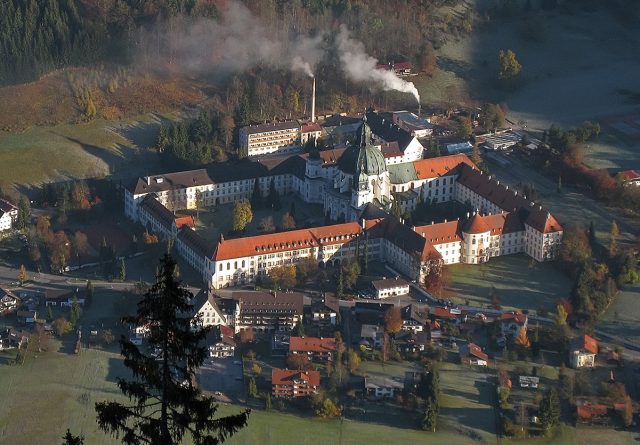
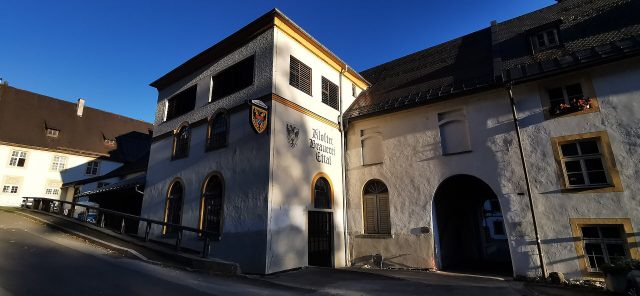
The surrounding area is worth exploring as well. Nearby hiking trails lead into the Alps, offering views of the valley below. Locals take pride in their region’s traditions, from centuries-old brewing methods to hearty Bavarian cuisine served in rustic inns. Nearby villages preserve their heritage in old churches and timber-framed houses with carved balconies, where time seems to move at a slower pace.
Visiting Linderhof is more than just a tour; it’s an immersion into a world where reality and imagination intertwine. The palace remains a testament to Ludwig II, a man who preferred the company of his dreams to the harshness of the real world. That’s why it still feels magical—it wasn’t built for power or prestige, but simply to bring one man’s impossible dream to life.