Linderhof Palace sits quietly in a secluded valley at the foot of the Bavarian Alps, where the only sounds are the murmur of fountains and the rustle of leaves in the wind. The surrounding forests and alpine meadows create a sense of isolation, as if the palace exists in its own private world, far from the noise of modern life. It’s a place where time seems to slow, and the grandeur of the past lingers in the air.
This was the only one of King Ludwig II’s three palaces completed during his lifetime, built not as a seat of power but as a personal retreat—a sanctuary where he could escape reality and live within his own dreams. Ludwig was a man of extravagant tastes, obsessed with beauty, theater, and the romantic ideals of a bygone era. Linderhof was his refuge, a place where he could indulge his fantasies without restraint.
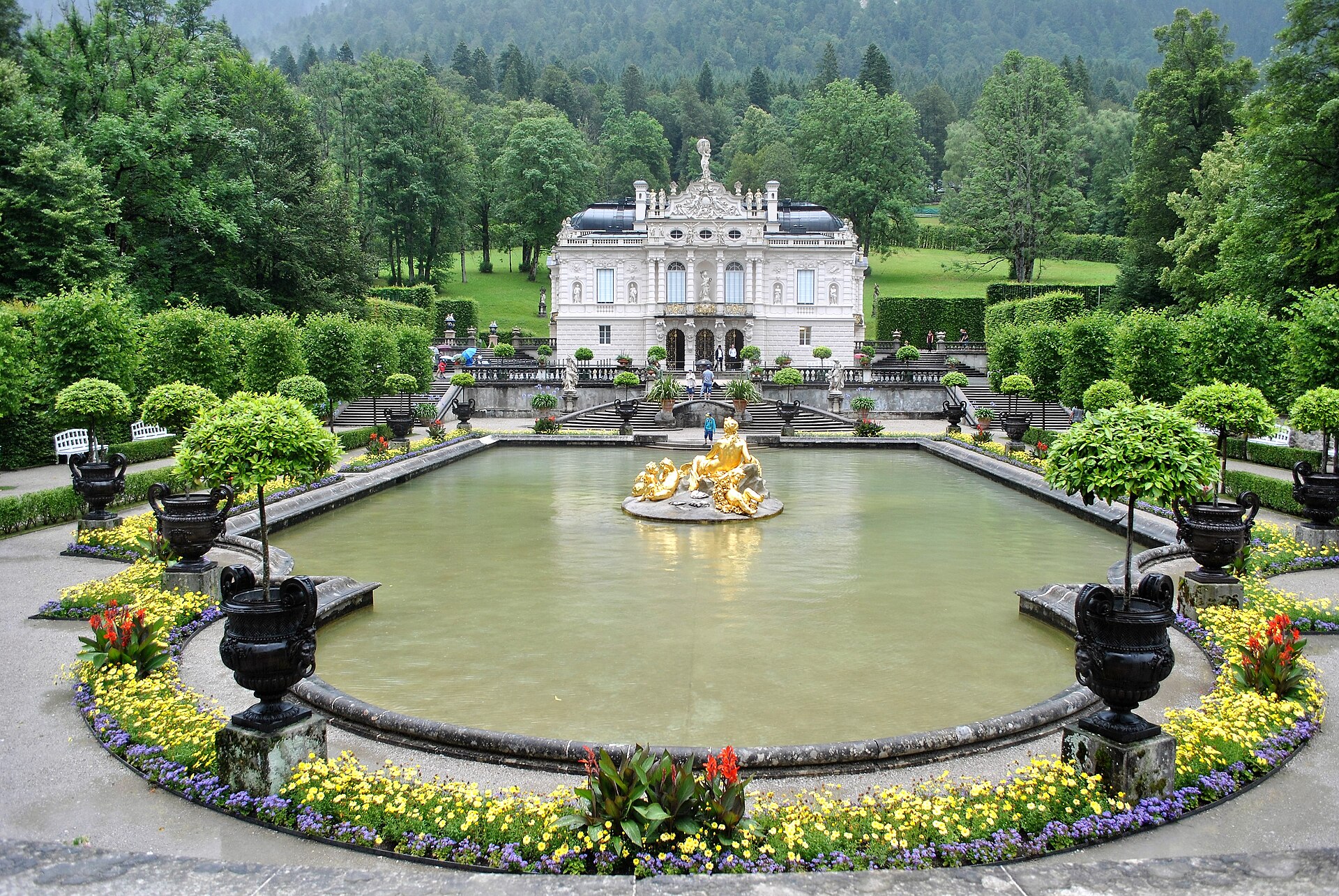
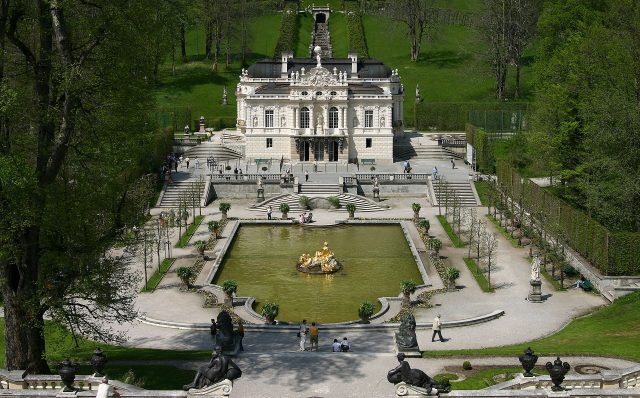
The palace’s architecture blends Rococo elegance with the opulence of French Baroque, evoking a miniature Versailles. The exterior is adorned with intricate stucco work and gilded details, while the roof is crowned with delicate turrets. Inside, every room is a masterpiece of craftsmanship. Mirrors, silk, porcelain, and crystal create an atmosphere of refined luxury, but it’s the Hall of Mirrors that leaves the strongest impression. Here, endless reflections dissolve the boundaries of space, making the room feel like a shimmering dream.
Unlike grand royal residences designed for state functions, Linderhof was built for solitude. There are no vast ballrooms—just intimate chambers, a private theater where Ludwig listened to Wagner’s operas alone, and a bedroom fit for a king who saw himself as a character in a fairy tale. One of the most unusual features is the artificial grotto, a man-made cave with a waterfall and colored lighting, where Ludwig would sit for hours, lost in his imagination.
The palace gardens are just as enchanting as the building itself. Designed in both French and English styles, they feature terraces, fountains, statues, and pavilions, each element carefully placed to create a harmonious whole. The most famous feature is the Venus Grotto, an artificial cave lined with shells and illuminated by hidden lights. Ludwig would spend hours here, watching the play of light on the water, as if transported to another world. Nearby, a Moorish Pavilion, a Moroccan House, and a Temple of Venus add to the sense of fantasy, each structure reflecting Ludwig’s eclectic tastes.
Ludwig II was a reclusive figure, more comfortable in his own company than in the rigid world of courtly life. Linderhof was his escape, a place where he could surround himself with beauty and live as he pleased. After his mysterious death in 1886, the palace was opened to the public, and today it remains one of Bavaria’s most captivating destinations. Unlike the crowded halls of Neuschwanstein, Linderhof retains an air of quiet elegance, as if the king’s spirit still lingers in its rooms.
Walking through the gardens, especially on clear days when the mountains seem close enough to touch, is a peaceful experience. The scent of pine and flowers fills the air, and the sound of water from the fountains adds to the sense of tranquility. It’s easy to see why Ludwig chose this place—here, the outside world feels distant, and the boundaries between reality and fantasy blur.
Linderhof is more than just a palace; it’s a monument to one man’s vision. Ludwig’s dreams were extravagant, but they were also deeply personal, and this place reflects that. Visitors don’t just see a building—they step into a world where art, nature, and imagination come together in perfect harmony. It’s a reminder of how beauty can shape a life, and how a single person’s passion can leave a lasting mark on the world.