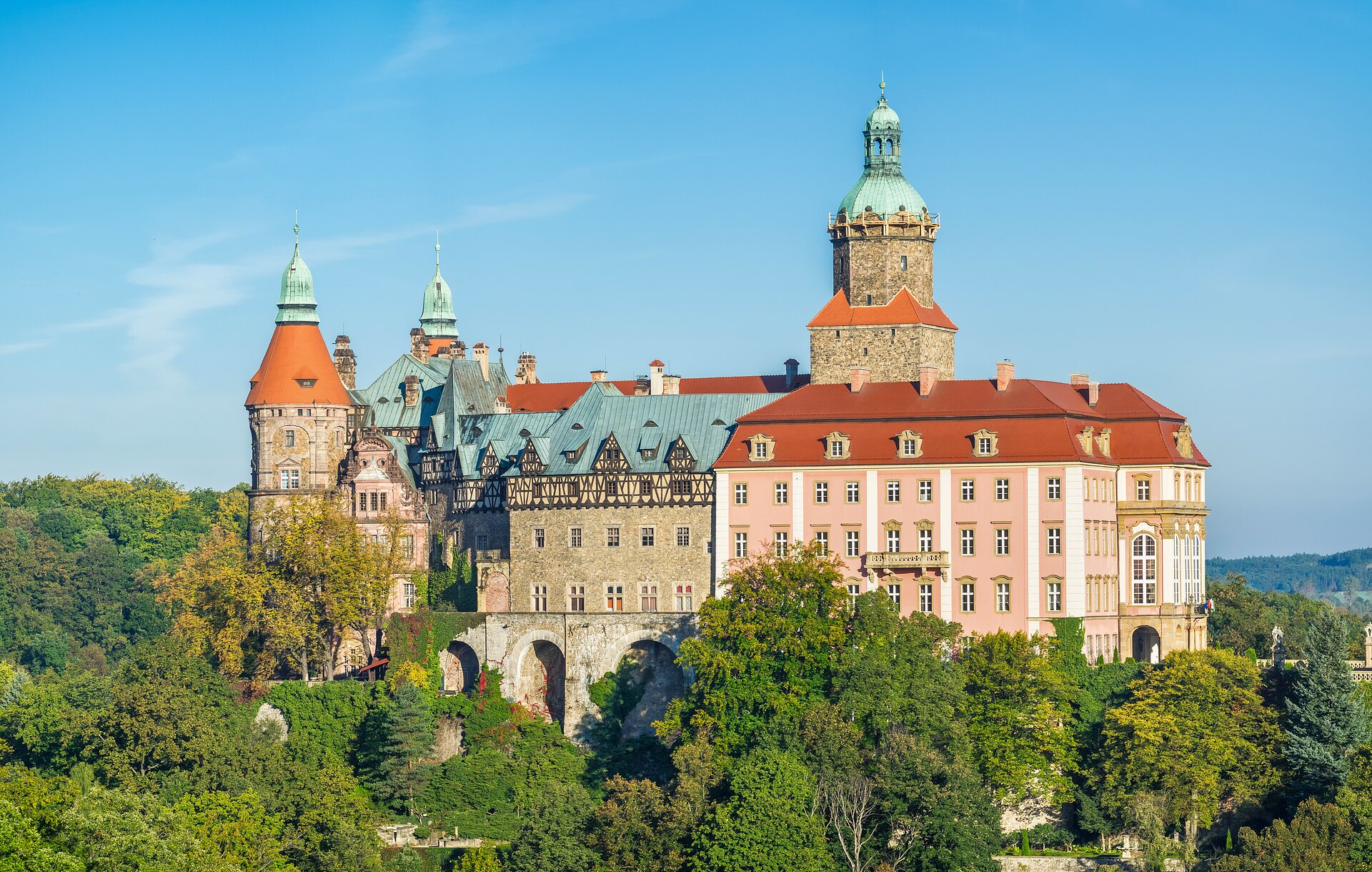
Perched on a hill above the quiet town of Wałbrzych, Książ Castle watches over the surrounding landscape like a silent guardian of Silesia’s turbulent past. Its stone walls have witnessed centuries of shifting borders, power struggles, and the ebb and flow of empires—Bohemian kings, Polish princes, and local nobles all left their mark here. Built in the mid-13th century as a fortified outpost for the Wrocław dukes, the castle began as a strategic stronghold before evolving into one of the region’s most important fortresses. Over time, its purpose changed, and today, only fragments of its medieval defenses remain, while later additions tell a different story.
The castle visitors see today is largely a product of the 17th century, when it belonged to the von Schaffgotsch family. It was during this period that the fortress shed some of its austere military character, acquiring Baroque flourishes that softened its imposing silhouette. The inner courtyard, with its arched galleries, steep roofs, and decorative gables, reflects an era when the castle’s role shifted from defense to display. By the 18th century, Książ had passed into Prussian hands and later to German aristocrats, each leaving their imprint on its architecture and interiors.
Inside, the castle’s halls offer glimpses into the lives of its former inhabitants. The Knight’s Hall stands out with its heraldic emblems and massive fireplace, a space where banquets and gatherings once took place. Other rooms house collections of period furniture, weapons, and paintings, illustrating the tastes and habits of Silesian nobility. Some chambers are adorned in late Baroque opulence, while others retain a more restrained elegance, creating a sense of time layered upon time. Not all areas are open to the public, but the accessible rooms provide a sense of how the castle’s purpose and style evolved with each new owner.
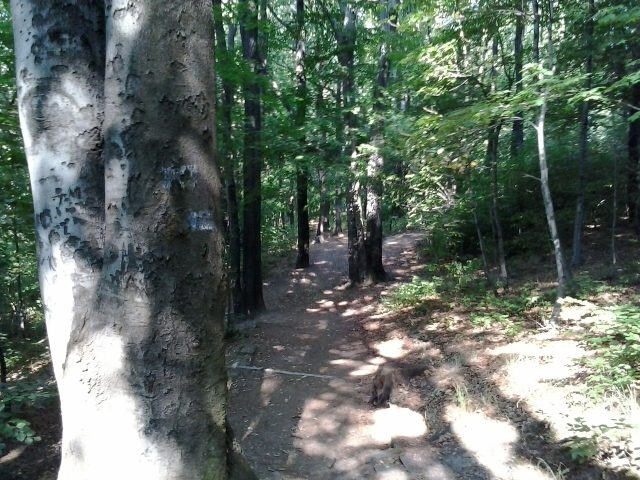
Beyond the castle walls, a 19th-century park unfolds across the hillside, a quiet contrast to the fortress’s earlier military function. Wide paths wind beneath old trees, offering views of Wałbrzych and the Pełcznica River valley below. On clear days, the panorama stretches far, revealing the gentle curves of the landscape. The park is small but well-tended, a peaceful place to wander after exploring the castle. In summer, it occasionally hosts concerts and historical reenactments, though on most days, the only sounds are the rustling of leaves and the distant call of birds.
Książ is not as famous as other Polish castles, and that’s part of its appeal. There are no crowds here, no hurried tours—just the quiet weight of history. Locals sometimes call it the Prince’s Castle, a nod to its ties to Silesia’s ruling families. Though little remains of its original fortifications, the site still feels steeped in the past. The stones themselves seem to hold memories of wars, fires, and reconstructions, while the surrounding countryside speaks of a region that has long been a crossroads of cultures.
In recent decades, restoration work has slowly brought the castle back to life, carefully balancing preservation with modern needs. The process is deliberate, ensuring that each change respects the building’s historical integrity. Occasionally, the castle hosts exhibitions on regional history or temporary displays, but for the most part, Książ remains a place where the past takes center stage. It’s not a destination for those seeking grand spectacles, but for travelers interested in Central Europe’s layered history, it offers a quiet, rewarding detour.
Wałbrzych itself is not a typical tourist town, but it has a charm of its own. The remnants of its mining past—old workers’ quarters, 19th-century industrial buildings, and quiet streets—paint a picture of provincial Poland, untouched by mass tourism. Książ Castle stands as a reminder that even in lesser-known places, history lingers in unexpected ways. If you find yourself in this part of the country, it’s worth the climb up the hill to spend an hour or two among the stones and greenery, listening to the wind in the trees and imagining the centuries that have passed beneath its walls.