Wałbrzych is one of those Polish towns that rarely makes it onto must-visit lists, tucked away among the gentle hills of Lower Silesia. Yet it’s here, in this quiet corner of the country, that the Cathedral of Saints Stanislaus and Wenceslaus stands as a silent witness to centuries of history. This isn’t just a church—it’s a place where the layers of time reveal themselves slowly, where the past feels closer than it does in more famous cities. The cathedral has seen rulers come and go, wars flare and fade, and the rise and fall of fortunes, yet it has always remained a refuge for those seeking solace, reflection, or simply a moment of stillness.
The story of the cathedral begins in the 13th century, when Wałbrzych was little more than a small settlement along a trade route connecting Bohemia and Poland. Back then, a wooden chapel dedicated to Saint Stanislaus, the patron saint of Polish lands, stood on this spot. As the town grew in importance, so did the need for a more permanent place of worship. By the 14th century, when Wałbrzych found itself under Bohemian rule, the chapel was replaced with a stone church in the Gothic style. The dedication was expanded to include Saint Wenceslaus, the revered Czech prince and saint, whose cult was deeply rooted in the region. In this way, the cathedral became a bridge between two cultures, its walls holding the symbols of both nations under one roof.
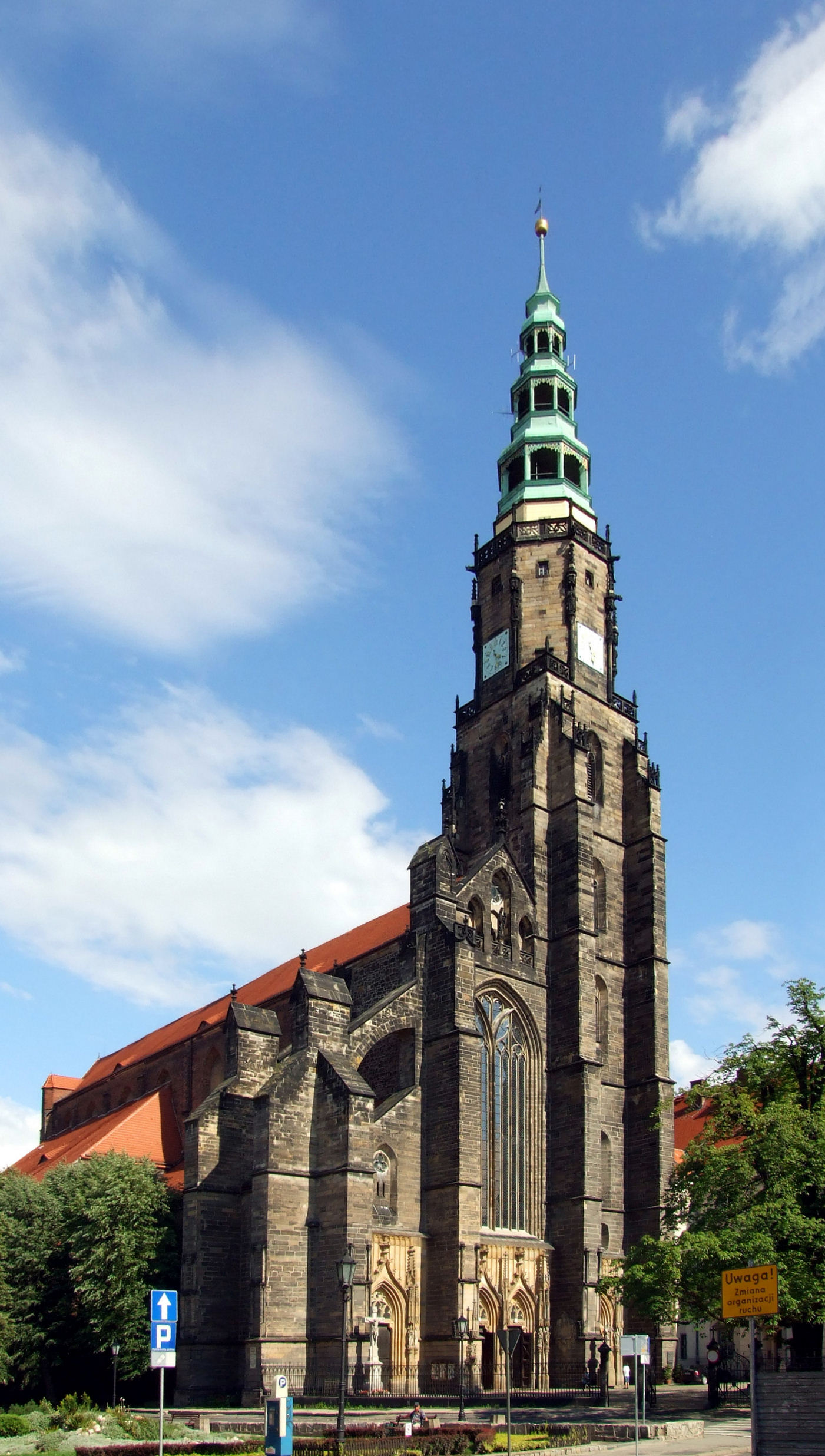
The architecture of the cathedral tells its own story, one written in stone and mortar. The Gothic structure we see today wasn’t built in a single era but evolved over centuries. The soaring tower, the sturdy buttresses, and the pointed arches are all hallmarks of a style that traveled to Silesia from Western Europe. Inside, the space feels vast and airy, with light filtering through stained-glass windows that cast shifting patterns on the walls. The Baroque altar stands in contrast to the Gothic vaulting, a reminder that the cathedral has been reshaped by different hands over the years. Some of the original frescoes and murals have survived, their faded colors hinting at the lives and events that once filled these walls with meaning.
Beyond its religious role, the cathedral has always been a gathering place for the community. In medieval times, it served as a meeting point for townspeople to discuss matters of importance. During wars, it offered shelter, its thick walls providing safety when the world outside was in chaos. The Thirty Years’ War in the 17th century brought destruction when Swedish troops looted the cathedral, but it was later restored, with new elements added to reflect the tastes of the time. In the 19th century, under Prussian rule, the interior was redecorated in the Neo-Gothic style, an attempt to recapture the building’s original character. These changes weren’t always seamless, but they reflect how attitudes toward history and heritage have shifted over the centuries.
Today, the cathedral remains a living place of worship, where services are held and the sound of the organ fills the air. Yet it’s also open to those who come to explore its past. Inside, you’ll find old tombstones, epitaphs commemorating notable townspeople, and fragments of medieval paintings that have been preserved over the years. The crypt is particularly moving, housing the remains of past clergy and local benefactors. It’s a quiet space that reminds visitors of the lives that have shaped this place, each one leaving a mark on the cathedral’s long history.
What makes the Cathedral of Saints Stanislaus and Wenceslaus special isn’t its grandeur or opulence. Instead, it’s the way time seems to slow down within its walls. Walking through the nave, you can’t help but wonder about the generations who have stood in this same spot—what prayers they whispered, what hopes they carried, what fears they left behind. The cathedral isn’t just a monument; it’s a repository of memory, a place where the past feels tangible.
For visitors to Wałbrzych, the cathedral offers an unexpected glimpse into the region’s history. The town itself isn’t overrun with tourist attractions, which makes it easier to experience its authentic atmosphere. The cathedral sits on a small square in the center, surrounded by low-rise buildings that still carry the charm of old Silesia. Nearby, the market bustles with locals, cafés serve coffee to those taking a break, and shops sell regional products. There’s a sense that life here moves at its own pace, unhurried and unpretentious.
The cathedral doesn’t announce its history loudly. It reveals itself gradually, in the quiet details—the worn stone steps, the flicker of candlelight, the way the light falls through the windows. There are no crowds here, no rush, just a sense of stillness and connection to something enduring. Perhaps that’s why those who visit once often find themselves returning, drawn back by the quiet power of a place that has weathered centuries and still stands as a testament to the past.