Wałbrzych isn’t the kind of place that makes it onto Poland’s must-see lists, and in many ways, that’s a blessing. The city moves at its own quiet pace, untouched by tourist crowds or the relentless hum of modern life. Its streets are lined with old houses, its corners filled with greenery, and among them, Juliusz Słowacki Park stands out—not as a grand attraction, but as a place where history, nature, and culture blend almost imperceptibly, creating a mood that’s equal parts melancholic and serene.
The park’s origins trace back to the 18th century, when it was part of a grand estate belonging to Silesian nobility. Back then, it was designed as a formal Baroque garden, with straight avenues, symmetrical flowerbeds, and manicured hedges—all meant to reflect the wealth and status of its owners. Ponds and fountains weren’t just decorative; they were places to stroll and reflect. Over time, tastes changed, and in the 19th century, the garden was reshaped into a more natural, Romantic-style landscape, the kind you see today. The rigid geometry of the past gave way to winding paths and clusters of trees, as if nature itself had been invited to reclaim the space.
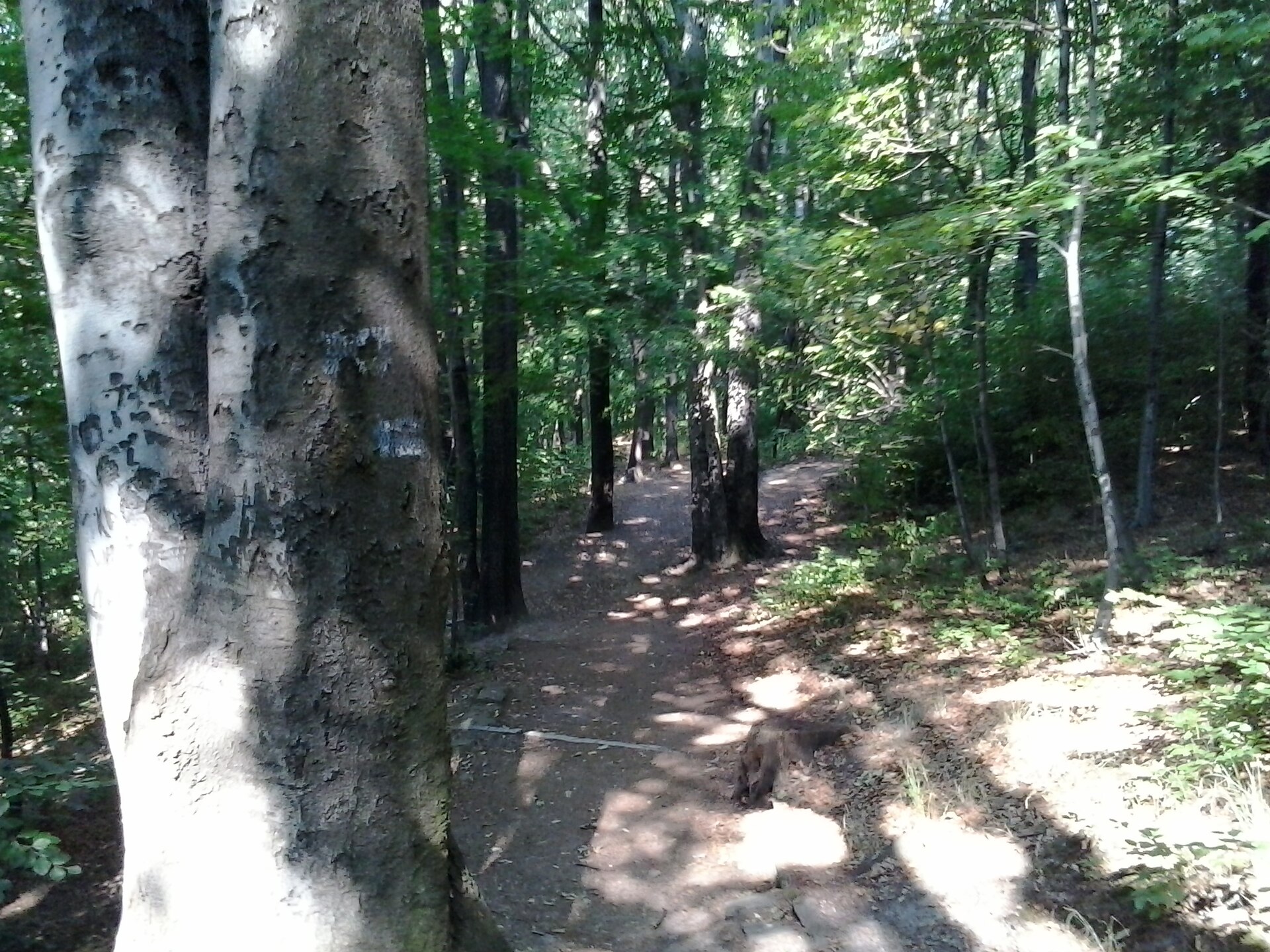
What remains of the original estate is fragmentary, but the park has held onto its character. Towering oaks, lindens, and chestnuts cast deep shadows, their branches forming a canopy that feels almost protective. Some of these trees have stood for centuries, their trunks thick with age. The most striking feature is the avenue of plane trees leading to a small pond, where the water once mirrored the palace’s façade. Now, the surface is still, broken only by the occasional ripple from ducks or the soft rustle of leaves underfoot.
One of the park’s most distinctive spots is the hilltop rotunda, a circular structure that looks like a miniature temple from antiquity. Built in the 19th century, it was a nod to the era’s fascination with classical architecture. Today, it serves as a quiet lookout point, offering views over the park and the rooftops of Wałbrzych. On clear days, the distant outline of the Sudeten Mountains appears on the horizon. Locals often come here in the evenings, when the setting sun turns the sky into a wash of warm colors, and the city below fades into shadow.
The park isn’t just a place to walk—it’s a kind of open-air museum, dotted with monuments and plaques that hint at its layered past. A bust of Juliusz Słowacki, the Romantic poet after whom the park is named, stands along one of the paths. Though Słowacki never had a direct connection to Wałbrzych, his work—filled with themes of nature, longing, and freedom—feels at home here. The park’s quiet corners seem to echo the emotions in his poetry, as if time itself has slowed to match the rhythm of his verses.
Small architectural details give the park its charm. Stone bridges, wooden gazebos, and weathered benches are scattered throughout, blending into the landscape rather than demanding attention. They make every walk feel like a discovery. One moment, you’re rounding a bend to find a pond covered in water lilies; the next, you’re passing an old lamppost or a grotto overgrown with ivy. These elements create the sense that the park has a life of its own, separate from the city beyond its borders.
The park changes with the seasons. In spring, magnolias and cherry trees bloom, filling the air with fragrance and carpeting the paths with petals. Summer brings dense foliage, offering shade for picnics or lazy afternoons with a book. Autumn turns the trees gold and crimson, their fallen leaves crunching underfoot like a reminder of time’s passage. Winter transforms the park into a quiet, frost-laced wonderland, where the pond freezes over and branches glisten with ice. Each season brings its own mood, its own way of drawing people in.
Despite its historical significance, the park doesn’t feel like a museum. There are no rigid rules here—children play on the grass, dogs run freely, and couples stroll hand in hand. It’s a place where everyone can find something for themselves: solitude for those who seek it, inspiration for others, or simply a moment of peace away from the noise of the city. Wałbrzych doesn’t try to impress; it simply exists, and in that simplicity lies its appeal.
Juliusz Słowacki Park is more than just a green space—it’s a reflection of Wałbrzych itself. The city, once a center of coal mining, is slowly rediscovering its identity, and the park serves as a reminder that even in an industrial region, there’s room for beauty. Here, you can forget the rush of daily life, lose yourself in thought, or just watch the way the light filters through the trees as the sun sets. It’s a place where the past and present coexist, not as opposites, but as layers of the same quiet story.