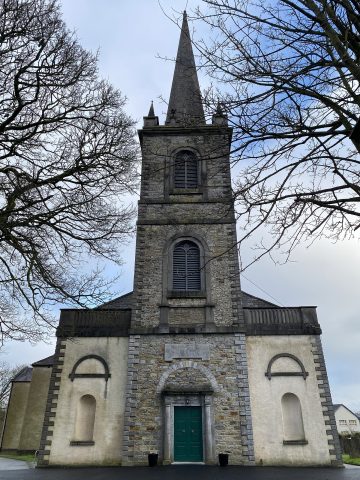
King John’s Castle in Longford is one of those places that feels suspended in time, a quiet echo of medieval Ireland. Perched on the banks of the River Shannon, it sits at the heart of a small county town where history isn’t just remembered—it’s still part of the everyday. The castle is now a ruin, its stones worn by centuries, but even in decay, it carries the weight of the past: wars fought, alliances broken, and the slow, relentless march of change that shaped the island.
Built in the early 13th century, the castle was commissioned by King John of England, the same monarch who appears in the legends of Robin Hood. At the time, Ireland was under English rule, and John sought to tighten his grip on the central lands. The castle was part of a network of fortifications meant to control local clans and protect trade routes along the Shannon. The river wasn’t just a waterway then—it was a lifeline, connecting the interior of Ireland to the coast and, by extension, to the wider world. For centuries, this stretch of water saw boats carrying goods, soldiers, and news, making Longford a small but strategic outpost.
The architecture of the castle follows the Norman style of the period: thick stone walls, a square keep, and a defensive ditch designed to intimidate. Inside, there would have been living quarters, storerooms, and barracks for the garrison. Over time, modifications were made, but the core structure remained unchanged. Today, only fragments of the walls and part of the tower survive, yet they’re enough to imagine how imposing the fortress must have looked in an age of swords and armor. The stones still bear the marks of time, their rough surfaces telling a story without words.
The castle’s history is one of conflict. By the 14th century, it had fallen into the hands of Irish clans who fought over it repeatedly. In the 16th century, during the English Reformation, it became a battleground once more, this time in the struggle between Catholic and Protestant forces. Later, in the 17th century, it was caught up in the wars between royalists and parliamentarians. Each era left its scars, though the names of those who fought and died here have mostly faded from memory. What remains is the sense of a place that has seen too much, yet endures.
Nowadays, King John’s Castle is a peaceful spot, visited mostly by locals and the occasional traveler. A small park surrounds the ruins, with benches facing the river and paths winding through the grass. There are no crowds, no guided tours shouting over one another—just the sound of the wind in the trees and the gentle lapping of water against the shore. Time seems to slow here, as if the land itself is holding its breath. It’s easy to picture the past: the clatter of hooves, the creak of the gate, the distant shouts of soldiers echoing across the courtyard.
For Longford, the castle is more than a historical site—it’s a piece of the town’s identity. It serves as a reminder that even small Irish towns have stories tied to larger events, that their streets have been walked by people who shaped history in ways both great and small. In the summer, the castle occasionally hosts festivals and reenactments, where locals don medieval costumes and demonstrate crafts or battles from the past. These aren’t performances for tourists so much as a way of keeping history alive, of honoring the people who once called this place home.
If you find yourself in Longford, the castle is worth a visit, if only to step away from the noise of modern life. It’s not as famous as the castles of Dublin or Galway, and that’s part of its charm. There are no souvenir stalls or pushy vendors, just the quiet, the river, and the wind carrying whispers of the past. The best times to come are early morning, when mist still clings to the Shannon, or late afternoon, when the setting sun turns the stones golden. In those moments, it’s as if the centuries peel away, and the past feels just within reach.
King John’s Castle isn’t just a ruin—it’s a living connection to the layers of history that have shaped this corner of Ireland. It has stood for nearly eight hundred years, surviving wars, shifting powers, and the slow erosion of time. Though little remains of its former grandeur, it still holds a place in the landscape, in the memory of the town, and in the broader story of Ireland. Perhaps that’s why it draws people in—not for its size or spectacle, but for the quiet authenticity that lingers in its stones. Here, history isn’t something you read about; it’s something you feel.